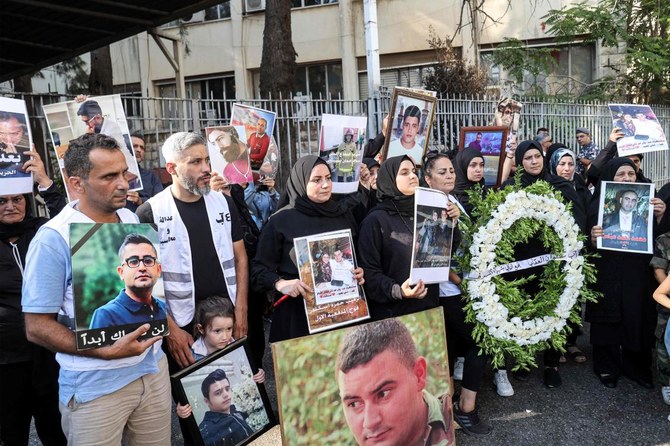
BEIRUT: Lebanon marked three years since one of history’s biggest non-nuclear explosions rocked Beirut with hundreds of protesters marching alongside victims’ families Friday to demand long-awaited justice.
Nobody has been held to account for the tragedy as political and legal pressures impede the investigation.
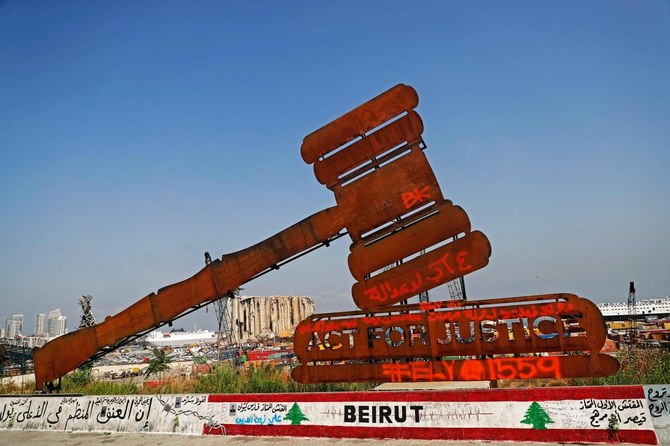
On August 4, 2020, the massive blast at Beirut port destroyed swathes of the Lebanese capital, killing more than 220 people and injuring at least 6,500.
Authorities said the disaster was triggered by a fire in a warehouse where a vast stockpile of ammonium nitrate fertilizer had been haphazardly stored for years.
Three years on, the probe is virtually at a standstill, leaving survivors still yearning for answers.
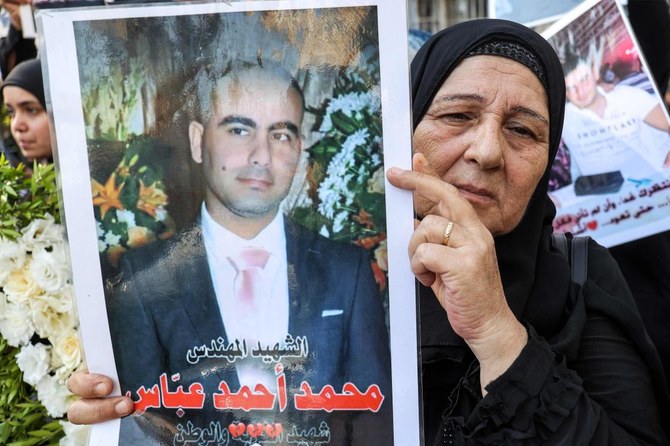
Protesters, many of them wearing black and carrying photographs of the victims, marched toward the port shouting slogans including: “We will not forget.”
“Our pain inspires our persistence to search for the truth,” said protester Tania Daou-Alam, 54, who lost her husband in the explosion.
Lack of justice “is the biggest example of rampant corruption in Lebanon, and we can no longer bear it,” she said.
The blast struck amid an economic collapse which the World Bank has dubbed one of the worst in recent history and which is widely blamed on a governing elite accused of corruption and mismanagement.
Some protesters waved a Lebanese flag covered in blood-like red paint while others carried an enormous flag covered in a written pledge to keep fighting for justice.
“I have the right to know why my fellow Lebanese were killed,” said protester Jad Mattar, 42.
“It’s like living on top of a volcano, not knowing were it will explode. We want safety,” he added.
Since its early days, the probe into the explosion has faced a slew of political and legal challenges.
In December 2020, lead investigator Fadi Sawan charged former prime minister Hassan Diab and three ex-ministers with negligence.
But as political pressure mounted, Sawan was removed from the case.
His successor, Tarek Bitar, unsuccessfully asked lawmakers to lift parliamentary immunity for MPs who were formerly cabinet ministers.
The powerful Iran-backed Hezbollah group has launched a campaign against Bitar, accusing him of bias and demanding his dismissal.
The interior ministry has refused to execute arrest warrants which the lead investigator has issued.
In December 2021, Bitar suspended his probe after a barrage of lawsuits, mainly from politicians he had summoned on charges of negligence.
But in a surprise move this January, Bitar resumed investigations after a 13-month hiatus, charging eight new suspects including high-level security officials and Lebanon’s top prosecutor, Ghassan Oueidat.
Oueidat then charged Bitar with insubordination and “usurping power,” and ordered the release of all those detained over the blast.
Bitar has refused to step aside, but has not set foot inside Beirut’s justice palace for months.
“Work (on the investigation) is ongoing,” said a legal expert with knowledge of the case, requesting anonymity due to its sensitivity.
Bitar is determined to keep his promise to deliver justice for victims’ families, the expert added.
Rima Al-Zahed, whose brother was killed in the explosion, said: “The judiciary is shackled, justice is out of reach and the truth is shrouded.
But, “the truth does not die so long as there is someone to demand it,” she added. “We believe that we will get the truth.”
French President Emmanuel Macron, told Lebanese: “I am thinking of you.
“Lebanon was not alone then, and it isn’t alone now. You can count on France,” he posted.
Washington condemned the long delay in holding those responsible to account.
“The lack of progress toward accountability is unacceptable and underscores the need for judicial reform and greater respect for the rule of law in Lebanon,” said State Department spokesman Matthew Miller.
On Thursday, 300 individuals and organizations, including Human Rights Watch (HRW) and Amnesty International, renewed a call for the United Nations to establish a fact-finding mission — a demand Lebanese officials have repeatedly rejected.
“If those responsible are not held accountable, it will put the country on a trajectory that allows this kind of crime to be repeated,” HRW’s Lama Fakih told AFP at the protest.


![]()
![]()
![]()
![]()
![]()

Hundreds protest as Lebanon marks 3 years since Beirut blast


Short Url
https://arab.news/8h5a5
Hundreds protest as Lebanon marks 3 years since Beirut blast
- Three years on, the probe is virtually at a standstill, leaving survivors still yearning for answers
- Protesters, many of them wearing black and carrying photographs of the victims, marched toward the port shouting slogans including: “We will not forget”


Latest updates


© 2026 SAUDI RESEARCH & PUBLISHING COMPANY, All Rights Reserved And subject to Terms of Use Agreement.