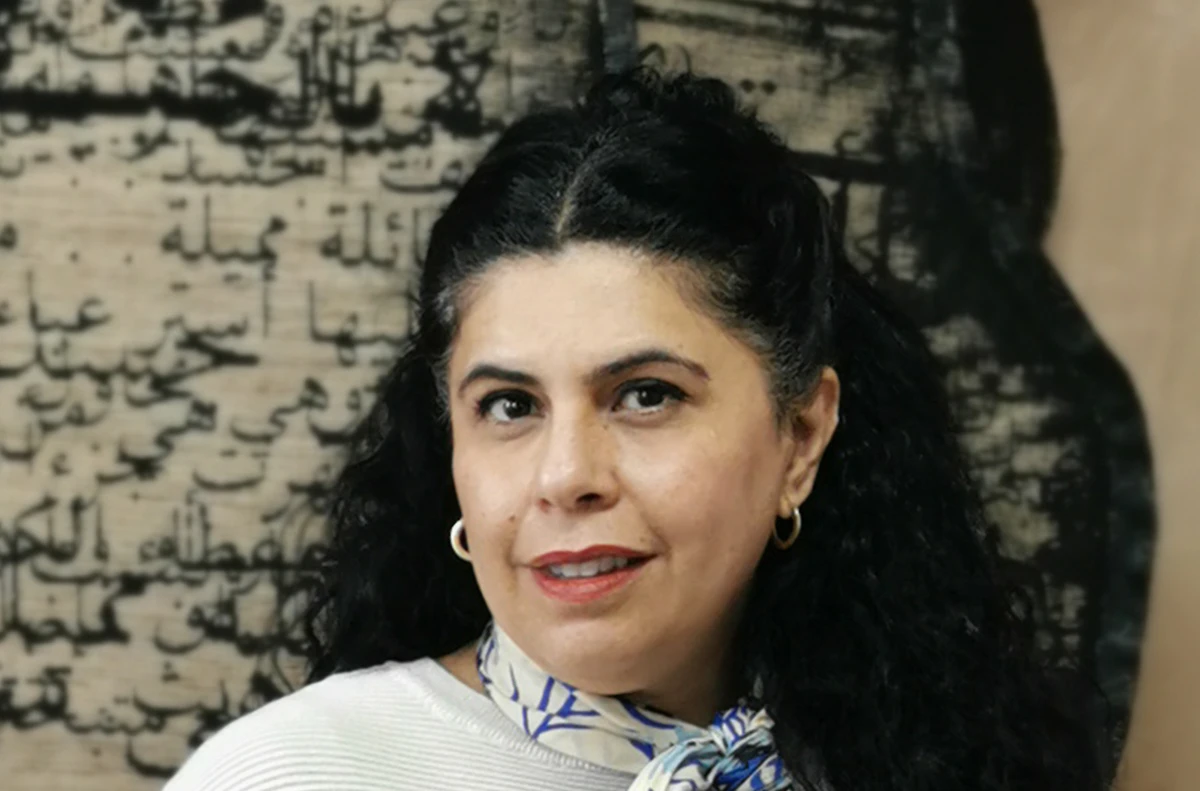
Saudi artist Manal AlDowayan wows audience in New York’s Guggenheim Museum 

Saudi artist Manal AlDowayan was approached by the museum’s Middle Eastern Circle team to stage her own work at the venue. (Supplied)
Short Url
Updated 07 August 2023
Follow

Saudi artist Manal AlDowayan wows audience in New York’s Guggenheim Museum 

  • The Saudi artist took over the museum’s rotunda for one night earlier in the summer to present a participatory art installation 

DUBAI: For decades, the iconic spiral rotunda of New York’s Guggenheim Museum, designed by famed US architect Frank Lloyd Wright, has been used for large installations, poignant performances by artists, and social demonstrations.  

So when acclaimed Saudi artist Manal AlDowayan was approached by the museum’s Middle Eastern Circle team to stage her own work at the venue, she realized the weight of history that came with the offer. She tells Arab News she “wanted to present something that was significant,” as she believes she is the first artist from the Gulf to stage a show at the venue.  
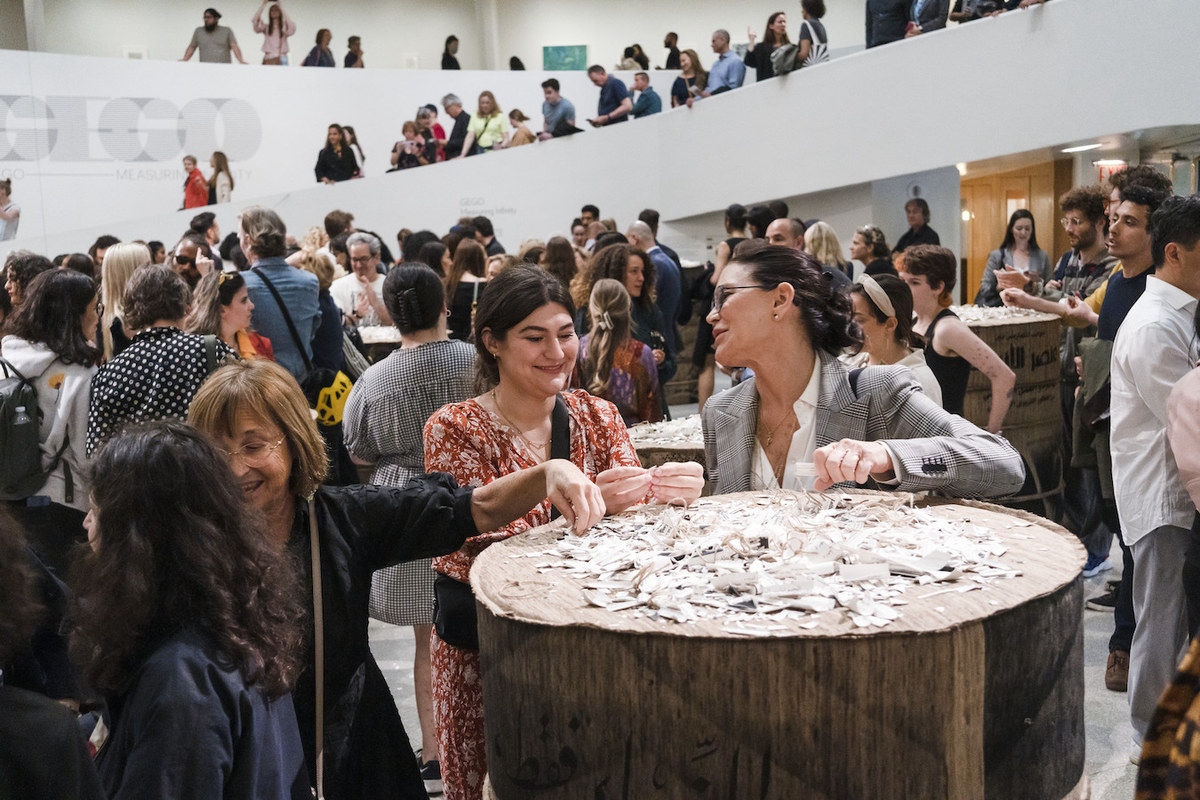


Visitors participate in Manal AlDowayan’s “From Shattered Ruins New Life Shall Bloom” in New York in May 2023. (Supplied)

On May 22, she put on a one-night-only participatory presentation — “From Shattered Ruins, New Life Shall Bloom” — that was attended by 750 people. AlDowayan placed a number of cylindrical fabric totems on the ground, on top of which were hundreds of delicate porcelain paper scrolls, akin to the outer shell of a hollow egg. As per the artist’s instructions, the scrolls would be crushed by attendees.  

AlDowayan, whose artistic career began over two decades ago in Saudi Arabia, has often interacted with people from her community, reaching out to women and craftspeople to play a part in her work, including photography.  

“I find participation is a very beautiful exchange between the artist and the community,” she says. “The distance between me and the community is so huge that only through this participation can we get close to each other.” 
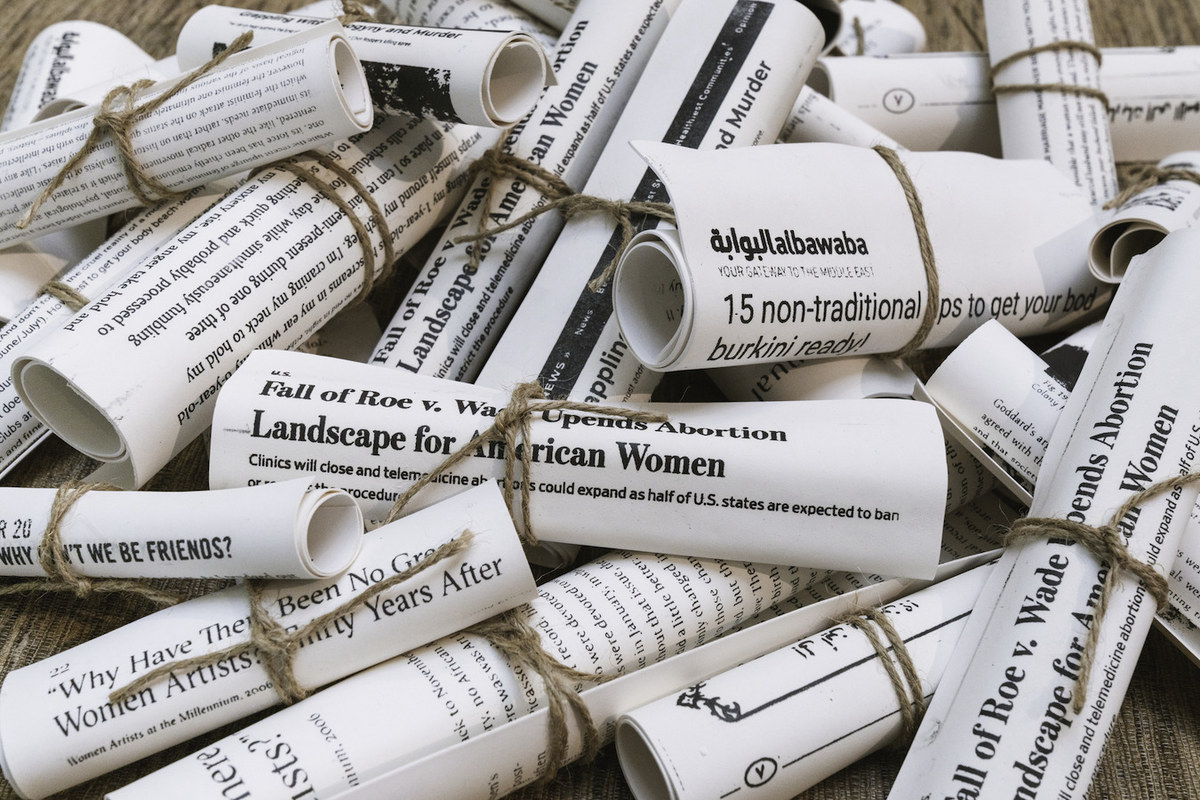


Details from Manal AlDowayan’s “From Shattered Ruins New Life Shall Bloom.” (Supplied)

Her Guggenheim installation was inspired by an earlier work of hers from 2019, when she presented a solo show in Madrid called “Watch Before You Fall.” In it, she showcased totems that showed Arabic writing. One piece read, “I wonder, do you see me?” and another said, “I am here!” That show took place just two years after the Kingdom had started introducing important changes for women in Saudi society, allowing them freedoms that AlDowayan didn’t get to experience herself when growing up there. 

“I’ve been traumatized by what has happened — living under so many years under this intense stress, being invisible — which (inspired) my whole practice: questioning the public sphere, and women having to exist in ‘the counter public.’ Women were hiding in the public space. I used this show to heal. I used totems, in which I put (images) of books that were written by men to instruct women on how to behave in the public space. Because public space, in their head, was for them and not for us,” she explained. “I remember telling my gallerist that my dream was to fill a full museum floor with the totems.”  
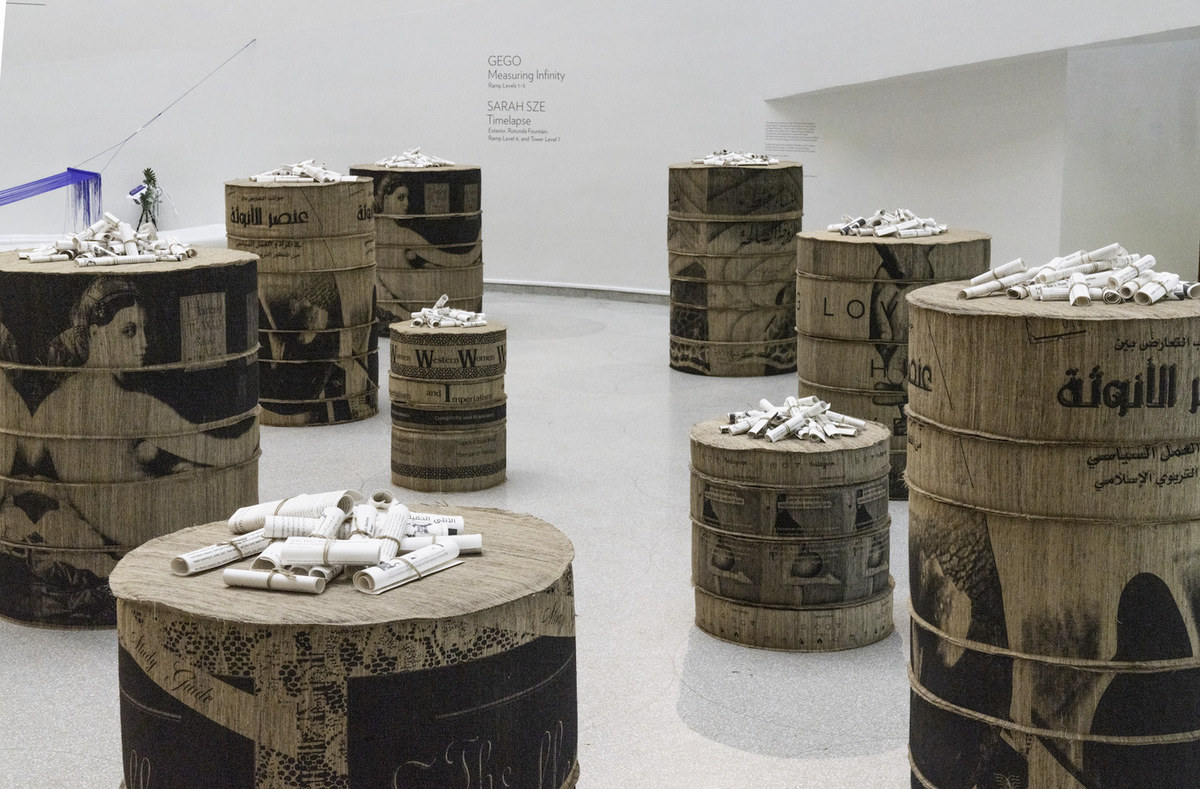


Manal AlDowayan’s “From Shattered Ruins New Life Shall Bloom.” (Supplied)

Now, that dream has come true. In her New York show, according to a press release, the scrolls “illustrated narratives that have for generations upheld structures oppressing women and girls.” Instead of focusing solely on Arabic texts, AlDowayan looked through the museum’s archive, nearby newspaper stands, and religious books, among other material about women, for inspiration.  

“I started thinking about the feminist movements coming out of the United States that absolutely ‘othered’ our feminist movements in the East and South East,” she says. “We need to look at other feminist movements as collaborators. We will not rise as women without thinking that way.”  

The artist printed some of the pages from her research on the scrolls, which the audience then demolished.  

“The concept was to use your hands – it’s in your hands. You can really change things. I wanted to give power to the audience,” AlDowayan says. 

She has kept the ‘confetti’ from the scrolls and says the pieces might be reincarnated in a future project.  

AlDowayan admits she was nervous about the turnout before the show. “It’s exactly like throwing a big party in your house. I was very anxious about who would come — would anybody come? Does New York want to interact with my ideas, because sometimes Americans are very insular in their thinking and they might come to my performance and feel very offended,” she said. 

She need not have worried. One aspect of the event, in particular, hit home for the artist.  

“I was surprised by the number of Arab women that attended,” she says. “They came together in groups — sisters, best friends, and schoolmates. I was very moved by that.” 

Saudi traditional meal anchors Al-Balad’s culinary scene

Ghalib Naji Al-Shadwy (center) with his son (right) and longtime customer Abu Samer Al-Sulami (left). (AN photo)
Updated 14 December 2025
Follow

Saudi traditional meal anchors Al-Balad’s culinary scene

  • Slow-cooked sheep’s head is drawing new generations and visitors to Jeddah’s historic district

JEDDAH: In the streets of Al-Balad, where centuries-old buildings frame one of Saudi Arabia’s most storied districts, culinary heritage continues to draw visitors as powerfully as architecture. 

Among the area’s enduring attractions is Al-Shadwy for Sheep Head Meat, a family-run restaurant that has served one of the Kingdom’s most traditional dishes since 1958, turning a once-necessity meal into a symbol of Saudi food culture and hospitality.

Tucked into Baba Makkah, Al-Balad’s historic core, Al-Shadwy began as a modest corner table before becoming a landmark destination for locals, food enthusiasts and tourists seeking an authentic taste of the past.

Eating sheep’s head has long been rooted in Arab culinary traditions, shaped by the principle of using the entire animal and avoiding waste. (AN photo)

Now run by the third generation of the Al-Shadwy family, the restaurant remains devoted to a single specialty; sheep’s head, slow-roasted over charcoal using a recipe unchanged for decades.

Eating sheep’s head has long been rooted in Arab culinary traditions, shaped by the principle of using the entire animal and avoiding waste. In Saudi Arabia, the dish evolved into communal meal associated with generosity, warmth and social gathering.

Sixty-five-year-old owner Ghalib Naji Al-Shadwy, who inherited the restaurant from his grandfather and father, remains a familiar presence at the restaurant, overseeing the service and greeting customers. 

FASTFACTS

• Al-Shadwy for Sheep Head Meat is a family-run restaurant in Al-Balad that has served one of the Kingdom’s most traditional dishes since 1958.

• It began as a modest corner table before becoming a landmark destination for locals, food enthusiasts and tourists seeking an authentic taste of the past.

He told Arab News that the dish has been central to Saudi culinary culture for generations.

“The sheep’s head has been a staple in Saudi Arabia and other GCC countries culinary culture for centuries,” he said. “Traditionally, it was a meal served during cold winter mornings to provide energy and warmth. In many regions of Saudi Arabia, the sheep head (is) always on the top of the main plate for guests, and families festive holidays gather in restaurants or at home to enjoy the sheep’s head, making it a social and festive occasion.”

In Saudi Arabia, the dish evolved into communal meal associated with generosity, warmth and social gathering. (AN photo)

Speaking about its significance in hospitality culture, he added: “Serving it to guests is considered an act of generosity and care.” Rich and filling, it is most commonly eaten as breakfast or an early morning meal.

Preparing sheep’s head is a slow, careful process. According to Al-Shadwy, the heads are cooked at low temperatures to soften the tendons and connective tissue, resulting in tender meat and deep flavor.

The preparation includes curing and slow cooking, a method that has remained largely unchanged at the restaurant for more than six decades. 

Being a family-owned restaurant here for so many years makes us a part of Jeddah’s history.

Ghalib Naji Al-Shadwy, Al-Shadwy for Sheep Head Meat owner

“I’ve cooked many sheep heads a while back and I still enjoy it,” he said. “Most of the customers actually prefer the head and the brain.”

Despite its small size and somewhat tucked-away location, the restaurant’s popularity is unmistakable. Long queues form outside each morning, often guiding first-time visitors to its door. A sign reading “Al-Shadwy Mandi” in Arabic marks the entrance, while the steady crowd confirms its reputation.

Over the years, the restaurant has attracted officials, celebrities and social media figures, with photographs of notable guests lining the walls. Al-Shadwy said the steady attention reflections Al-Balad’s growing appeal as a cultural and culinary destination.

He said that interest in sheep’s head is no longer limited to older generations. Younger Saudis, he said, are increasingly curious about traditional dishes, while tourists often see it as an adventurous experience. 

“For many visitors, trying sheep’s head is considered ‘extreme food’ or a challenging dish,” he said. “But it gives them a sense of adventure and a unique story to tell.”

Inside the lively restaurant one morning, longtime customer Abu Samer Al-Sulami, who has been dining there for 40 years, described it as a rare example of authentic Saudi cuisine.

“I am a regular customer here and always come early in the morning because when you eat the sheep’s head it really gives you energy for work,” he said. 

Demand is highest in the early hours, particularly on Fridays. Al-Shadwy said the restaurant often sells out by mid-morning, making early visits essential.

“The number of sheep heads our restaurant sells daily varies but it reaches around 200 heads,” he added.

As he works alongside his two sons, Al-Shadwy says preserving the family legacy is as important as serving the fish. 

“Being a family-owned restaurant here for so many years makes us a part of Jeddah’s history,” he said.