


RIYADH: Saudi artist Manal AlDowayan incorporates community participation into her work and is the subject of Misk Art Institute’s latest Art Library series book, titled “Manal AlDowayan: Participatory Acts,” showcasing her unique skills as a multidisciplinary artist who uplifts the voices of a community.
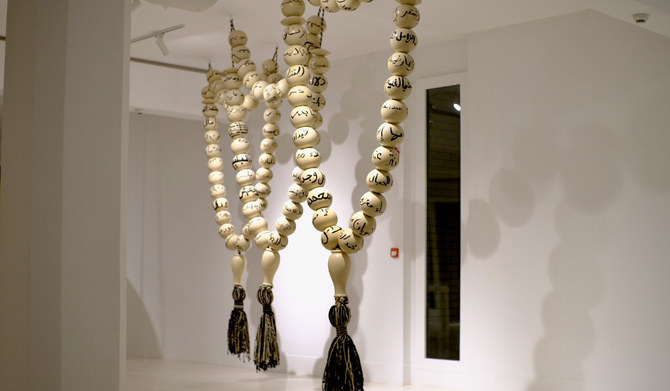
In 2012, AlDowayan collected a group of female Sadu weavers, marginalized by the oil boom, and had each of them paint their names on maplewood pearls. Strung together and suspended, this collective art piece became one of her most notable participatory works, titled “Esmi — My Name.”
The project was developed around the social attitude towards concealing women’s names and identities.
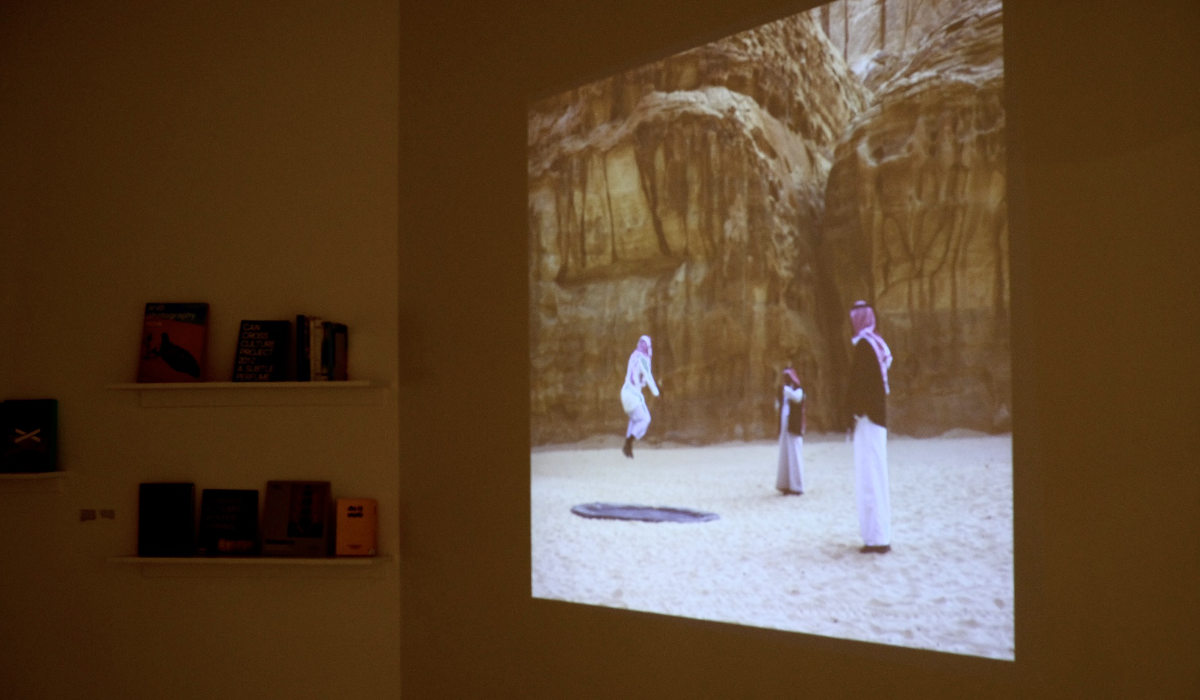
"Now You See Me, Now You Don’t" Invites the public to experience the immersive piece that highlights puddles, or lack thereof, in the landscapes of AlUla. (AN Photo Nada Alturki)
What infatuated viewers was not the artist’s use of material to conceptualize social issues, but rather the consistent candor and truth in voicing her and the collective experience.
“What you connect with is the humanity of my story,” AlDowayan told Arab News.
Emerging as an artist in 2005, AlDowayan created a space where the public, especially women, were centered in the growth of a participatory art movement in the Kingdom.
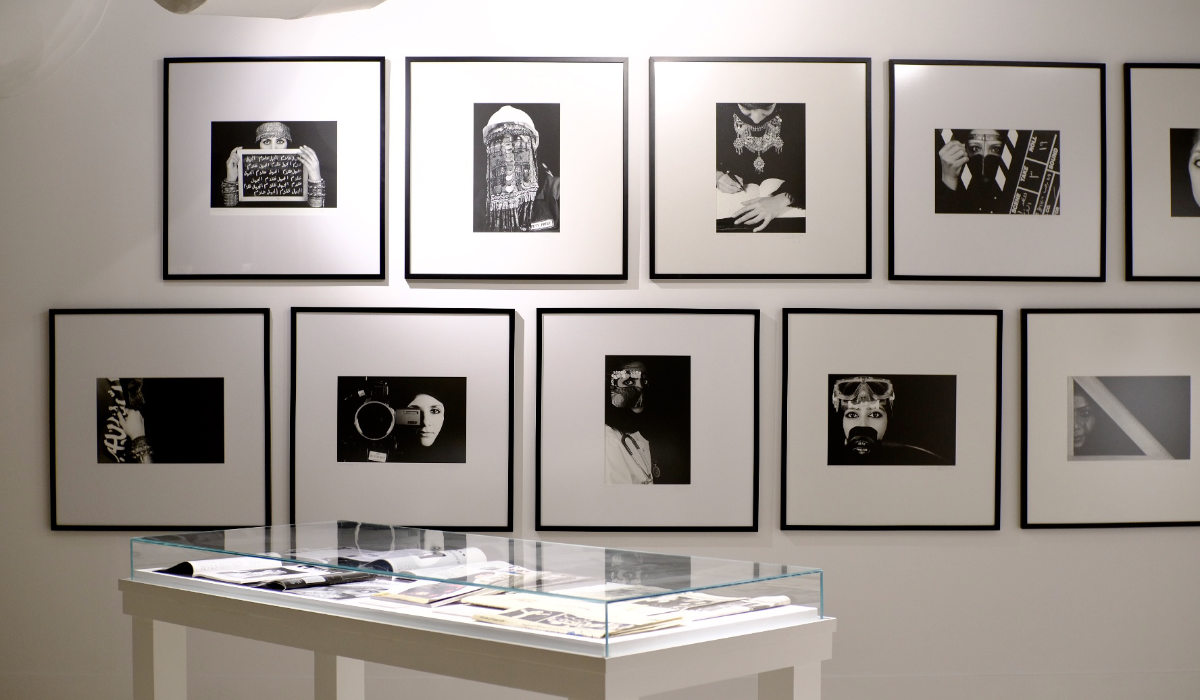
Portraits from AlDowayan's "I Am" series hand at the Prince Faisal bin Fahd Arts Hall, highlighting women's contributions to furthering society historically. (AN Photo Nada Alturki)
“We have not witnessed another artist that has done it in the way (AlDowayan) did in terms of communicating with the society and community around her in (the making of) her artworks,” Basmah Alshathry, chief curator at the institute, told Arab News.
The publication release is accompanied by an exhibition of selected artworks, which move away from a one-sided conversation by bringing her art to life, allowing the community to indulge in an inclusive thread of conversation and share live responses.
FASTFACT
The 125-page Art Library series book titled ‘Manal AlDowayan: Participatory Acts,’ offers a glimpse into the artist’s work, her transition to conceptual art, and a rearview into her life.
Alshathry said: “When you look at a work like ‘Sidelines,’ and the fact that she wanted to create a work to shed light on a community that was sidelined in society, (AlDowayan) wants these communities to join her. And that on its own is very powerful.”
Her pieces are displayed alongside the legacy of the late Emirati artist Hassan Sharif in both a publication and exhibition based on AlDowayan’s selection. While their individual practices and journies are vastly different, he is more of a symbol than inspiration for her work.
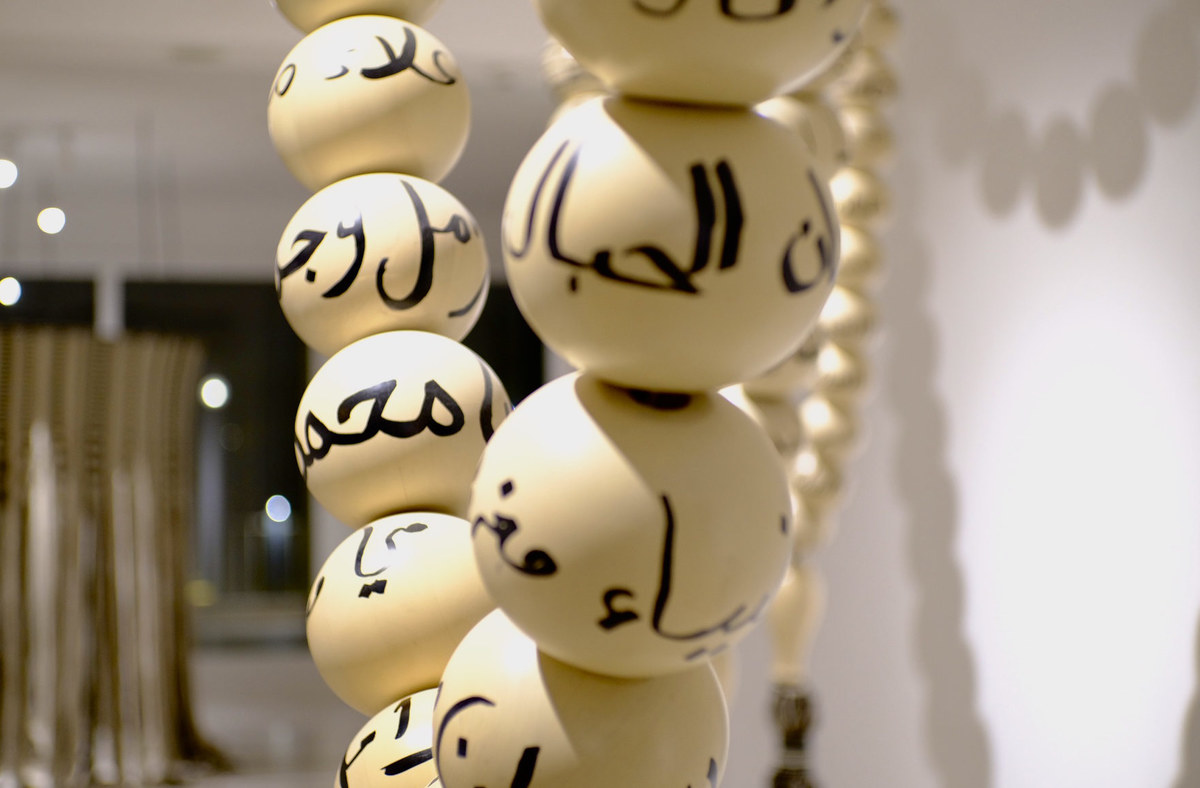
In 2012, Saudi artist Manal AlDowayan collected a group of female Sadu weavers, marginalized by the oil boom, and had each of them paint their names on Maplewood pearls. Strung together and suspended, this collective art piece became one of her most notable participatory works, titled “Esmi (My Name).” (AN Photo Nada Alturki)
AlDowayan explained: “In Saudi Arabia, the contemporary art movement is so powerful and is getting the majority of talent and investment … it would be an injustice to our own regional art history not to include the story and art of Hassan Sharif.”
Building on art history in the region, the side-by-side exhibitions invite local art-lovers to view her work, and maybe even get a glimpse into the world of the “father of conceptual art” in the Gulf region.
The works on display are merely a retrospective; a slice of AlDowayan’s participatory works, or artworks activated by the presence or contribution of the audience.
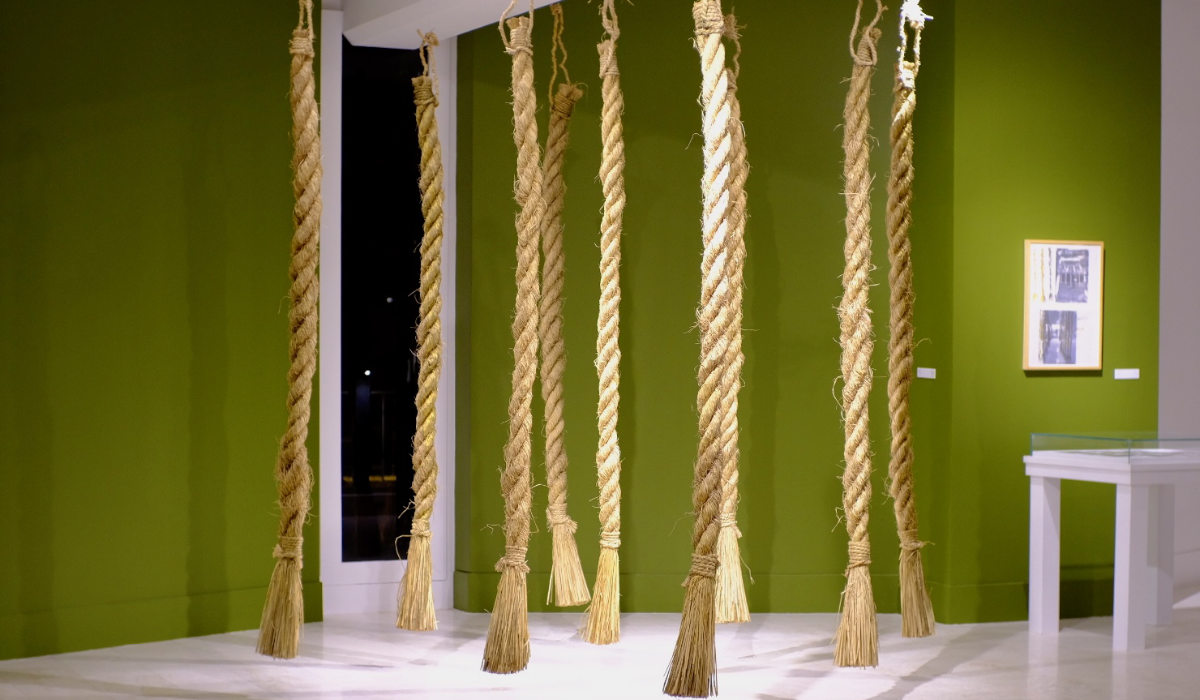
Shimenawa rice straw paper has been woven together to create "Illuminate Me," a Shinto shrine dedicated to the goddess of light. (AN Photo Nada Alturki)
“Despite a critical aversion to reductive pigeonholing, it is near impossible to untangle Manal AlDowayan’s story from that of her home country,” wrote Ruba Al-Sweel, one of the three contributing writers to the retrospective.
Indeed, documentation of the works’ timeline mirrors that of Saudi Arabia through shedding layers, cultivating complexity, and championing collective experiences.
Her life story unfolds through art. The two-dimensional photo series “I Am” in 2005 highlights women in various fields during a gendered time in history. Later, she stepped out of the studio with photo documentations of Dhahran in “Landscapes of the Mind.” She then disposed of the frame completely with a flock of birds in the 2011 “Suspended Together,” a response to the imposed guardianship on women’s travel.
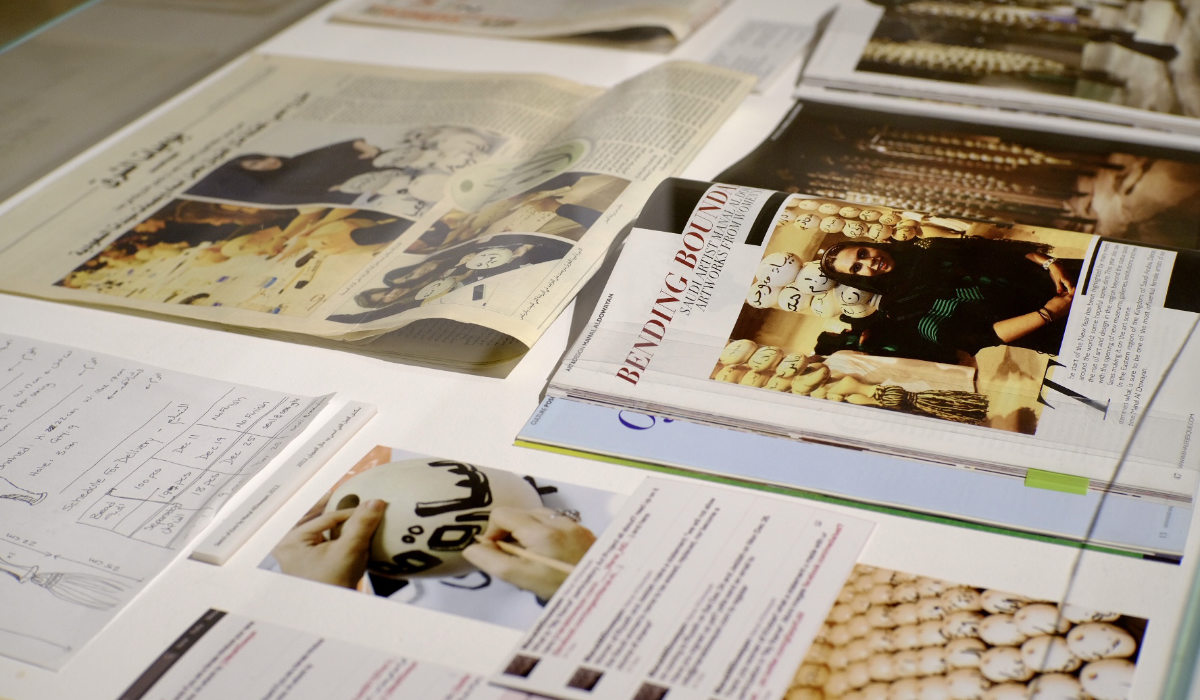
The release of "Manal AlDowayan: Participatory Acts" is accompanied by an exhibition of selected artworks, which move away from a one-sided conversation by bringing her art alive, allowing the community to indulge in an inclusive thread of conversation and share live responses. (AN Photo Nada Alturki)
While many believe the installation speaks on behalf of a people, her practice stems from a personal place.
The 125-page book offers a glimpse into the artist’s engagement in participatory works, tracking her introductions to art through a photographic lens, her transition to conceptual works, and a rearview into her life.
AlDowayan has displayed her photography, multimedia installations, and sculptures globally, including solo shows in Madrid’s Sabrina Amrani Gallery and Miami’s Rojas + Rubensteen Projects.
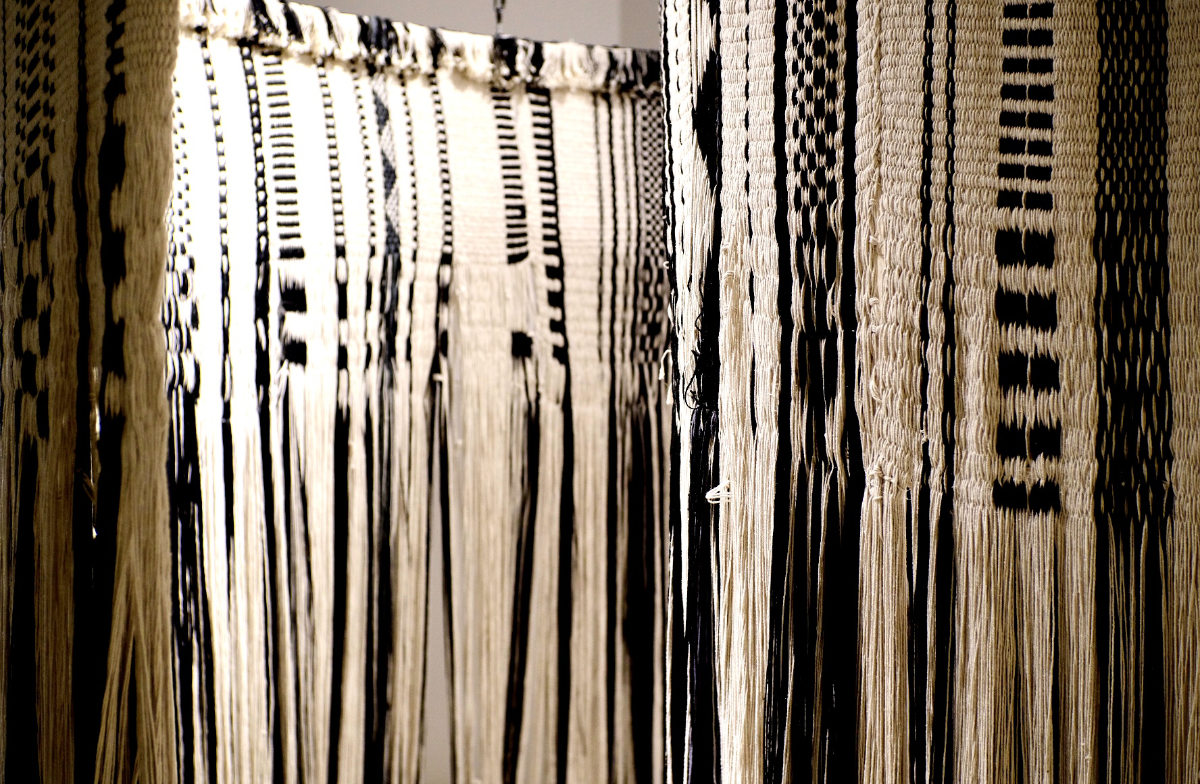
'Sidelines' by Manal AlDowayan contrasts the the neglect that women artisans have suffered with the urbanization and rapid transformation of Bedouin groups in Saudi Arabia. (AN Photo Nada Alturki)
In the Kingdom, she has a unique positioning, initiating not only a shift from modern to contemporary, but also addressing gender within society. Her impact is undeniable, making her one of the most internationally recognized Saudi figures in the art world.
“The intention of actually producing the series of the Art Library is to fill a prevalent gap in terms of the archiving documentation of Arab artists that have contributed in important and significant ways to the art field,” Alshathry said.
It is an essential record for artists, historians and researchers today, and more importantly, the future. Regardless of the boundless artworks born out of the region, they have historically been dictated and archived through Western lenses.
“Every researcher that you will come across in the world that wants to write a paper, or a PhD thesis, or an article, will tell you the worst thing is there are no resources. And most of our resources, that document our contemporary art movement, have not been preserved,” AlDowayan said.


