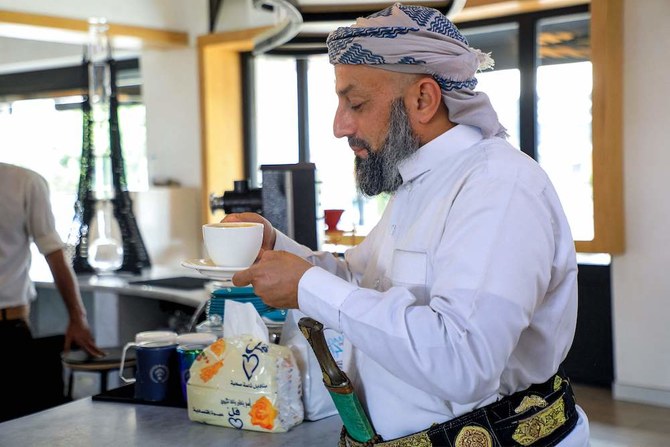
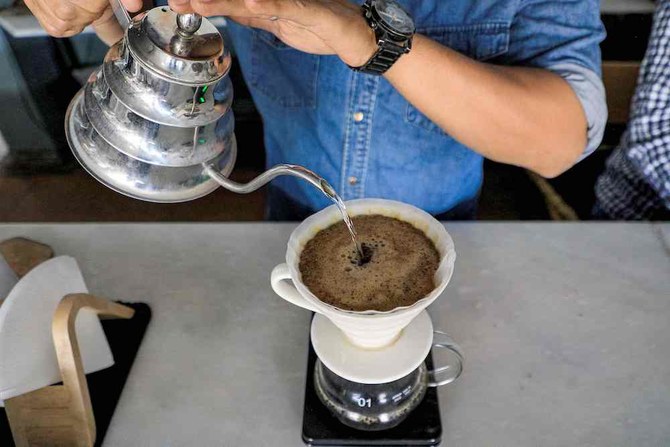
SANAA: Tucked amid shell-pocked buildings and roadside tributes to fallen fighters, a less obvious byproduct of wartime is spreading across Yemen’s capital: specialty coffee houses serving steaming cups of top-rated pour-over.
The Arabian Peninsula’s most impoverished country, locked in an eight-year conflict between Iran-backed Houthi militia and forces supporting the internationally recognized government, has deep ties to coffee.
Legend has it that Sufi mystics on Yemen’s western coast were the first people to brew coffee beans back in the 15th century.
Yet Yemeni entrepreneurs have until recently focused on exporting their best product to wealthy overseas markets.
The most famous among them is Mokhtar Alkhanshali, whose death-defying bid to ship a container full of specialty beans during the war’s early stages was chronicled in Dave Eggers’ 2018 best-selling book “The Monk of Mokha.”
For other Yemenis, however, blocked ports and related restrictions imposed during the war have inspired them to turn inward, giving rise to a cafe scene that today brings flashes of Brooklyn and Paris to Sanaa’s war-scarred streets.
“People started to feel like Yemeni coffee was costing a lot and they lost interest in buying it,” said Rashed Ahmed Shagea of Durar Coffee, recalling how the export market soured as fighting broke out in 2015.
In response, he opened a cozy shop in central Sanaa where customers can sample beans from all over the country, surrounded by Yemeni art and Yemeni-made wood furniture.
“We had to think of another way to support our farmers,” Shagea said.
“Everybody said it’s impossible to work in Yemen, that people had no purchasing power... But we insisted.”
In southern Sanaa’s Hadda neighborhood, Hussein Ahmed made a similar gamble in 2018, opening his Mocha Hunters cafe on a street dotted with million-dollar villas.
It was the culmination of a long personal journey with coffee that began when he and his Japanese wife founded a cafe in Tokyo more than a decade ago.
After the marriage ended, Ahmed also turned his attention to exporting, but wartime hurdles and a travel ban against Yemenis introduced by former US president Donald Trump spurred him to consider opportunities in his home country.
In the cafe’s early days, Ahmed could sometimes count on one hand the number of customers who dropped by.
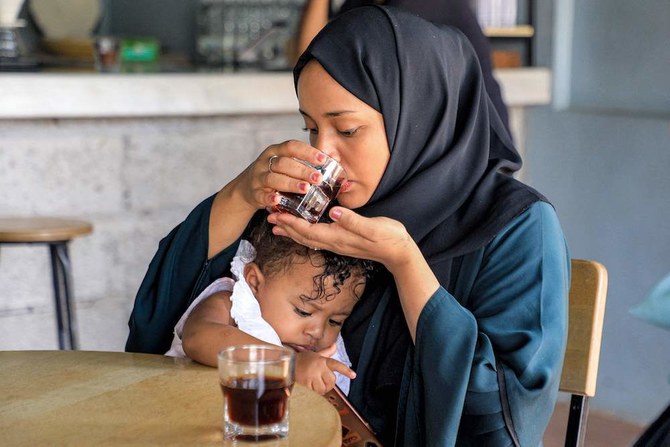
Now the patio is full most afternoons, with Yemenis and foreigners drawn to the simple menu: 750 Yemeni rials (around $1.50) for pour-over drip and qishr, a traditional drink made from coffee husks, and 1,000 Yemeni rials (around $2) for cold brew.
“It’s like a wave,” Ahmed said, adding this was only natural for a country of coffee “pioneers” who transformed it “from seeds to a magical drink.”
The specialty offerings are a far cry from the commercial-grade coffee, often loaded with milk and sugar, that many Yemenis are used to consuming, Ahmed said.
“This movement, it reintroduces what is good taste,” he said, with a touch of the haughtiness required of any self-respecting trendsetter.
“We tell customers, ‘Your taste or preference doesn’t matter for us. We drink what we think is good.’“
Both Durar and Mocha Hunters still depend heavily on their export business, which became easier after a truce was announced in April last year.
Yemeni coffee is world-renowned: James Freeman, founder of Blue Bottle Coffee, once said of Alkhanshali’s Port of Mokha product that “this is what angels singing tastes like.”
Sales abroad have been boosted further by Yemeni diaspora communities wracked with nostalgia for their homeland but reluctant to return because of the fighting, Ahmed said.
“I think our expats, our people who live abroad, because of the hardness of travel, they become more emotional about their land. So they buy local products,” he said.
“It’s a global movement, specialty coffee, but in Yemen it’s more emotional.”
Back home, meanwhile, entrepreneurs are bullish on local consumption, especially if a durable cease-fire were to take hold and improve the economy.
More than two-thirds of the population currently depend on aid to survive.
“This place will grow in the future to become the largest coffee center in the Middle East,” predicted Ghaleb Yahya Alharazi, manager of Haraz, a coffee house that opened last year and can accommodate 1,000 people.
“We have a goal, which is a journey back to the glory, culture and authenticity of Yemeni coffee.”


![]()
![]()
![]()
![]()

Yemen specialty coffee ‘wave’ sweeps war-hit capital

Short Url
https://arab.news/wbfqf
Yemen specialty coffee ‘wave’ sweeps war-hit capital
- Legend has it that Sufi mystics on Yemen’s western coast were the first people to brew coffee beans back in the 15th century


Latest updates


© 2026 SAUDI RESEARCH & PUBLISHING COMPANY, All Rights Reserved And subject to Terms of Use Agreement.