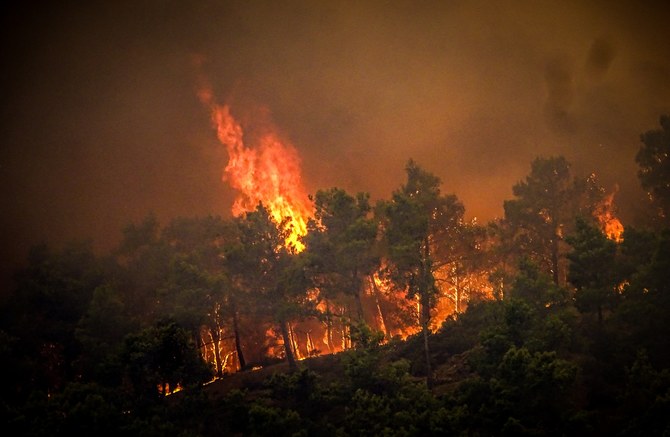
ATHENS: A wildfire raging on the Greek island of Rhodes forced thousands of tourists and island residents to shelter in schools and indoor stadiums on Sunday after they were evacuated from coastal villages and resorts.
Thousands spent the night outdoors and tour operators Jet2, TUI and Correndon canceled flights departing for the island, which is located in southeastern Greece and is popular with holidaymakers for its beaches and historic sites.
One government official told Reuters 19,000 people had been moved away from their homes and hotels, 3,000 of them by boat. Many were assisted by police.
There have been no reports of casualties in the fire.
Greek authorities said the evacuation effort was among the biggest the country had ever conducted.
“We were walking down the road at 2 o’clock in the morning and the fire was catching up with us,” tourist Amy Leyden told Sky News, calling the experience “just terrifying.”
“I didn’t think we were going to make it,” Leyden said, describing being moved from two hotels with her 11-year-old daughter, before being taken to the safety of a school in the northern part of the island.
Coast Guard vessels and dozens of private boats carried more than 2,000 tourists from beaches on Saturday after the wildfire, which has burned for nearly a week, was fanned by strong winds and rekindled along the southeastern part of the island.
Many fled hotels when huge flames reached the seaside villages of Kiotari, Gennadi, Pefki, Lindos, Lardos and Kalathos. Large groups gathered in the streets under a red sky waiting to be taken to safety. Smoke hung heavy over a deserted beach.
Volunteers fought to extinguish a blaze that blackened the hillside and charred buildings near Lindos, which is one of the island’s most visited sites and is famed for an acropolis perched on a massive rock within medieval walls.
“We have between 4,000 and 5,000 people now accommodated at different structures,” Thanasis Virinis, a vice mayor of Rhodes told Mega television on Sunday, calling for donations of essentials such as mattresses and bedclothes.
CANCELLED FLIGHTS
The evacuees, including residents from the villages, were housed at hotels, indoor stadiums, conference centers and school buildings, fire brigade spokesman Ioannis Artopoios told Skai radio.
“They have been given food, water and medical help,” he said.
One British tourist thanked locals for their generosity, in an interview with Greek television.
The tourist, who did not give her name in the footage, said shops had refused payment for water and food and small boats had taken women and children to safety first, before returning for the men.
The Greek foreign ministry said it was setting up a helpdesk at Rhodes airport to facilitate, in cooperation with embassies, the departure of visitors who have lost travel documents.
Footage on social media showed crowds of tourists at the airport.
Tour operator Jet2 said five planes due to take more tourists to the island would instead fly empty and would take people home on their scheduled flights. TUI said it canceled all outbound flights to Rhodes up to and including Tuesday.
“Customers currently in Rhodes will return on their intended flight home,” it sad in a statement.
FIREFIGHTING
More than 250 fire fighters were trying to contain the flames, assisted by 15 aircraft, state television said.
Firefighters, backed by aircraft that dropped water, battled three fronts on Sunday, setting up firebreaks to prevent flames from spreading to a dense forest or threatening more residential areas.
The fire has scorched swathes of forest and several buildings since breaking out in a mountainous area on Tuesday.
Civil protection has warned of a very high risk of wildfires on Sunday in almost half of Greece, where temperatures were expected to hit 45 Celsius.
Heatwaves across Southern Europe and many parts of the world could last until August.
Fires are common in Greece but hotter, drier and windy summers have brought more of them in recent years. Climate change means heatwaves will become more frequent, an adviser to the World Meteorological Organization (WMO) said on Saturday.


![]()


Tourists flee wildfire on Greek island Rhodes, flights canceled
Short Url
https://arab.news/4h6wx
Tourists flee wildfire on Greek island Rhodes, flights canceled
- Thousands spent the night outdoors and tour operators Jet2, TUI and Correndon canceled flights departing for the island
- Greek authorities said the evacuation effort was among the biggest the country had ever conducted


UK, allies convinced Kremlin critic Navalny was poisoned
- That was the conclusion of the five governments based on analyzes of samples from Alexei Navalny – statement
LONDON: Britain and allies France, Germany, Sweden and the Netherlands are convinced that late Kremlin critic Alexei Navalny was poisoned with a lethal toxin in a penal colony two years ago, they said in a joint statement on Saturday.
That was the conclusion of the five governments based on analyzes of samples from Navalny, according to the statement issued in London.
It added that the analyzes had conclusively confirmed the presence of epibatidine, a toxin found in poison dart frogs in South America and not found naturally in Russia. The Russian government has denied any responsibility for Navalny’s death.


Latest updates


Recommended


© 2026 SAUDI RESEARCH & PUBLISHING COMPANY, All Rights Reserved And subject to Terms of Use Agreement.