WASHINGTON: Amid celebrations at getting a slew of US citizens and Kremlin opponents out of Russian prisons, the White House had one public regret Thursday: failure to get out an even bigger name — Alexei Navalny.
“We had been working with our partners on a deal that would have included Alexei Navalny and, unfortunately, he died,” US National Security Adviser Jake Sullivan revealed.
In the White House’s plans, the last truly high-profile political opponent of President Vladimir Putin should have been included in the historic swap that saw 16 people — including three US citizens and a US resident — freed in return for 10 Russians chosen by the Kremlin, including two minors.
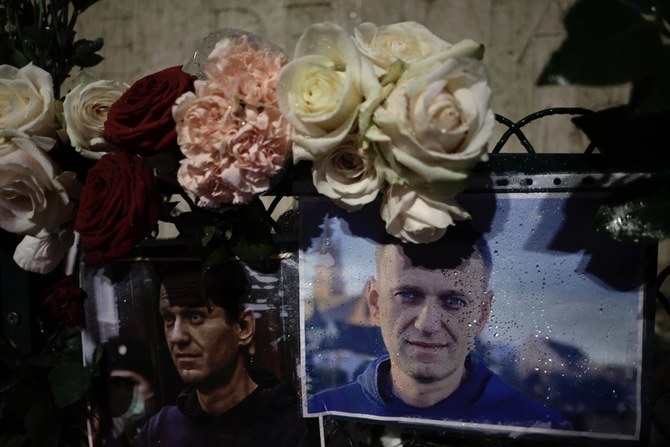
But in February 2024, just as the secret international talks were at a crucial stage, Navalny was pronounced dead at a notoriously brutal Russian Arctic prison, where he was serving a 19-year sentence after exposing Kremlin corruption.
Navalny was a larger-than-life figure whose bravery in confronting Putin, despite the deaths of multiple other Kremlin opponents over the years, amazed Russia watchers around the world.
After surviving an assassination attempt in which he was poisoned with a rare, Soviet-designed nerve agent, and then daring to return from safety in Germany to certain arrest in Russia, Navalny took on an aura of near-invincibility.
His sudden death behind bars shocked the White House team who had been trying to get the other prisoners home.
“The team felt like the wind had been taken out of our sails,” a senior US official told reporters.
When the news broke, national security chief Sullivan said he happened to be with the parents of one of the other key targets in the prisoner swap plan: Evan Gershkovich, a Wall Street Journal reporter arrested in Russia in March 2023.
“On the very day that he died, I saw Evan’s parents,” Sullivan said.
“I told them that the president was determined to get this done, even in light of that tragic news, and that we were going to work day and night to get to this day.”
And the plan worked.
On Thursday, the Western-chosen prisoners — including Gershkovich and a veteran Russian human rights campaigner — were flown to Turkiye and then home.
They also included two former aides to Navalny: Lilia Chanysheva, 42, and Ksenia Fadeyeva, 32.
The Russian-chosen prisoners — including a hitman and accused deep-cover spies — were flown to Moscow.
US Vice President Kamala Harris gave Navalny’s widow, Yulia Navalnaya, a call.
Harris, who is running to replace Biden in November, called “to dicuss the exchange and express her support,” Navalnaya spokeswoman Kira Yarmysh said on X.
And the Russian opposition figure’s widow urged efforts to get others out continue.
She “called on the international community to facilitate the release of other Russian political prisoners,” Yarmysh said.

US tried to get Navalny into Russia swap — but then he died
https://arab.news/4rwrb
US tried to get Navalny into Russia swap — but then he died
- Navalny was pronounced dead at a notoriously brutal Russian Arctic prison in February
Blacklisted naphtha tanker from Russia enters Venezuelan waters while another diverts, ship data shows
- Under U.S. sanctions related to Russia, the ship has a different sanctions profile than Skipper, the tanker that was seized by the U.S. on December 10
HOUSTON: A tanker subject to U.S. sanctions carrying some 300,000 barrels of naphtha from Russia entered Venezuelan waters late on Thursday, while another began redirecting course in the Atlantic Ocean, ship tracking data showed, a reflection of diverging last-minute decisions by ship owners after President Donald Trump ordered a "blockade" of oil tankers under sanctions bound for the OPEC country earlier this week.
The move ramped up pressure on Venezuelan president Nicolas Maduro by targeting the country's main source of income and followed the seizure by the U.S. of an oil tanker off the coast of Venezuela earlier in December.
Vessels that were not subject to sanctions began setting sail on Wednesday from Venezuelan waters after a week's pause, helping drain the country's mounting crude stocks.
Gambia-flagged medium tanker Hyperion docked on Friday at Amuay Bay on Venezuela's western coast, according to LSEG ship tracking data. It loaded near Murmansk in Russia in late November.
Under U.S. sanctions related to Russia, the ship has a different sanctions profile than Skipper, the tanker that was seized by the U.S. on December 10.
The U.S. can only seize vessels outside of its jurisdiction, or vessels that aren't heading to or from the country, if Washington has placed them under sanctions for links to groups it designates as terrorist, said David Tannenbaum, a director at consulting firm Blackstone Compliance Services that specializes in sanctions and anti-money laundering compliance.
Skipper, formerly called the Adisa, was under sanctions for what the U.S. says was involvement in Iranian oil trading that generated revenue for Iranian groups it has designated as foreign terrorist organizations.
With the Hyperion, though, sanctions were imposed to reduce Russian revenues from energy because of its war with Ukraine.
"The Hyperion doesn't have known ties to terrorism, and therefore unless they can prove it's subject to the jurisdiction of the U.S., Washington can't grab it extraterritorially," said Tannenbaum, who previously worked with the U.S. Treasury's Office of Foreign Assets Control that administers and enforces economic and trade sanctions.
REDIRECTS AND U-TURNS
The Angola-flagged Agate, another medium tanker under sanctions that loaded in Russia and had been sailing toward the Caribbean, was seen redirecting on Friday, according to LSEG ship tracking. The vessel was pointing towards Africa, but had not yet signaled a new destination.
Oman-flagged Garnet, also under sanctions and loaded in Russia, continued on its track, signaling the Caribbean as its destination on Friday.
Benin-flagged tanker Boltaris, under sanctions and carrying some 300,000 barrels of Russian naphtha bound for Venezuela, made a U-turn earlier this month and was heading for Europe without having discharged, according to LSEG vessel monitoring data.
Two very large crude carriers not subject to sanctions set sail for China on Thursday from Venezuela, according to sources familiar with Venezuela's oil export operations, marking only the second and third tankers unrelated to Chevron to depart the country since the U.S. seized Skipper.
The American oil major, which has continued to ship Venezuelan crude under a U.S. authorization, exported a crude cargo on Thursday bound for the U.S., LSEG data showed.
Secretary of State Marco Rubio on Friday said the U.S. was not concerned about the four vessels that sailed from Venezuela on Thursday, as those were not ships under sanctions.
"Sanctioned boats, we have the capabilities necessary to enforce our laws. We'll have a judicial order, we'll execute on those orders and there's nothing that will impede us from being able to do that," Rubio said.
Venezuela's government called Trump's blockade a "grotesque threat" in a statement on Tuesday, saying it violates international law, free commerce and the right of free navigation.


