Saudi health minister confirms success of Hajj health plans, no outbreaks recorded

1 / 4
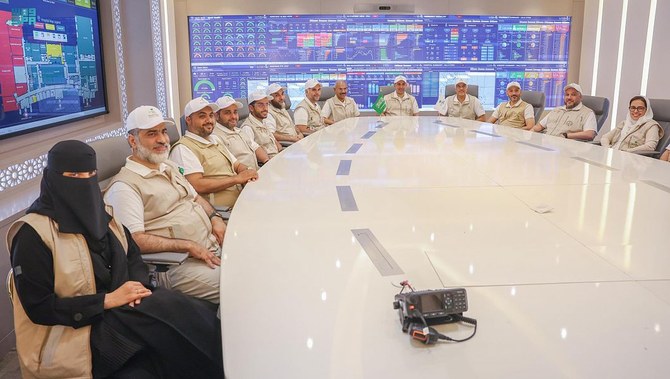
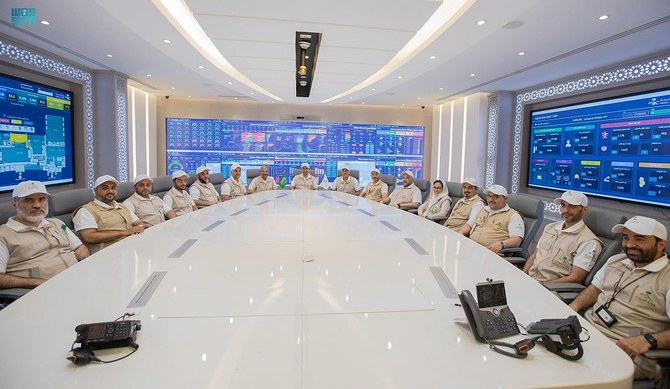
Saudi Minister of Health, Fahad Al-Jalajel attends a press conference at the Command and Control Center in Mina on June 30, 2023. (SPA)
2 / 4
Saudi Minister of Health, Fahad Al-Jalajel attends a press conference at the Command and Control Center in Mina on June 30, 2023. (SPA)
3 / 4
Saudi Minister of Health, Fahad Al-Jalajel attends a press conference at the Command and Control Center in Mina on June 30, 2023. (SPA)
4 / 4
Saudi Minister of Health, Fahad Al-Jalajel attends a press conference at the Command and Control Center in Mina on June 30, 2023. (SPA)
Short Url
Updated 01 July 2023
Follow

Saudi health minister confirms success of Hajj health plans, no outbreaks recorded

  • More than 400,000 pilgrims had received health care services during this year’s annual pilgrimage

JEDDAH: Saudi Arabia’s Minister of Health, Fahad Al-Jalajel, announced the success of the health plans for this year’s Hajj season and confirmed that there were no outbreaks or threats to public health, the Saudi Press Agency reported on Friday.
In a statement delivered from the Command and Control Center in Mina, Al-Jalajel said: “With the great support of the Custodian of the Two Holy Mosques and the follow-up of the crown prince and prime minister, I am pleased to announce the success of this year’s Hajj health plans and the absence of any outbreaks or threats to public health, witnessing the return of this seasons’ pilgrim numbers to what they were before the pandemic.”
The health minister praised the role played by the Supreme Hajj Committee, headed by Prince Abdulaziz bin Saud bin Naif, minister of interior, in overcoming all health challenges, extending his thanks to the Ministry of Interior for the effective contribution in implementing the health plans.
He also expressed appreciation for the tireless follow-up of Prince Khalid bin Faisal, governor of Makkah and chairman of the Central Hajj Committee, Prince Badr bin Sultan, deputy governor of Makkah and vice chairman of the Central Hajj Committee, and the Makkah Principality, which had an impact on achieving this success.
The minister attributed the success of the plans to the “integration among all government agencies and early preparedness for the Hajj season.”
Al-Jalajel said that based on the keenness of King Salman, “more than 354 health care facilities had been prepared to serve pilgrims, with help from more than 36,000 health cadres from all health sectors, supported by more than 7,600 volunteers.”
He added that more than 400,000 pilgrims had received health care services during this year’s annual pilgrimage, of which 50 underwent open heart surgery, 800 received cardiac catheters, and more than 1,600 had dialysis sessions.
Virtual health consultations through Seha Virtual Hospital, which uses the latest innovative technologies to provide specialized services and support health facilities in the Kingdom, were provided for 4,000 pilgrims, and 8,000 were treated for heat stress.
Al-Jalajel thanked all the sectors that cooperated in raising the health awareness of pilgrims and providing services to them, wishing them a happy return journey to their countries.


Saudi Arabia’s Sharaan and Wadi Nakhlah nature reserves win Dark Sky recognition

Updated 25 December 2025
Follow

Saudi Arabia’s Sharaan and Wadi Nakhlah nature reserves win Dark Sky recognition

  • The two reserves in AlUla join more than 250 locations worldwide that are protected from light pollution
  • AlUla Manara and AlGharameel Nature Reserve, also both in AlUla, received Dark Sky Park designations last year

ALULA: Two more nature reserves in Saudi Arabia’s AlUla have won recognition as Dark Sky Places, joining more than 250 locations worldwide that are protected from light pollution.

The official accreditation of Sharaan National Park and Wadi Nakhlah reserves from the DarkSky International builds on AlUla’s 2024 achievement, when AlUla Manara and AlGharameel Nature Reserve became the first sites in the Kingdom and the Gulf region to receive Dark Sky Park designations.

The latest recognition further strengthens AlUla’s position as a leading global destination for night sky protection and astronomical tourism, said the Royal Commission for AlUla (RCU) in a statement carried by the Saudi Press Agency (SPA).

Dark Sky International also announced the recognition in an earlier report, noting that the Sharaan and Wadi Nakhlah’s combined area of 6,146 square kilometers reflects the “expanded scope of environmental protection efforts aimed at preserving AlUla’s pristine night skies and reducing light pollution across a vast geographical area.”

DarkSky International works to reduce light pollution in both urban and rural areas and to raise global awareness of the importance of protecting the night sky.

AlUla’s natural isolation from urban light sources, combined with ideal atmospheric conditions, makes it a world-class destination for stargazing, astronomy education, and immersive dark-sky experiences.  (SPA)


AlUla’s protected areas are located in the heart of northwest Arabia, near the ancient oasis city of AlUla in Madinah Province.

“Towering sandstone cliffs, labyrinthine canyons, tranquil basins, and volcanic formations create a dramatic setting where geological diversity, cultural heritage, and thriving biodiversity converge beneath exceptionally dark, open skies,” Dark Sky said.

Scientists have noted that AlUla’s natural isolation from urban light sources, combined with ideal atmospheric conditions, makes it a world-class destination for stargazing, astronomy education, and immersive dark-sky experiences. 

With the phased development of its reserves, AlUla is now ranked 3rd globally in the Dark Sky Park category, solidifying its status as one of the world’s premier destinations for astronomical discovery.

The RCU reaffirmed its commitment to protecting the natural environment, preserving the night sky, and promoting sustainable tourism, further positioning AlUla as a leading global destination for astronomy, scientific research, and advanced environmental experiences, in line with AlUla Vision and the Kingdom’s Vision 2030.