

Amnesty accuses Spain and Morocco of cover-up over Melilla enclave migrant deaths

1 / 2
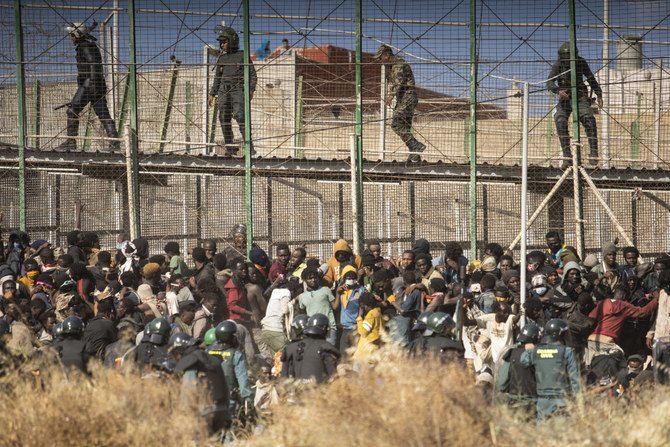
Riot police cordon off the area after migrants arrived on Spanish soil and crossed the fences separating the Spanish enclave of Melilla from Morocco, in Melilla, Spain, June 24, 2022. (AP file photo)
2 / 2
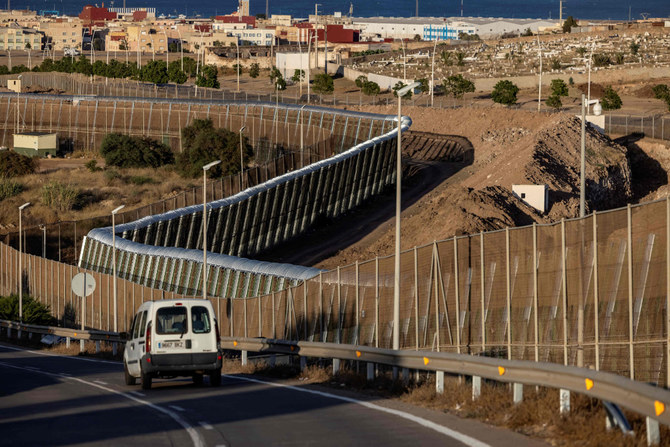
This picture taken on June 25, 2022 in Melilla shows the border between northern Morocco and the Spanish enclave, a day after at least 23 African migrants died in a bid by around 2000 people, mostly sub-Saharan African, to force their way into Europe. (AFP file photo)
Short Url
Updated 23 June 2023
Follow

Amnesty accuses Spain and Morocco of cover-up over Melilla enclave migrant deaths

  • At least 37 died and 76 went missing when around 2,000 Sub-Saharan African migrants and refugees attempted to enter Spain’s North African enclave of Melilla from Morocco on June 24, 2022

BARCELONA, Spain: Amnesty International on Friday accused Spain and Morocco of a cover-up for failing to properly investigate events at the border of the Spanish enclave of Melilla last year, when tens of migrants and refugees died during a mass attempted crossing.

On June 24 2002, around 2,000 Sub-Saharan African migrants and refugees attempted to enter Spain’s North African enclave from Morocco. At least 37 died and at least 76 are still missing, the NGO said.
Morocco said 23 people died in a crush when migrants fell from the fence, and Spain has said no deaths occurred on its soil.
“One year on from the carnage at Melilla, Spanish and Moroccan authorities not only continue to deny any responsibility but are preventing attempts to find the truth,” said Amnesty International’s Secretary General, Agnes Callamard.
Amnesty said authorities had failed to make any attempt to repatriate victims’ remains and had not provided a full list of names and causes of death, as well as CCTV footage which could inform an investigation.
“The lessons of Melilla must be learned or – as the shipwreck off the Greek coast shows – arbitrary loss of life, violence and impunity at borders will continue,” Callamard added.
A fishing boat packed with hundreds of migrants sank off Greece’s south-west coast earlier this month, on a journey that started from Libya and was supposed to end in Italy. At least 82 were killed and hundreds are still missing.
Spain’s Attorney General investigated the Melilla incident but declined to charge Spanish officers who he said had been unaware of the fatal crush. Spanish lawmakers rejected calls for a parliamentary inquiry.
The handling of the event by authorities on both sides of the border was criticized however by rights groups and independent investigators.
Spain’s ombudsman said Spain had returned those who jumped the fence without processing their cases and the UN’s Commissioner for Human Rights said they found “no genuine and effective access to asylum at the border.”
A spokesman for Spain’s Interior Ministry said the investigation by Spain’s Attorney General had been carried out “with full guarantees and in full depth.”
Authorities in Morocco declined a request for comment.

128 journalists killed worldwide in 2025: press group

Updated 35 sec ago
Follow

128 journalists killed worldwide in 2025: press group

  • The press group voiced particular alarm over the situation in the Palestinian territories, where it recorded 56 media professionals killed in 2025

BRUSSELS, Belgium: A total of 128 journalists were killed around the world in 2025, more than half of them in the Middle East, the International Federation of Journalists (IFJ) said Thursday.
The grim toll, up from 2024, “is not just a statistic, it’s a global red alert for our colleagues,” IFJ general secretary Anthony Bellanger told AFP.
The press group voiced particular alarm over the situation in the Palestinian territories, where it recorded 56 media professionals killed in 2025 as Israel’s war with Hamas ground on in Gaza.
“We’ve never seen anything like this: so many deaths in such a short time, in such a small area,” Bellanger said.
Journalists were also killed in Yemen, Ukraine, Sudan, Peru, India and elsewhere.
Bellanger condemned what he called “impunity” for those behind the attacks. “Without justice, it allows the killers of journalists to thrive,” he warned.
Meanwhile, the IFJ said that across the globe 533 journalists were currently in prison — a figure that has more than doubled over the past half-decade.
China once again topped the list as the worst jailer of reporters with 143 behind bars, including in Hong Kong, where authorities have been criticized by Western nations for imposing national security laws quashing dissent.
The IFJ’s count for the number of journalists killed is typically far higher than that of Reporters Without Borders, due to different counting methods. This year’s IFJ toll also included nine accidental deaths.
Reporters Without Borders said 67 journalists were killed in the course of their work this year, while UNESCO puts the figure at 93.