

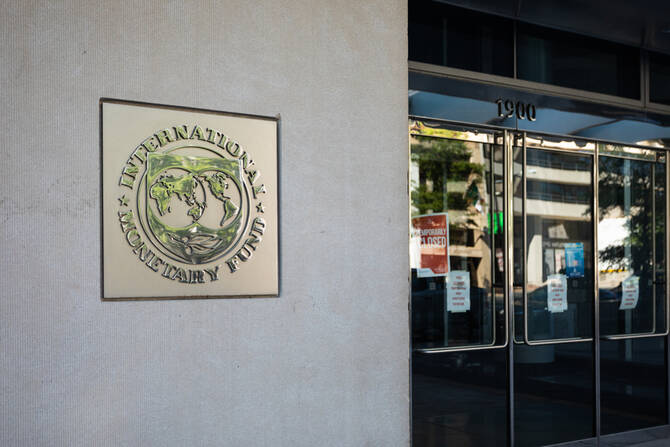

RIYADH: Saudi Arabia’s economy is holding up well despite the disruption caused by the ongoing conflict in the Middle East, according to the International Monetary Fund.
A team from organization, which visited the Kingdom from late April to mid-May, said the Kingdom’s strong fundamentals, low government debt, and ample foreign reserves, as well as a large sovereign wealth fund, have provided crucial buffers against the shock.
Quick action by authorities to reroute oil shipments via the East-West pipeline and Red Sea ports, combined with Aramco’s overseas inventories, helped limit the impact on oil deliveries after maritime traffic through the Strait of Hormuz was curtailed.
The Kingdom entered 2026 on a strong footing, having posted gross domestic product growth of 4.5 percent in 2025, driven by the unwinding of OPEC+ production cuts and solid domestic demand. Inflation had eased to below 2 percent heading into the year.
“The Saudi economy is demonstrating agility and resilience, supported by robust and diversified infrastructure and the authorities’ concerted efforts to redirect shipments and ease logistical bottlenecks,” said Azim Sadikov, who led the IMF mission.
In April, the fund revised down its 2026 growth forecast for Saudi Arabia to 3.1 percent amid a wider downgrade across the Middle East and North Africa.
It nevertheless upgraded its 2027 projection to 4.5 percent, anticipating a normalization of energy output and transport activity.
Despite the disruption, the IMF expects the economy to grow around 2 percent this year, assuming shipping through the Strait of Hormuz normalizes in the coming months.
High-frequency data already pointed to a stabilization in non-oil activity in April after a likely contraction in March, a sign the economy is finding its footing.
While lower production volumes may weigh on growth, higher oil prices are expected to partially mitigate the impact. The IMF also noted that the Kingdom’s banking sector remains well-positioned to absorb potential shocks, backed by robust capital and liquidity levels.
The fund also pointed to the longer-term benefits of Vision 2030, saying the reform program has, over the past decade, strengthened institutions, improved governance and policymaking, and helped diversify the economy away from oil.
“Sustaining the reform momentum to remove remaining impediments to diversification and to expand the role of the private sector will be key to maintaining strong growth prospects for the medium term,” Sadikov added.
The IMF welcomed a recalibrated strategy from the Public Investment Fund, which is shifting toward more selective capital allocation and greater private-sector involvement.
It added that maintaining growth momentum will require continued reforms to strengthen the business environment, further develop capital markets, support SMEs, and accelerate AI adoption, which it identified as key drivers of medium-term economic expansion.



