



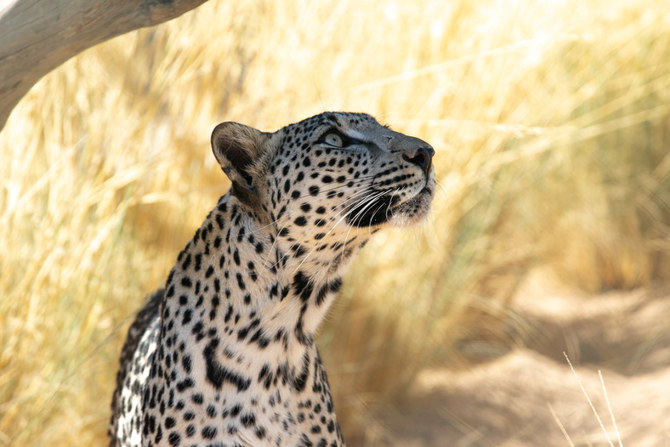

NEW YORK CITY: When the UN General Assembly voted this month to adopt a resolution designating Feb. 10 as International Day of the Arabian Leopard, Thomas S. Kaplan’s reaction was one of “absolute delight.”
The leopard has been etched into Saudi consciousness for thousands of years, he said, with the petroglyphs on AlUla’s ancient walls that depict the animal bearing witness to its significance to the Saudi people and their ancestors.
Having the importance of the Arabian Leopard now finally enshrined by the UN General Assembly is therefore “a major triumph for the Saudi people and for the Kingdom of Saudi Arabia itself,” Kaplan added during an exclusive interview with Arab News.
As co-founder of Panthera, the global wild cat conservation organization, and founder and chairperson of the Global Alliance for Wild Cats, Kaplan in 2019 signed an agreement with Prince Badr bin Abdullah, the Saudi minister of culture and governor of the Royal Commission for AlUla, to support regional and international conservation initiatives, at the heart of which is the Arabian Leopard Initiative to protect the critically endangered animal, which is indigenous to AlUla.
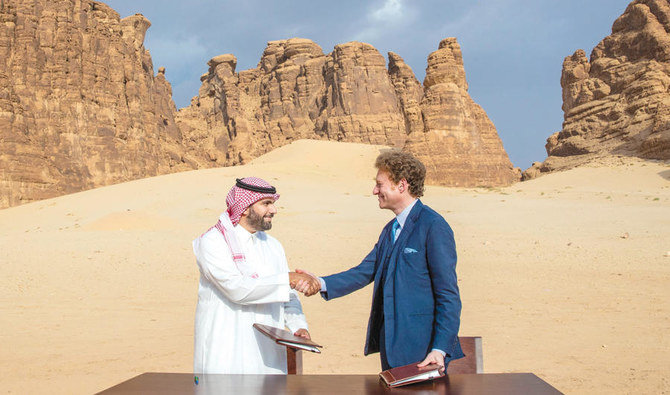
Prince Badr bin Abdullah bin Farhan, Saudi minister of culture and governor of the Royal Commission for Al-Ula, signing the cooperation agreement with Panthera Chairman Thomas Kaplan in AlUla in June 2019. (Supplied/File)
“The Arabian leopard is the most persecuted of all the big cats,” Kaplan said. “So having a champion like Saudi Arabia helping us to do the work that we do so passionately is really a gift from God.”
The UN resolution enshrining an International Day of the Arabian Leopard is “a clear win, both for the leopard and for the Kingdom,” he added.
“It is in many respects a beautiful affirmation of one of the most ambitious environmental and conservation initiatives in generations: The restoration of AlUla as a cultural center point for the new Saudi Arabia is complemented by one of the most significant environmental restoration programs in the world.”
Wild cats play a critical role in ecosystems. They are considered an “umbrella species” when making conservation-related decisions, because efforts to protect them also indirectly protect many other species. They represent “Apex Predator Strategy Opportunities.” What this means is that a thriving wild cat population can help ensure the survival of its entire habitat.
Even the human population can benefit when the animals thrive, because they help boost tourism and shine a light on local communities. In the case of Saudi Arabia, such communities can become important parts of the Kingdom’s broader development agenda, leading to better local amenities and opportunities.
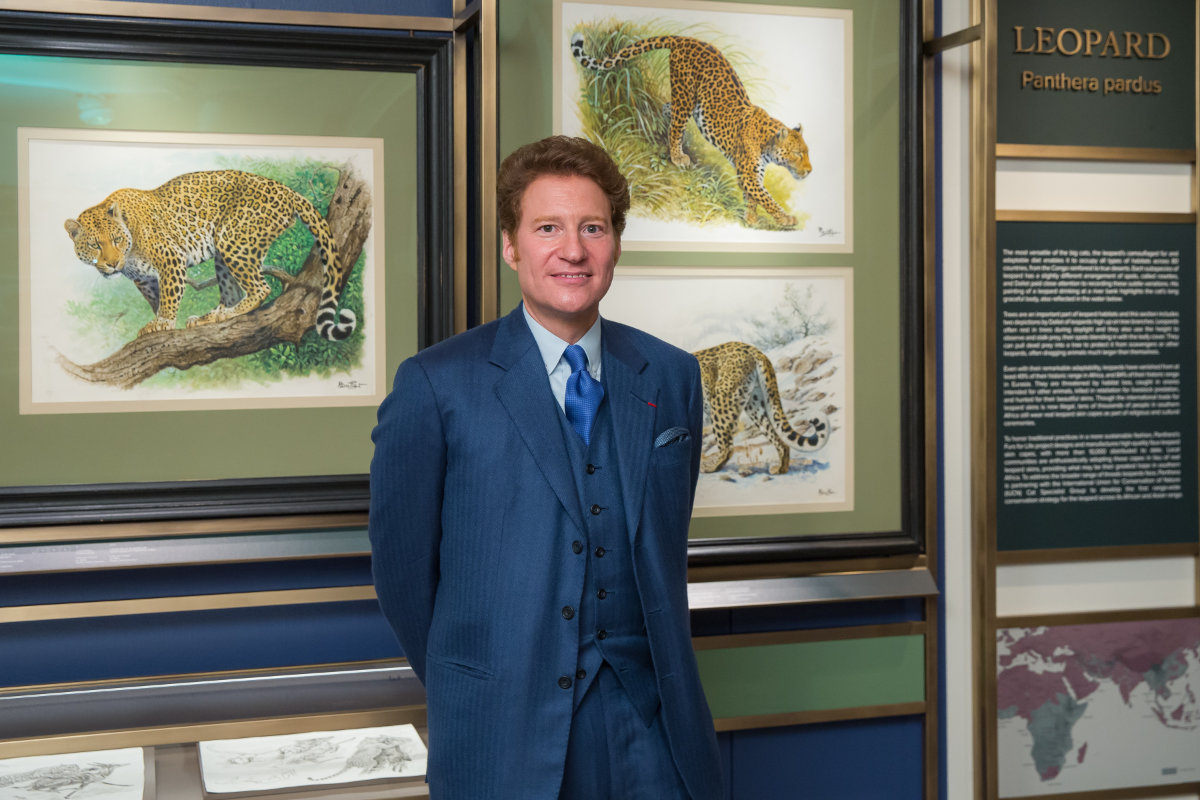
The UN recognition of the animal’s importance will help boost the efforts of conservationists to save the leopard, says Panthera Chairman Thomas Kaplan. (Courtesy of Matthew Carasella Photography)
“In places where we have gone in to save leopards or jaguars or other animals that are part of the local tourist industry, we have always brought with (us) increased medical attention, building schools, building clinics, (showing) the local communities that not only do they have nothing to fear, but they have everything to gain by a thriving cat population, (and that) because of the leopard, there will be socioeconomic opportunities for their children,” said Kaplan.
“If in its own way the Arabian Leopard Initiative is something that not only gives people national pride, but gives those who live in the same habitat as the leopard even greater opportunities for their children, then this is a huge win.
“So the success of the Arabian Leopard Initiative becomes a signal to the Kingdom, and to the rest of the world, that Saudi Arabia has been successful in restoring the landscape. For these reasons, I believe that AlUla is one of the most transformational initiatives in the preservation of cultural and environmental heritage for future generations.”
None of this would have been possible, he said, without “the passion and commitment” of Crown Prince Mohammed bin Salman; Prince Badr; and Princess Reema bint Salman, the Kingdom’s ambassador to the US.
“The revolution from above that has been implemented by the crown prince is the catalyst for all (the reforms that) followed, and the Arabian leopard is no exception,” said Kaplan.
“I have personal experience in engaging with the Crown Prince on the Arabian leopard and leopard conservation globally. He is truly committed not only to the Arabian leopard but also to advancing the cause of leopard conservation in other countries that are not necessarily playing catch-up like Saudi Arabia, but trying to stay ahead of the curve.
Regarding Prince Badr’s role, Kaplan said “everyone knows that (he is) the initiator of the Arabian leopard process. He is, in many respects, the father of the Arabian leopard program, for which I think he will go down in the history books.”
Kaplan also had nothing but praise of Princess Reema.
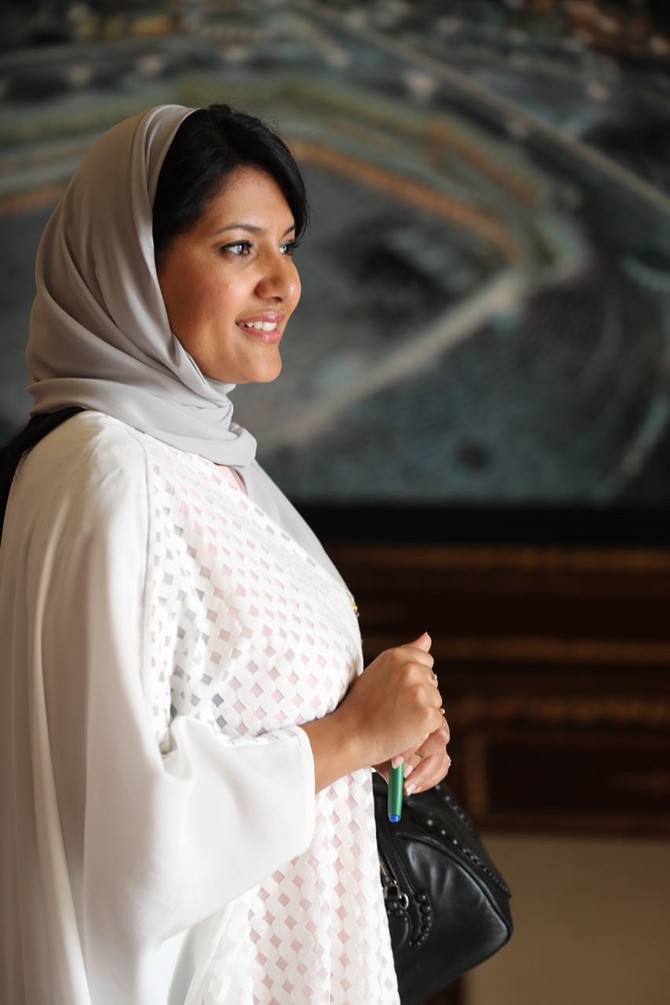
Princess Reema bint Bandar Al-Saud, Saudi ambassador to US, founded Catmosphere, a group dedicated to supporting big cat species worldwide. (AN file photo)
“Anyone who has come into contact with Princess Reema in Washington DC, or elsewhere, immediately is presented with the passion of what the Arabian leopard means for the Kingdom,” he said.
“It’s not simply because the Arabian leopard is, in my mind, to Saudi Arabia what the panda is to China, an instrument of soft power, it’s much more than that.
“The crown prince, Prince Badr and Princess Reema understand that the Arabian leopard is a symbol of national unity for Saudi Arabia. It is something that goes back thousands of years.”
The UN recognition of the animal’s importance will help boost the efforts of conservationists to save the leopard, Kaplan said.
“Being able to show the buy in of the international community allows us the freedom to show to environmental activists all over the world the significance of this initiative,” he added.
“It allows us to be able to evidence that the reintroduction of the Arabian leopard is real, that it has the full support of Saudi Arabia, that it is not some form of power exercise but it’s the product of passion.
“This in turn allows people such as myself on the international stage to be able to recruit the highest-quality experts to work with us in our field.”
Kaplan said the UN resolution will also aid the work of Saudi environmental and wildlife champions, including Catmosphere, a foundation established by Princess Reema to assist big-cat conservation efforts worldwide.
READ MORE: Saudi-led Catmosphere’s inaugural Catwalk raises awareness about wildlife conservation
“Catmosphere has the potential to be the most important cat-conservation awareness program ever undertaken, not simply in the Middle East, but globally, and that was originated by a Saudi, by Princess Reema,” he said.
“It’s an extraordinary story. The impact that it can have on cat conservation is very obvious but, at the same time, the impact that can have on our agenda, which is to get people to see the Arabian Leopard as being Saudi Arabia’s panda, as being a symbol of commitment to the best practices in wildlife conservation, this is absolutely enormous.”
“When you combine the work that Prince Badr is doing at the Royal Commission of AlUla with the work of Catmosphere, what you see is an organic, Saudi-generated initiative and campaign to save the Arabian leopard and, as the crown prince asked us to do, to be able to help countries around the world save their leopards, so that rather than playing catch-up, they’re getting ahead of the curve, and are not in the same situation.
“This is an act of generosity to the world, and it’s coming from Saudi Arabia.”

keywords


