



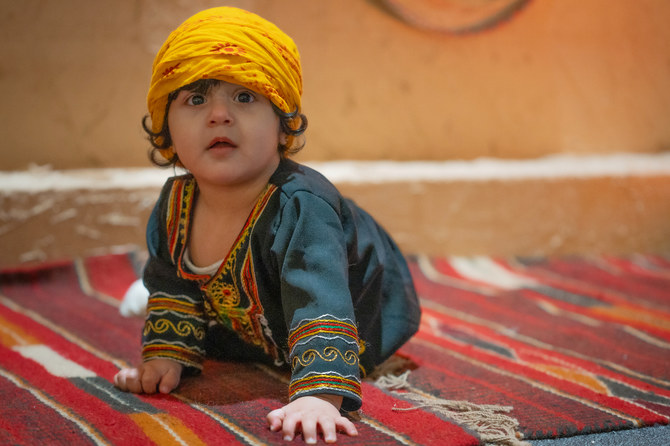


RIYADH: A handicrafts event in Riyadh is shedding light on local and international heritage passed down from one generation to the next.
Titled “Banan,” meaning fingertips in Arabic, the Saudi International Handicrafts Week is highlighting the community-building aspect of multinational crafts, including woodworking, blacksmithing, weaving and embroidery, among others.
The event, which kicked off on Tuesday, will run until June 12 at Riyadh Front.
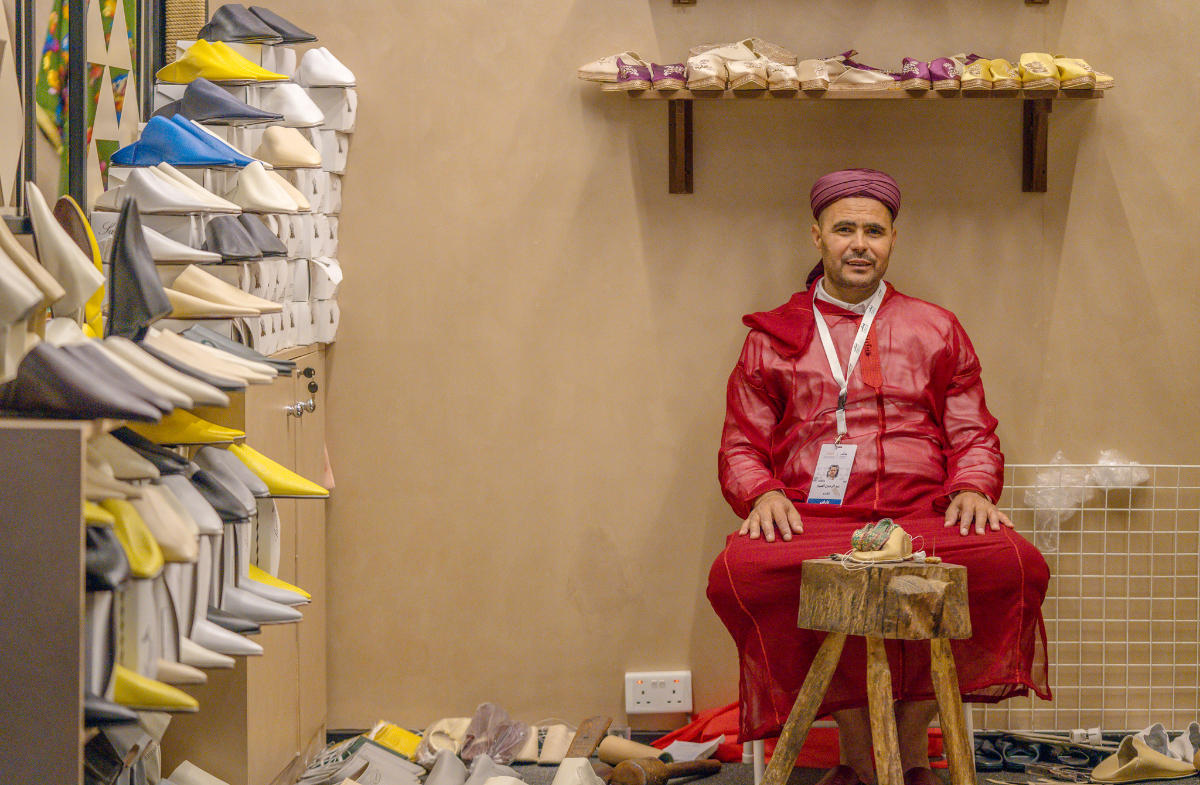
The event invites craft enthusiasts to engage in hands-on workshops. (AN photo by Huda Bashatah)
“There’s no doubt that handicrafts play an important part in economic and cultural projects, and are a factor for creating job and investment opportunities, in addition to their role in preserving cultural heritage and strengthening national identity,” Saudi Deputy Minister of Culture Hamed Fayez said.
The event also invites craft enthusiasts to engage in hands-on workshops throughout the week, gathering centuries of collective stories and legacies from across the globe in one platform.
From Mexico, Regina Velasco Marin and Alberto Lopez Gomez are highlighting the tradition of weaving, filigree design and openwork embroidery techniques using existing cotton materials, like clothing or drapes. The fabric is undone, and cotton threads are reused to create unique patterns and wearable pieces on a backstrap loom.
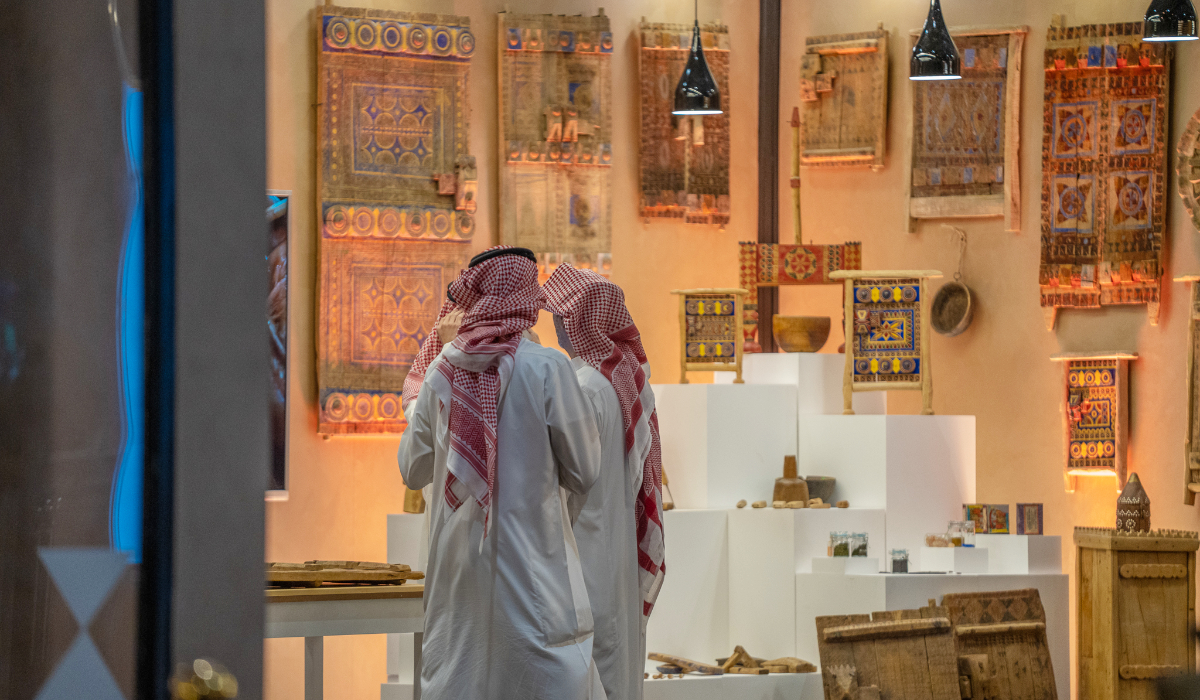
The event invites craft enthusiasts to engage in hands-on workshops. (AN photo by Huda Bashatah)
“I’m proud to be representing five generations of artisans, from my great grandmother to myself. It’s so surprising that my culture has expanded and reached Saudi Arabia. I’m very thankful to my mom for teaching me all of this, and I’m especially proud of her and my grandmother now that I’m here,” Marin told Arab News.
Pottery artist Zaki Al-Gharrash, from the Eastern region of the Kingdom, showcases the unique soil that characterizes the governorate of Al-Qatif and gives off the pale green hue in pottery production.
FASTFACT
Fahad Al-Shammary from Hail uses the stems of Saudi’s national treasures, palm trees, to craft unique doors for interior decorating and miniature ones for gifting.
“This was a hobby first that turned into a profession. If it wasn’t for my love and passion for it, I wouldn’t have kept pursuing it, because it is tiring,” Al-Gharrash said, demonstrating the elongated process, from extracting soil from deep underground, to drying out the product, then working it to clay.
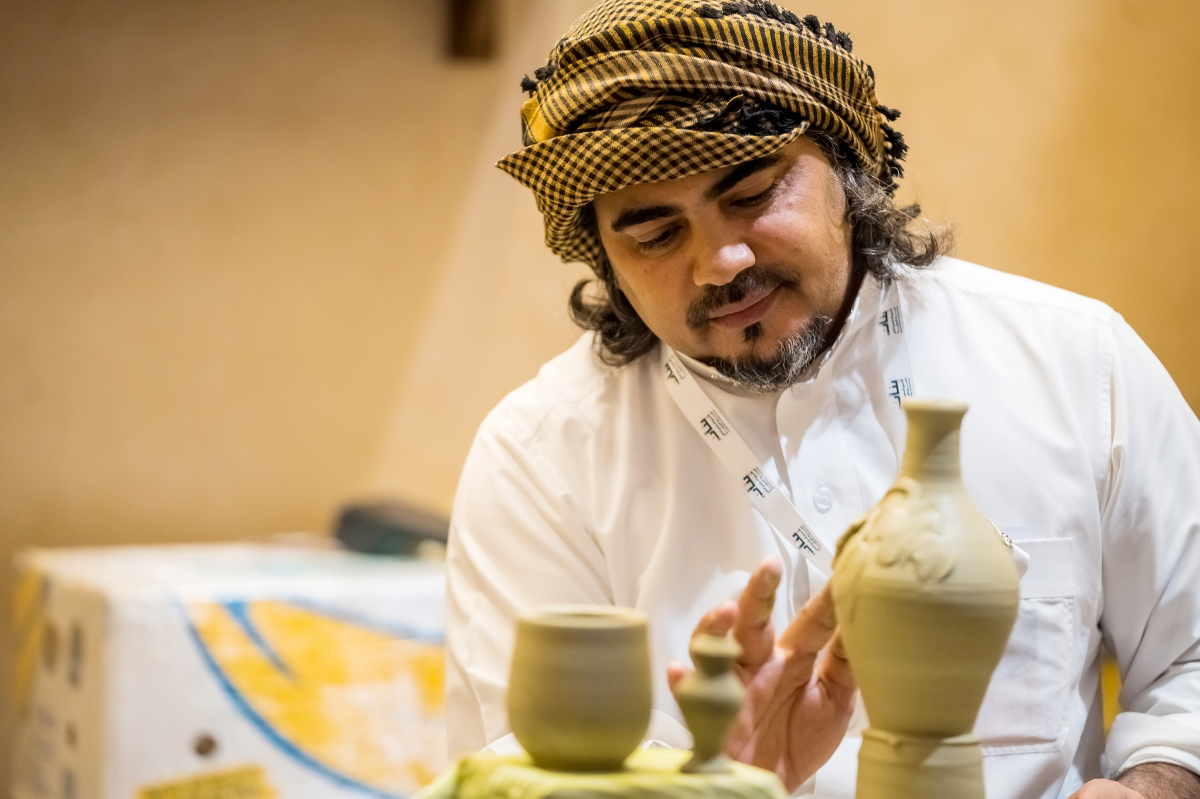
The event invites craft enthusiasts to engage in hands-on workshops. (AN photo by Huda Bashatah)
While his father, years ago, made clay pans and water coolers out of necessity, people now look for antiques, driving the craft’s demand. More people are also recognizing the benefits of drinking from clay cups.
“(It) actually revives its qualities, making water more alkaline and healthier for humans, and gives it life again after it dies in plastic. It also keeps it cool, especially in the desert,” the artisan said.
While the profession has become commercialized, it takes an artisan to preserve the unique qualities of pottery during production.
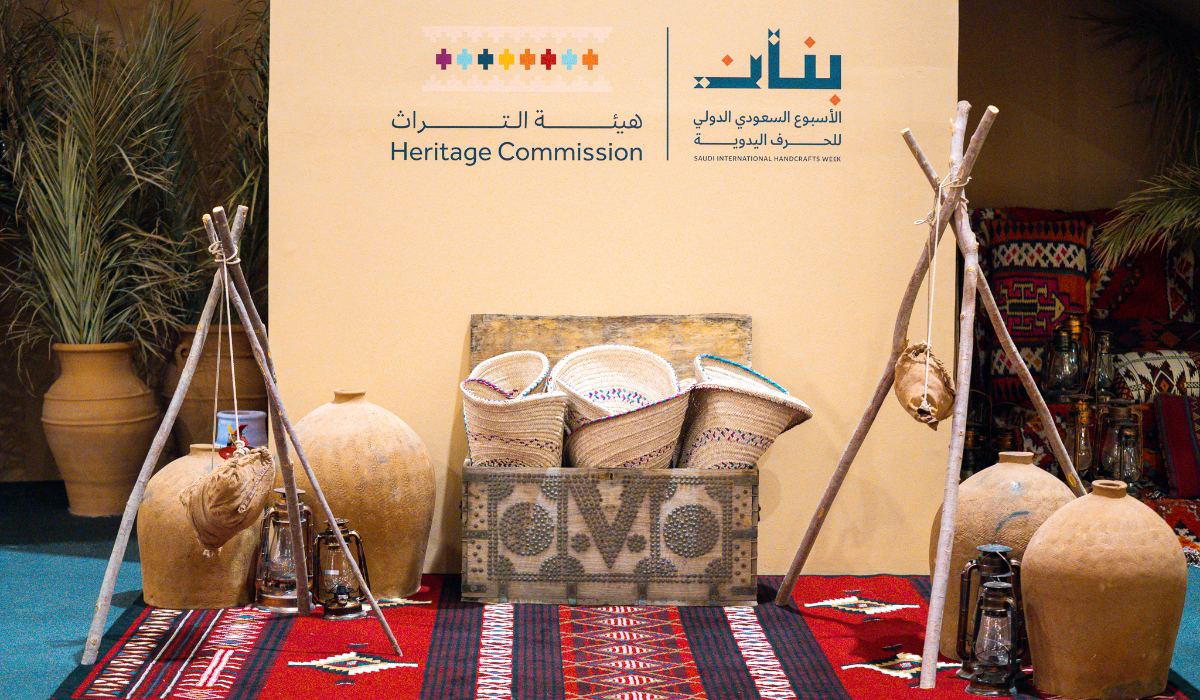
The event invites craft enthusiasts to engage in hands-on workshops. (AN photo by Huda Bashatah)
Fahad Al-Shammary from Hail uses the stems of Saudi’s national treasures, palm trees, to craft unique doors for interior decorating and miniature ones for gifting. Utilizing the abundance of palms on his family farm, he has managed to take part in a profitable hobby for 15 years and counting.
“This event brings together all the cultures of the north, south, east, and west and its heritage … it’s our ancestor’s, so we have to preserve it,” he said.
Banan is an opportunity for artisans to educate others on the history of their regions and also sell their products through 11 sections of the space.
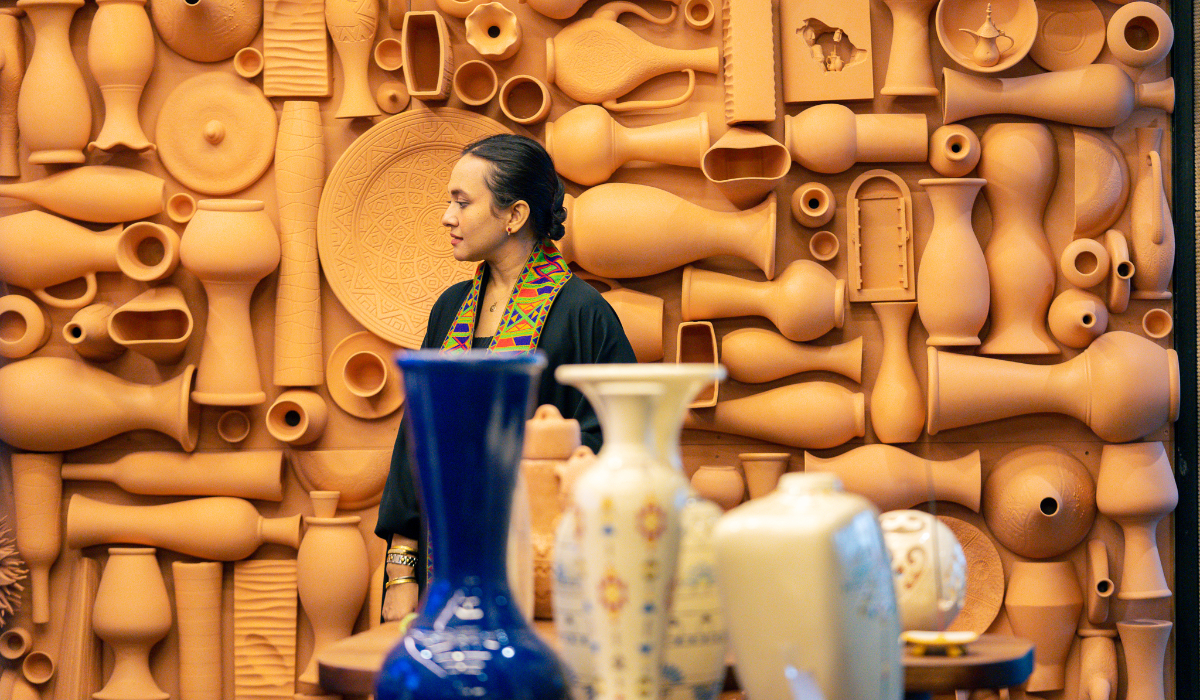
The event invites craft enthusiasts to engage in hands-on workshops. (AN photo by Huda Bashatah)
Italian handcraft store Lisa Tibaldi Terra Mia attracts customers with the charm of its story. The store’s modern jewelry utilizes plants sourced from the Aurunca land, located between Naples and Rome. “After a (special process), they can be made into a jewel, into a semi-precious material,” Ludovica Zanon, a representative of the business, told Arab News.
The store also carries a collection of authentic silk scarves influenced by the natural palette of the region, with some of the collections delicately printed in native butterflies and ocean waves. A home decor line by Lisa Tibaldi Terra Mia also champions sustainability using 3D printing and biodegradable organic materials.
Zanon said: “Our vision is in strict contact with our territory, so we like to make and craft all our things (sustainably) in Italy because we want to help our territory and make it valuable and not waste our land.
“It’s (very emotional) for me to come here and represent my country and city because Aurunca land is a small territory between Rome and Naples, so it’s important to us to bring our land here and be proud of that.”


