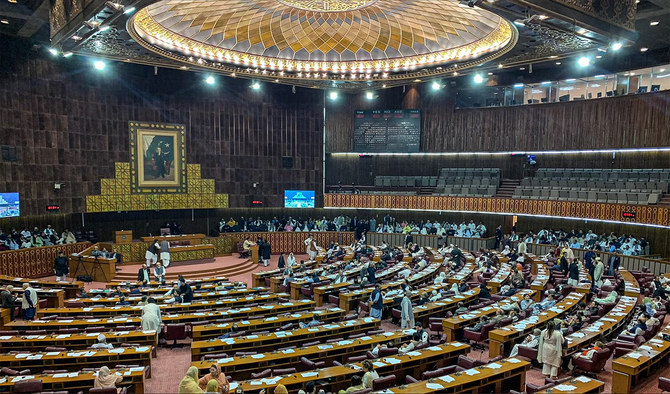

ISLAMABAD: Prime Minister Shehbaz Sharif said on Monday the budget for fiscal year 2023-24, due to be presented on June 9, would bring economic prosperity, business friendly policies and public welfare to the country, as an International Monetary Fund bailout deal remains elusive after months of talks.
Millions of Pakistanis are struggling to cope as Pakistan's annual inflation rate rose to 37.97% in May, setting a national record for the second month in a row and adding to the South Asian nation's problems of a balance of payment crisis and the risk of a sovereign default. Inflation has been on an upward trend since early this year after the government took painful measures as part of fiscal adjustments demanded by the IMF to unlock stalled funding.
The IMF demands include the withdrawal of subsidies, a hike in energy prices, a market-based exchange rate and new taxation to generate extra revenue in a supplementary budget.
Islamabad says it has met the demands, but the IMF has yet to release the $1.1 billion funding stalled since November as part of the $6.5 billion Extended Fund Facility agreed in 2019.
The funding is critical for Pakistan to unlock other bilateral and multilateral financing. The IMF program is set to expire on June 30 this year.
“The central point of the fiscal year 2023-24 budget is going to be economic prosperity, public welfare and business friendly policies,” the prime minister said in a statement, as he approved increasing the Public Sector Development Program (PSDP) from Rs700 billion to Rs950 billion to boost growth and create job opportunities.
The statement came after the prime minister held a detailed meeting with coalition partners in Islamabad to incorporate their proposals in the upcoming budget.
“The government is endeavouring to ensure prudent utilisation of all available resources despite economic challenges,” he said, promising to allocate a “sufficient amount” for those affected by floods last year and start a flood response program to deal with the disaster in future.
Floods from record monsoon rains in Pakistan and glacial melt in the country’s mountainous north last year affected 33 million people and killed over 1,500, washing away homes, roads, railways, bridges, livestock and crops in damage estimated at $30 billion.
Separately, the Prime Minister’s Coordinator for Economy and Energy, Bilal Azhar Kayani, told Arab News Sharif’s government would be presenting a “pro-investor and pro-poor budget.”
He declined to share the total outlay of the budget or its revenue and taxation targets, saying: “These details will be revealed in the National Assembly on the budget day.”
He said finance ministry officials, including Finance Minister Senator Ishaq Dar, were meeting all stakeholders, including industrialists and professionals, to get their input on the budget: “We will be trying to entertain proposals of all stakeholders to make an investor friendly budget.”
Economists said the country’s net federal receipts were not sufficient to even pay for the markup and the government had to take domestic and foreign loans to bear all expenditures.
“Pakistan’s budget is in serious distress and in need of serious repair,” Dr Khaqan Hassan Najeeb, a former economic adviser to the government, told Arab News.
He said that a look at the budget of FY-23 would reveal that Pakistan’s net federal receipts with the federal government would not be sufficient to even pay for the markup which had risen from the budgeted amount of Rs 3900 billion to Rs 5300 billion.
“It is unfortunate that all other expenditures would have to be borne by taking domestic and foreign loans,” he said, adding that the same fact would become even larger as the markup payment for the FY-24 budget would be much bigger considering the rise of the policy rate to 21 percent.
“The borrowing needs would be higher without meaningful expenditure and tax reforms,” Najeeb said. “Without containment of a fiscal deficit to near 5 percent of GDP on a permanent basis Pakistan’s fiscal and debt sustainability will never be ensured.”
The Federation of Pakistan Chambers of Commerce and Industry (FPCCI) suggested the government ensure tax reforms in the country and add new taxpayers to boost revenue.
“The taxation system in Pakistan contributes less than 10 percent of the GDP to the national exchequer, indicating that it is not balanced, broad-based and simplified,” Irfan Iqbal Sheikh, President FPCCI, told Arab News.
The taxation system's heavy reliance on indirect taxation and surcharges was damaging the economy, he said, adding that taxes were insufficient for debt servicing, defence, social welfare and public-sector development programs.
Sheikh said the upcoming federal budget was a golden opportunity for the government and the business community alike to agree upon and introduce budgetary measures and policies to enable industrial growth in Pakistan, explore avenues for import substitution and revive sick units through targeted, phased and result-oriented fiscal measures.
“Industrialization is the key to wealth creation and reversing the trend of dwindling per capita income in the country; bridge trade deficit and create employment in these difficult times,” he said.
“We can only have healthy foreign exchange reserves on a sustainable basis if our industry earns substantive sums in a number of industrial sectors like many of our regional and sub-regional countries.”