

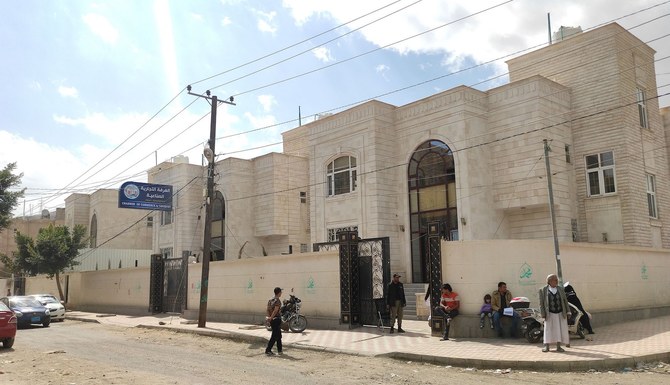

AL-MUKALLA: The Iran-backed Houthis have dismissed the leaders of Sanaa’s Chamber of Commerce and Industry, days after the chamber issued a strongly worded statement condemning the militia’s harsh measures against the private sector in areas under their control.
Yemeni government officials and local activists said that armed Houthis stormed the chamber building in Sanaa and replaced the chamber’s chief and his deputy with allies.
In a rare recent statement, the Federation of Yemeni Chambers of Commerce and Industry and the Sanaa Chamber of Commerce and Industry accused the Houthis of imposing a price list without their consent, preventing traders’ goods from entering the militia’s territories, allowing those goods to rot, and selling them without telling traders.
The two merchant unions also stated that the Houthis shut down businesses without providing any justification and delayed for months the issuance of new business licenses or the renewal of existing licenses.
Some Yemenis claim that the Houthis have never tolerated criticism, and punished the Sanaa chamber leader and his deputy by replacing them with “inexperienced” loyalists. They also assert that chambers of commerce executives are elected by members and not appointed by the state.
The Houthis’ severe policies, according to many Yemenis, are aimed at favoring the militia’s parallel business and trade sectors, warning that a collapse of the private sector in densely populated areas under its control would exacerbate the humanitarian situation and result in people starving.
“This perilous step confirms the Houthi militia’s continued implementation of its plan to destroy the private sector and eliminate commercial houses in areas under its control in favor of companies and investors loyal to it,” Yemen’s Information Minister Muammar Al-Eryani said in a tweet.
At the same time, Yemen’s Interior Ministry said the Houthis demolished a house belonging to Maj. Gen. Abdullah Yahyia Jaber, the deputy interior minister, in Sanaa’s Geraf neighborhood, the latest in a series of such actions.
Jaber is one of hundreds of Yemeni politicians, officials, military and security officers, journalists, and others who fled Sanaa following the Houthi military takeover in late 2014. The Houthis condemned them in absentia and confiscated their homes and other properties, turning a few into detention facilities, handing some to supporters, and selling others.
The Houthis also blew up the home of Ali Ahmed Al-Hejazi, a pro-government tribal leader in Marib’s Serwah area, over the weekend.
“The group has a lengthy history of murdering, kidnapping, displacing, bombing homes, recruiting children, and kidnapping women, among other crimes,” the Yemeni Network for Rights and Freedoms said in a statement, adding that the Houthis have blown up more than 700 of their opponents’ homes since early 2015.


