ISLAMABAD: Pakistani aerospace engineer Dr. Sarah Qureshi, who has been granted patents in the United States and United Kingdom for her groundbreaking work on jet engines that control excessive noise emissions, hopes to collaborate next with Saudi Arabia to advance her work, inspired by transformative progress in the Kingdom under its Vision 2030.
Qureshi, an aerospace engineer and licensed pilot, grew up in the capital of Pakistan, Islamabad, where her parents were prominent scientists. With the help of her late father Masood Latif Qureshi, she co-founded Aero Engine Craft Private Limited, Pakistan‘s first commercial engine and aircraft R&D company developing environmentally safe contrail-free aircraft engines designed to reduce aviation-induced global warming.
Qureshi holds a PhD in aerospace propulsion from Cranfield University in the UK and has accumulated over 70 hours of flying experience.
Three of her engines have received UK and USA patents. Two are climate friendly jet engines patented in 2021 and the other is a supersonic jet engine patented this year.
“My design successfully achieves a significant reduction in noise levels, while also delivering exceptional performance in terms of speed and efficiency,” she told Arab News in an interview this week, speaking about her latest design which she described as marking a “crucial milestone in aviation,” addressing the issue of excessive noise generation that has placed limitations on previous engines.
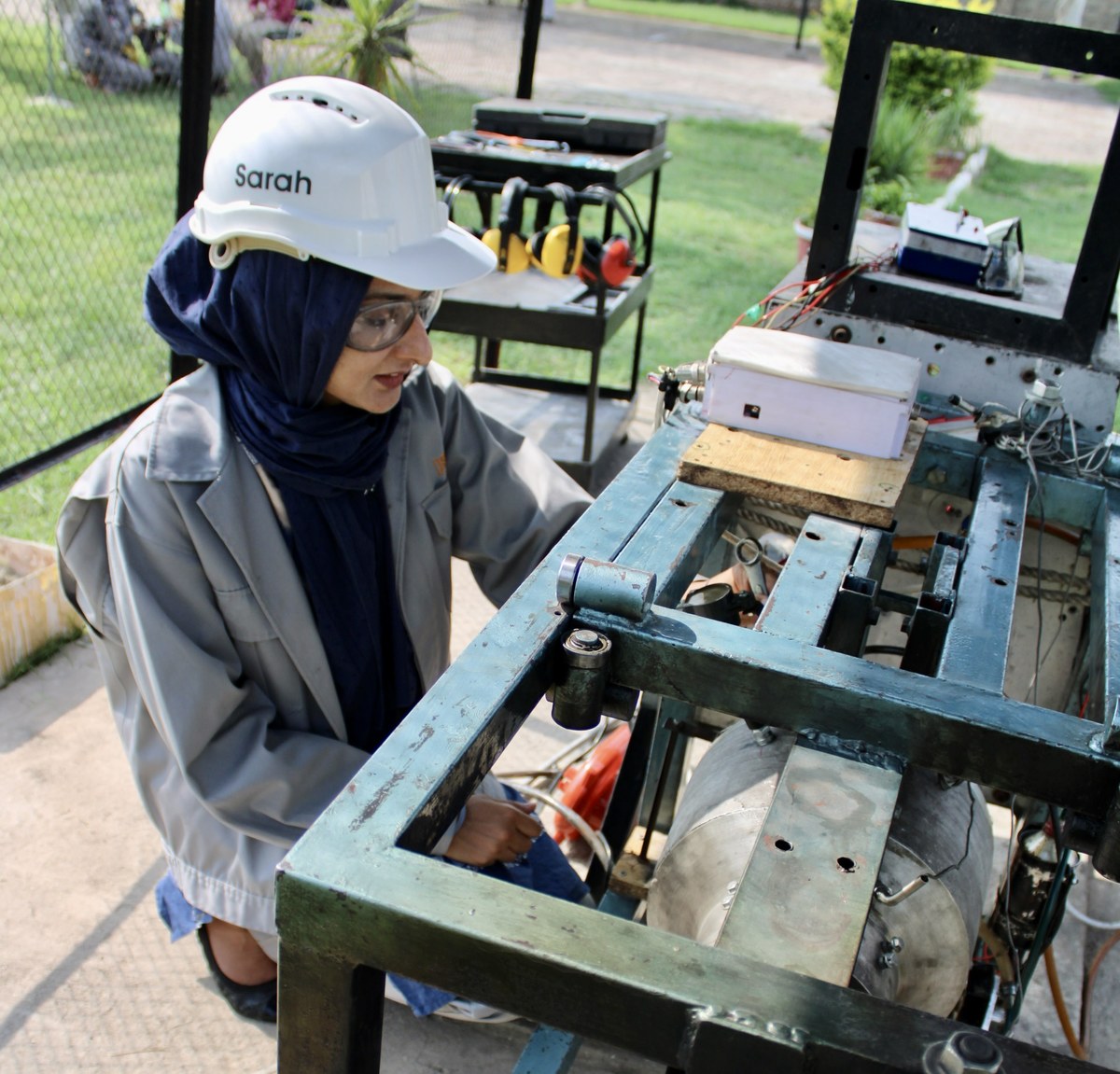
Pakistani aerospace engineer Dr. Sarah Qureshi is working at the Aero Engine Craft site in Islamabad, Pakistan, on July 1, 2022. (Photo courtesy: Dr. Sarah Qureshi)
After receiving a patent from the United States in March this year, Qureshi now has three patents, two of which bear her father’s name.
As the scientist seeks international investment to advance her project, she hopes Saudi Arabia would contribute, especially under Saudi prime minister and Crown Prince Muhammad bin Salman’s Vision 2030 to diversify the economy away from oil.
“I would like to collaborate with Islamic countries such as Saudi Arabia because I have witnessed the transformative changes brought about by Saudi Arabia’s Vision 2030,” Qureshi said.
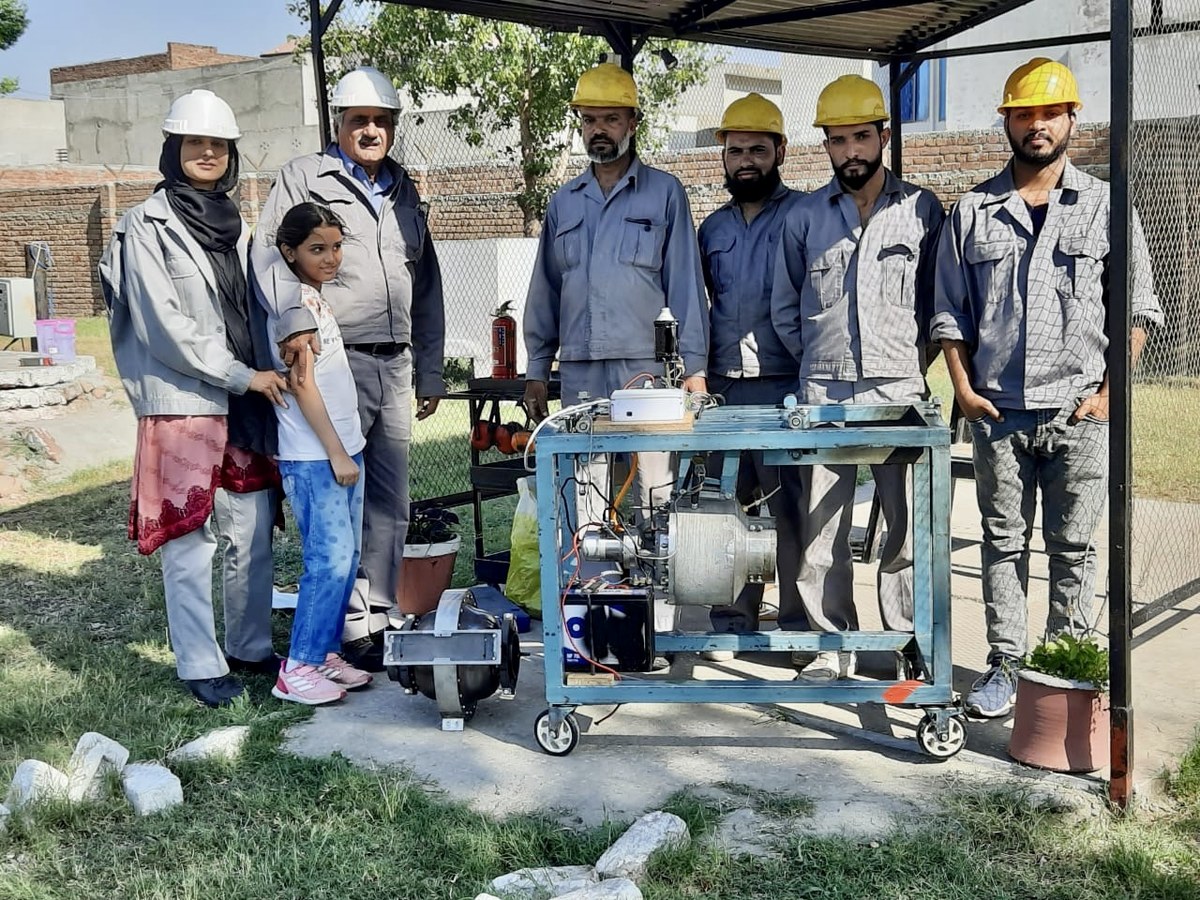
Pakistani aerospace engineer Dr. Sarah Qureshi is working at the Aero Engine Craft site in Islamabad, Pakistan, on July 1, 2022. (Photo courtesy: Dr. Sarah Qureshi)
“I have observed remarkable progress, such as the historic achievement of a Saudi woman going to space, and the growing recognition and empowerment of Arab women across various domains.”
Speaking about her company, Qureshi said it had been developing engines on a “small scale” thus far.
The first phase of any invention involved creating a prototype, which was then scaled into an actual model after successful testing, she explained.
“We have already constructed and tested a small-scale model,” Qureshi said, “and we have also developed a jet engine.”
The engineer said she owed her success to her parents, who had encouraged her to be confident and have her own identity.
“Thanks to my father and mother, I have a natural inclination toward machines, inventions, and science,” Qureshi said.
Her message for other women who wanted to pursue science?
“Each person is blessed in their own way. Identify your goals and focus on them, leaving everything else behind.”