

Saudi airports witness 42% rise in passengers in first 4 months of 2023

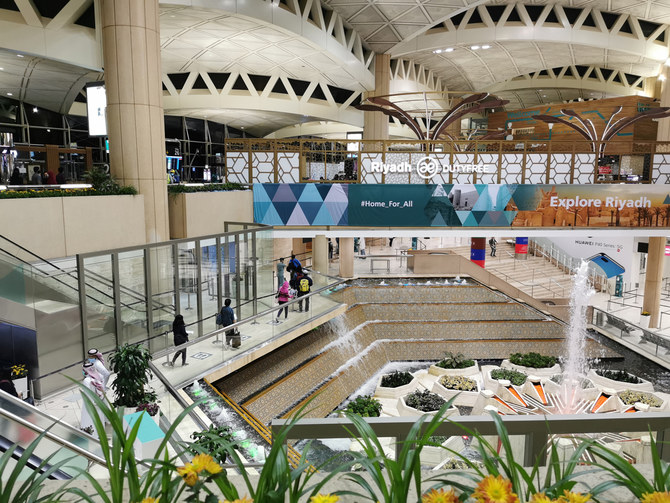
The Kingdom’s airports also witnessed a marked increase in air traffic during 2023 compared to pre-pandemic levels, growing at a rate of 6.2 percent compared to the same period in 2019. (Shutterstock)
Short Url
Updated 23 May 2023
Follow

Saudi airports witness 42% rise in passengers in first 4 months of 2023

RIYADH: Fueled by significant growth in the Saudi travel and tourism sector, air traffic witnessed a strong rebound during the first four months of 2023, recording a 42 percent increase in the number of passengers compared to the same period last year.

According to the latest report issued by the General Authority of Civil Aviation, the number of passengers jumped to 35.8 million in the first four months of 2023, up from 25.3 million during the same period last year.

The Kingdom’s airports also witnessed a marked increase in air traffic during 2023 compared to pre-pandemic levels, growing at a rate of 6.2 percent compared to the same period in 2019.

Passenger volume reached about 35.8 million compared to the same period in 2019, when it recorded 33.7 million. 

The number of flights, on the other hand, increased by 23.5 percent reaching approximately 263,000, up from 212,500 flights during the same period last year. 

On the domestic front, the number of passengers increased by 6.7 percent in the first four months of 2023, reaching 16.3 million, up from 15.3 million during the same period last year.

The number of passengers on international flights showed a remarkable jump, surging by 95.5 percent to 19.5 million, up from 10 million passengers in the same period last year. 

In a further boost to the aviation industry, Crown Prince Mohammed bin Salman announced the launch of a new airline, Riyadh Air, which is wholly owned by the Public Investment Fund.

The Kingdom also achieved another milestone in line with its National Aviation Strategy by launching a project to develop and expand Al-Ahsa International Airport and expand its capacity by 250 percent to reach 1 million passengers annually. 

The Kingdom also scored well in the aviation security audit and was placed seventh among the G20 countries in this category. 

The evaluation results by Skytrax, an international air transport organization, showed that the Kingdom’s airports continued to advance in the rankings of the 50 best airports in the world. 

In keeping with its impressive track record, King Fahd International Airport has been named the best regional airport in the Middle East for the second year in a row. Meanwhile, King Khalid International Airport in Riyadh advanced to 27th place from 44th, and King Abdulaziz International Airport in Jeddah reached 41st from 44th.


Post-break return of students drives surge in education spending, SAMA data shows

Updated 10 sec ago
Follow

Post-break return of students drives surge in education spending, SAMA data shows

RIYADH: Spending on education in Saudi Arabia increased by 141.1 percent for the week ending Jan. 24, as students returned to the classroom after the mid-year break.

This was accompanied by a 7 percent increase in spending on books and stationery, which reached SR146.17 million ($38.9 million).

According to the latest data from the Saudi Central Bank, the over POS value dropped 10.6 percent to SR12.52 billion, with transactions representing a 9.7 percent week-on-week decrease to 213.62 million.

This week saw negative changes across all the remaining sectors. Spending on bakeries and pastries saw an 18.4 percent decline to SR229.71 million, while gas stations saw an 11 percent drop. Professional and business services decreased by 11.6 percent.

Expenditure on apparel and clothing fell by 19.7 percent to SR985.94 million, followed by a 2.8 percent drop in spending on jewelry.

Spending on car rentals in the Kingdom fell by 14.7 percent, while airlines saw a 9.3 percent decrease to SR38.16 million.

Expenditure on food and beverages saw a 7.9 percent decline to SR1.88 billion, claiming the largest share of the POS. Restaurants and cafes retained the second position despite an 18.5 percent decrease to SR1.50 billion.

Geographically, Riyadh accounted for the largest share of total POS spending, but still saw a 6 percent dip to SR4.46 billion, down from SR4.74 billion the previous week. The number of transactions in the capital settled at 69.07 million, down 6.8 percent week on week.

In Jeddah, transaction values decreased by 13.6 percent to SR1.75 billion, while Dammam reported a 4.8 percent decrease to SR640.59 million.

POS data, tracked weekly by SAMA, provides an indicator of consumer spending trends and the ongoing growth of digital payments in Saudi Arabia. 

The data also highlights the expanding reach of POS infrastructure, extending beyond major retail hubs to smaller cities and service sectors, supporting broader digital inclusion initiatives. 

The growth of digital payment technologies aligns with the Kingdom’s Vision 2030 objectives, promoting electronic transactions and contributing to the Kingdom’s broader digital economy.