JUBA: Tens of thousands of refugees who escaped ethnic violence in Ethiopia’s Tigray find themselves trapped in neighboring Sudan, once a safe haven for the region’s displaced, now itself the site of a worsening humanitarian emergency.
Adise Gemechu, an Ethiopian refugee and a mother of two children who has lived in Khartoum since leaving her native Tigray, says the Sudanese capital is in a state of chaos. “There are airstrikes. It’s terrible,” she told Arab News.
“We’ve closed our doors and are in the house. The children cry if I open the doors.”
Now over a month since Sudan’s conflict erupted, Khartoum has become a war zone, with families huddling at home as gun battles rage in the streets. Meanwhile, the western region of Darfur has descended into chaos.
Residents of Khartoum, a city of 5 million, have endured weeks of food shortages, power blackouts, communications outages and runaway inflation. Foreign embassies have suspended operations and hospitals, banks, shops and wheat silos have been ransacked by looters.
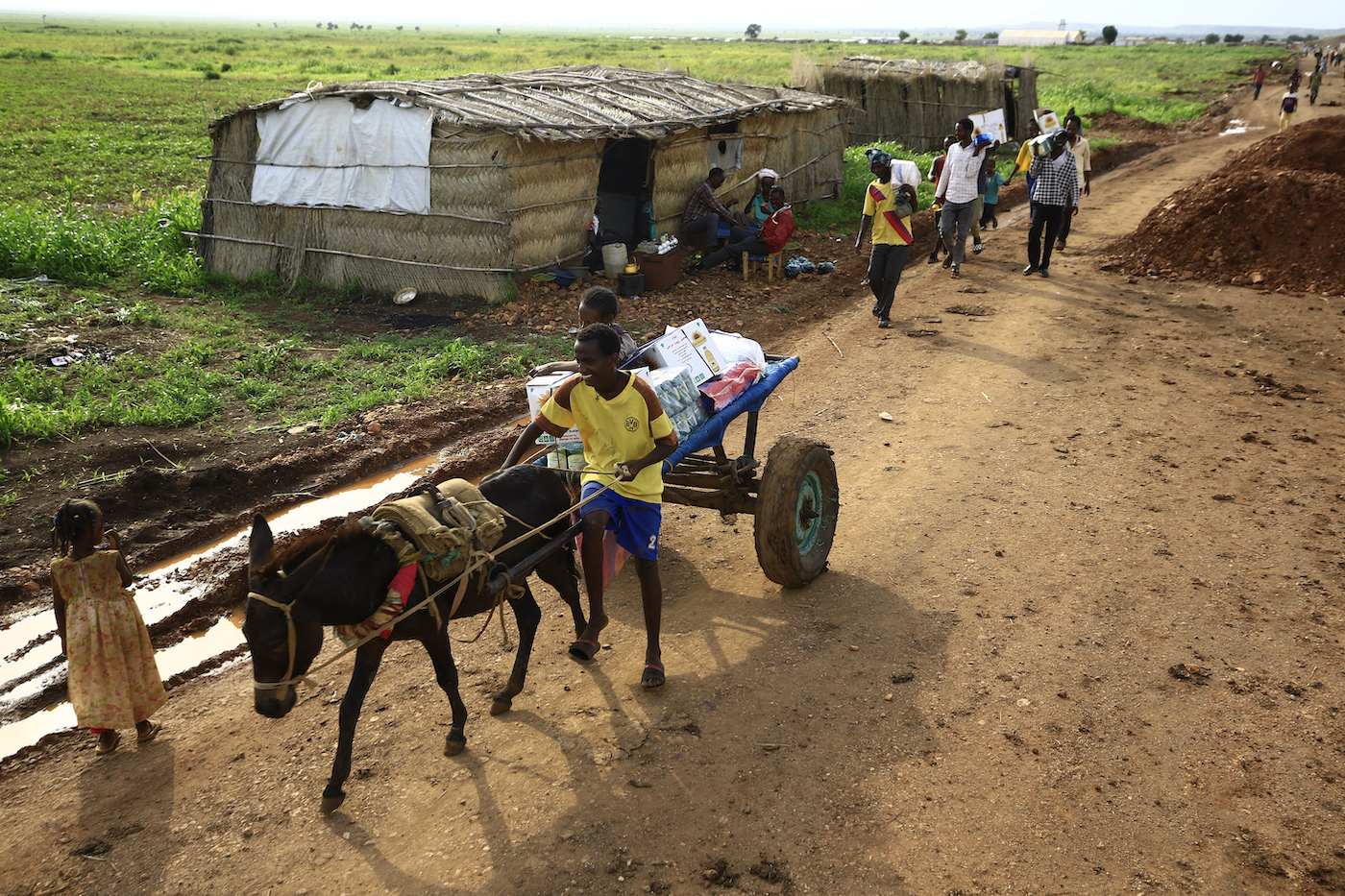
Ethiopian refugees who fled the fighting in the Tigray region transport merchandise using a donkey-pulled cart, at Umm Rakuba camp in eastern Sudan’s Gedaref State. (File/AFP)
Around 1,000 people have been killed, mainly in and around Khartoum as well as the ravaged state of West Darfur, according to medics. Saudi Arabia has hosted envoys from both sides in a bid to halt the conflict and allow humanitarian access.
In addition to the threat of being caught in the crossfire, refugees who remain in Sudan face significant difficulties accessing food, with many families forced to limit their meals to just one per day owing to scarcity.
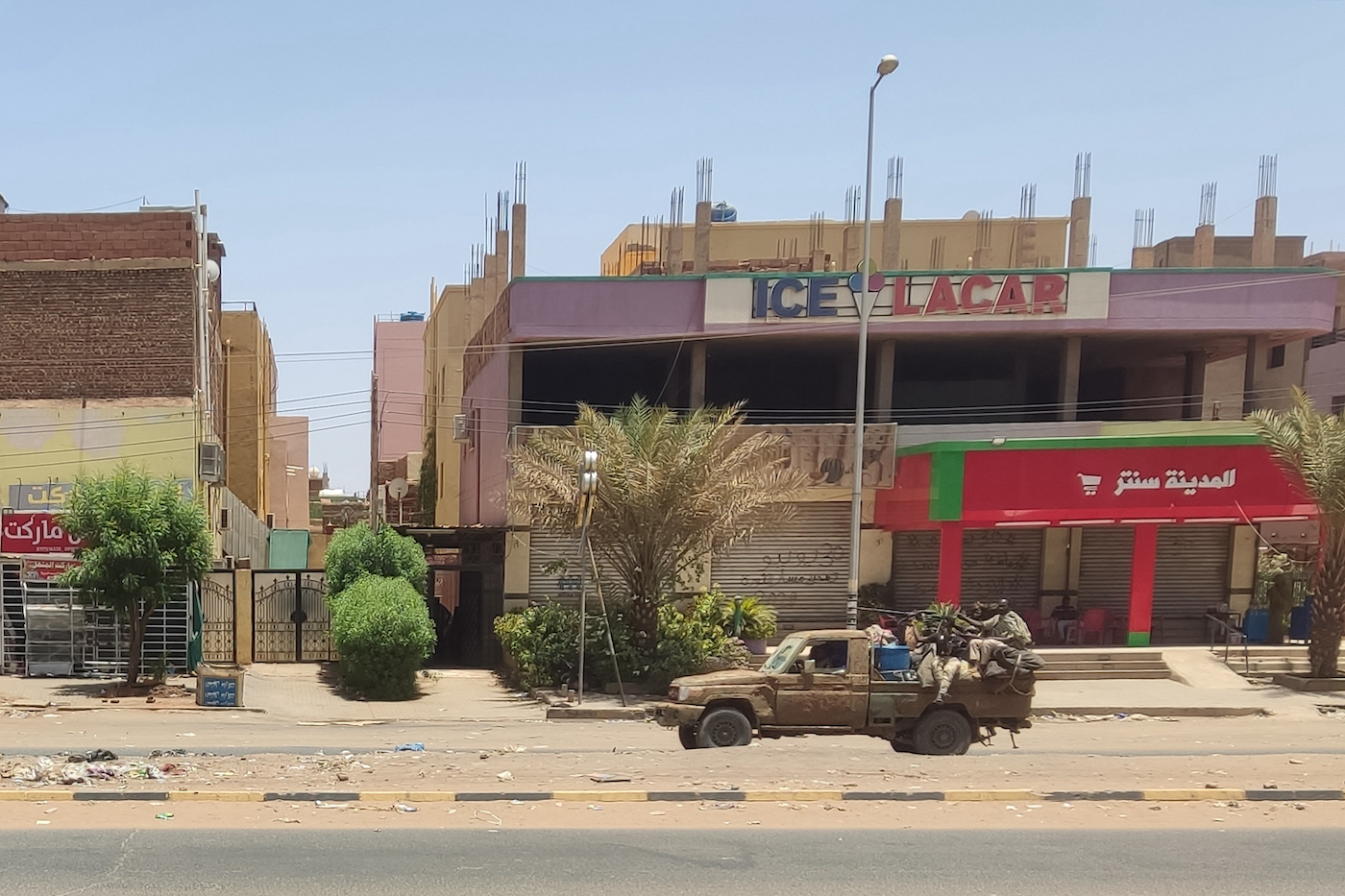
A vehicle of the paramilitary Rapid Support Forces drives down Al-Sittin Road in Khartoum, on May 22, 2023. (AFP)
As a result, many have been left in an impossible position — unable to stay put, but too afraid to risk returning home.
“Refugees face a painful dilemma of whether to go back to where they fled from,” William Carter, Sudan country director at the Norwegian Refugee Council, told Arab News. “It’s a tragic choice they have.”
The situation has been particularly difficult for Tigrayans who fled persecution as well as for refugees and migrants from Eritrea and other neighboring countries.
According to the UN refugee agency UNHCR, Sudan was home to 1.1 million refugees prior to the eruption of violence on April 15 between the Sudanese Armed Forces and the paramilitary Rapid Support Forces, making it one of the largest refugee-hosting nations in the world.
Now, more than 700,000 people have been internally displaced by the violent power struggle, and nearly 200,000 have fled Sudan for neighboring countries. There are fears for the stability of the wider region.
FASTFACTS
* Before the war erupted, Sudan hosted one of the largest refugee populations in Africa
* Sudan welcomed and assisted 58,000 Ethiopian refugees and asylum seekers (UNHCR)
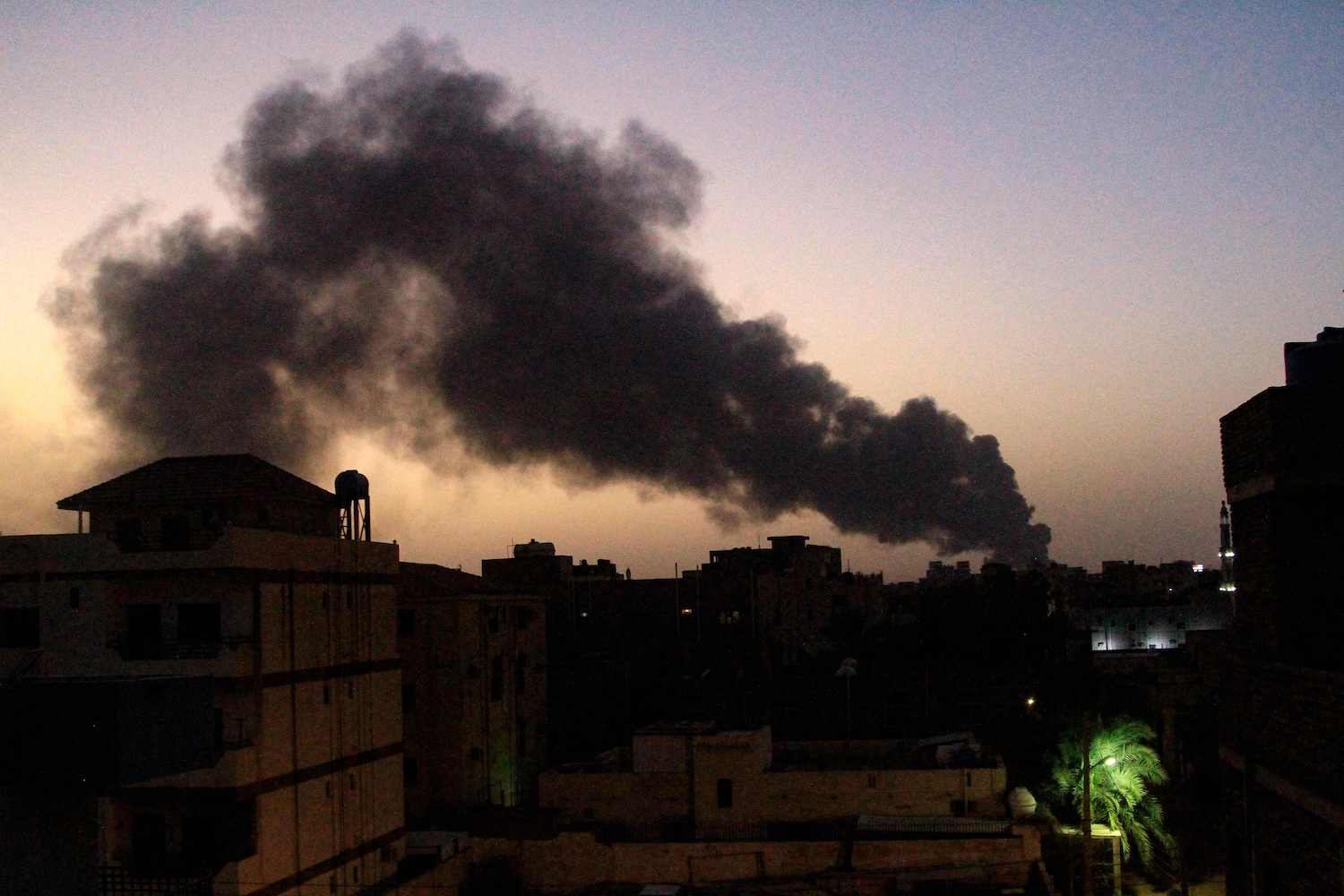
Smoke rises above buildings in southern Khartoum on May 19, 2023. (AFP)
The situation in Um Rakuba refugee camp in the east of Sudan, which hosts around 20,000 Tigrayan refugees, is “deteriorating, with limited access to aid due to unsafe roads and markets hit hard by inflation,” Ahmed Shaweesh, a humanitarian aid worker for the Norwegian Refugee Council, recently posted on Twitter.
“Prices of basic necessities have skyrocketed, leaving refugees struggling to afford even basic items.”
In November 2020, a two-year war erupted between Ethiopia’s federal government and forces led by the Tigray People’s Liberation Front. The conflict has killed tens of thousands of people, displaced millions and caused famine-like situations for hundreds of people.
Periodic outbreaks of fighting have forced many to repeatedly seek refuge in neighboring Sudan in recent years.
Maebel Gebremedhin, co-founder of Tigray Action Committee, was born in the Safaw refugee camp in Sudan in 1986 after her family fled the so-called Red Terror — a period of extreme violence and repression carried out by Ethiopia’s Marxist military regime known as the Derg.
“This is devastating. Being in Sudan was never the goal for the Tigrayans. This was just the opportunity to survive,” Gebremedhin told Arab News. “Right now, they are trapped in another war, experiencing devastation after devastation.”
Last November, the government and the TPLF struck a peace agreement in the South African capital, Pretoria, that allowed additional aid to reach the region. However, despite the pact, the situation remains dire for many Tigrayans.
“The peace process in Ethiopia seems to be working, but Eritreans continue to occupy some parts of Tigray, with the support of the Amhara region forces,” Mohamed Kheir Omer, an expert on the region’s affairs, told Arab News.
The continuing dispute over the status of Western Tigray, also known as Welkait-Tegede among members of the Amhara ethnic group, which borders Sudan, remains an obstacle to the return of displaced communities, he added.
According to Human Rights Watch and Amnesty International, the disputed area has been the site of multiple crimes against humanity and bouts of ethnic cleansing.
Tigrayan activists have broadly denounced the Pretoria peace agreement, citing allegations of the continued marginalization and dispossession of their people.
“The political negotiation was one-sided,” Leake Zegeye, an activist who fled the Tigray region when the fighting erupted in late 2020, told Arab News.
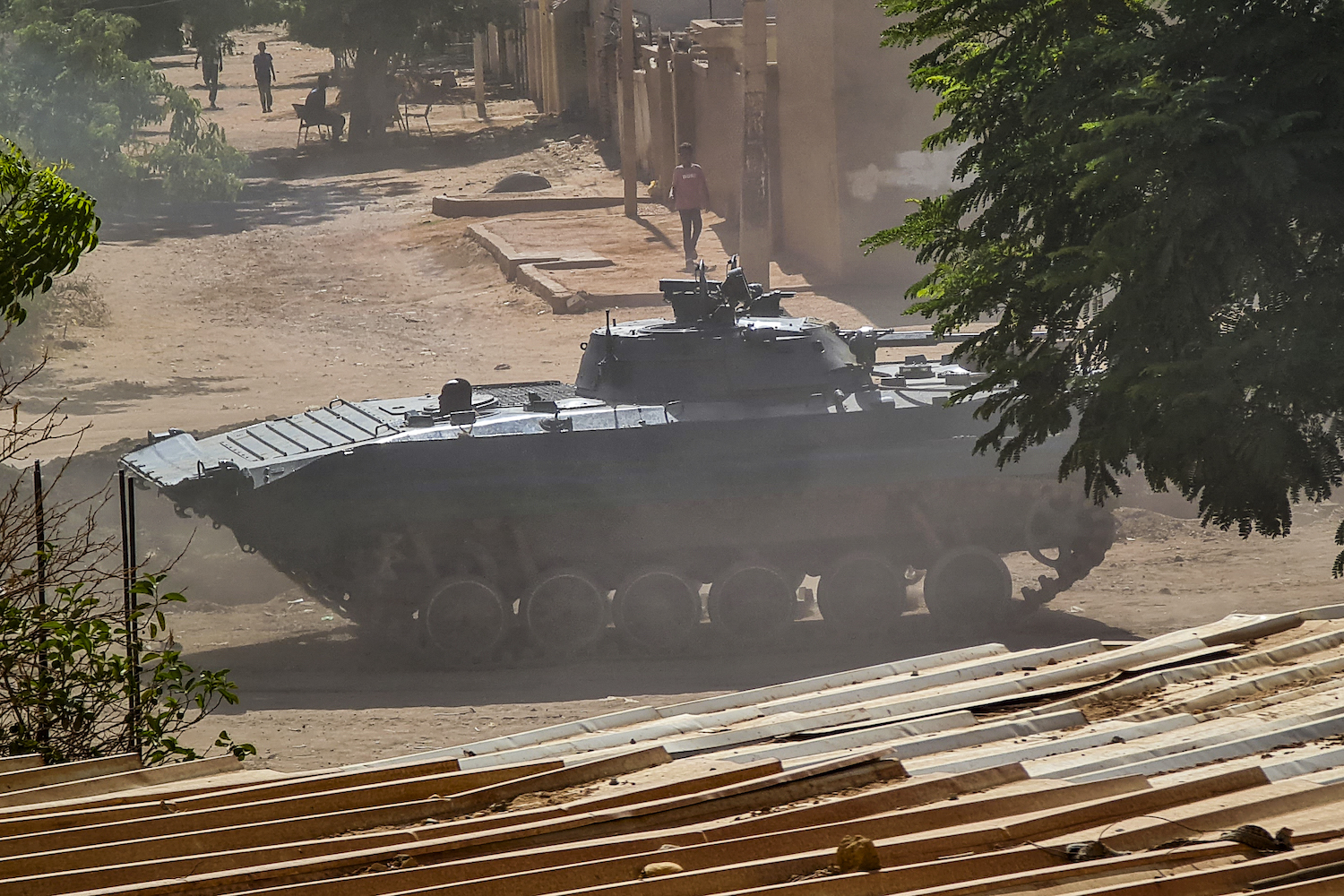
A Sudanese army armoured vehicle is stationed in southern Khartoum on May 21, 2023. (AFP)
“The Tigrayan people were not properly represented, and six months after its signing, the deal has been badly implemented.”
To achieve the security of Tigrayans caught up in the fighting in Sudan, Zegeye says the only solution is to resolve the dispute in their home country and permit them to safely return.
“My heart goes out to the people of Sudan because they have been very kind and accommodating,” he said.
“Refugees are now vulnerable to attacks; they must be put back to their rightful places where they were evicted from.”