

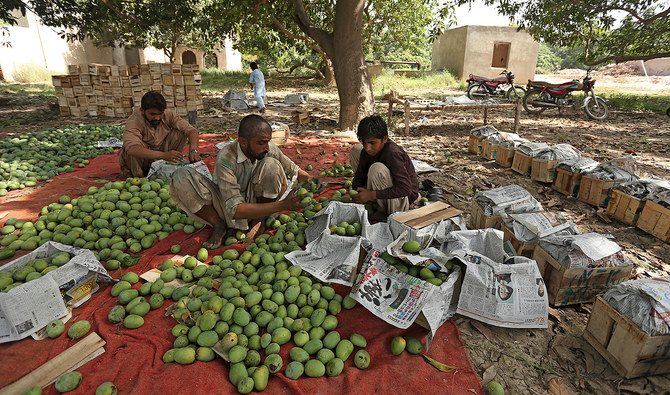

ISLAMABAD: The export season for Pakistani mangoes commenced on Saturday after the country dispatched the first air shipment to Europe, confirmed a top official of a leading association of fruit exporters of the country.
Mangoes hold great popularity among the people of Pakistan, and their export helps generate millions of dollars in revenue. Additionally, they serve as a cultural symbol and a diplomatic tool, aiding the government in strengthening international connections.
“The mango export season started today with the first air shipment to Europe,” Waheed Ahmed, patron-in-chief of the All Pakistan Fruit and Vegetable Exporters Association, told Arab News. “The first shipment through sea will depart the country on May 22. It will go to the United Arab Emirates and other gulf countries like Oman and Saudi Arabia.”
Ahmed said 50 percent of Pakistani mangoes were exported by sea, 35 percent by land, and 15 percent by air.
He informed that Pakistan’s mango export target was 125,000 metric tons during the current year, adding it would help the country earn about $100 million.
“Pakistan’s main export destinations are the Middle East and Europe and around 40 percent of our mangoes exports go to the UAE, Saudi Arabia, Oman and Iran,” he added.
Ahmed informed last year was not good for mango exports due to the climate change that led to unprecedented monsoon rains and heavy floods. He added the situation brought down mango production by about 50 percent, making the country export only 90,000 metric tons.
“Pakistan’s average annual production is about 1.88 million metric tons, but last year it was impacted by about 50 percent,” he said. “This year, we are expecting around 20 percent reduction in the overall yield which is expected to be around 1.44 million metric tons.”
He asked research institutes and provincial agriculture departments to devise a strategy to deal with the adverse impact of climate change on the crop since it was becoming a regular feature.
“They should introduce new varieties of mangoes which can sustain emerging weather trends and raise awareness among mango growers about how to avert the negative impact of the climate change,” he added.
Ahmed also pointed out the deteriorating law and order situation in the country also posed challenges to exporters.
“In Pakistan, 70 percent of mangoes are produced in Punjab, and if a single day of delivery is disrupted, it impacts our export target since ships and cargoes do not wait,” he added.
Muhammad Azhar Sheikh, managing director of Iftikhar Ahmed and Co., which exports the fruit to the Middle East, said the UAE was the hub for Pakistani mangoes.
“The bulk of Pakistani mango exports go through the UAE to other Gulf countries like Saudi Arabia, Oman, Qatar, Bahrain and others,” he said.
Sheikh added the varieties which were liked the most in the Arab countries included Chaunsa, Sindhri, Banganapalle, Dasheri and Anwar Ratol.


