

Pakistan’s mango crop may face 20 percent reduction due to climate change this year

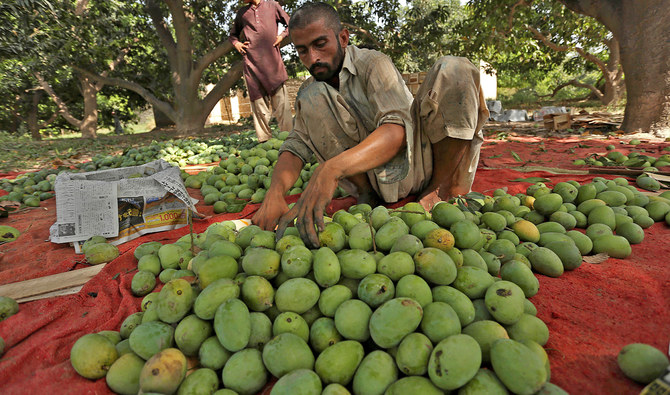
In this picture taken on June 22, 2020, a labourer sorts mangoes before packing them into boxes at a farm in Multan. (AFP/File)
Short Url
Updated 18 May 2023
Follow

Pakistan’s mango crop may face 20 percent reduction due to climate change this year

  • The country’s annual mango production capacity is about 1.8 million metric tons, which may reduce to about 1.44 million
  • Pakistan will export 125,000 metric tons during the course of this year and hopes to earn a revenue of about $100 million

KARACHI: Pakistan’s fruit and vegetable exporters suspect the country’s mango crop may be reduced by 20 percent this year since the country continues to face the adverse climate change effects during the ongoing season.

According to official statistics, the country’s annual mango production capacity is around 1.8 million metric tons. Given the erratic weather patterns caused by the challenge of climate change, however, the overall yield is expected to be 1.44 million metric tons.

“Mango crop in Pakistan is facing the adverse effect of climate change during the current mango season, leading to a likely drop of 20 percent in production,” Waheed Ahmed, patron-in-chief of All Pakistan Fruit and Vegetable Exporters Association said in a statement on Thursday.

Ahmed warned that due to a prolonged winter and delayed summer season, mango production was decreasing, adding that the production of the fruit was directly affected by changing weather patterns.

He urged research institutes and provincial agriculture departments to provide resources and awareness to mango farmers to help them avert the negative impact of climate change.

Ahmed said the country had set the mango export target of 125,000 metric tons this year which could help earn it about $100 million.

Pakistan will start exporting the fruit from May 20.

The country’s biggest mango buyers are in the Middle East, Central Asia along with other countries like China and the United Kingdom.

Pakistan produces 70 percent mangoes in Punjab province while 29 percent of the fruit is cultivated in Sindh. The country’s Khyber Pakhtunkhwa province also has a one percent production share.

Ahmed said 50 percent mangoes were exported from Pakistan by sea, 35 percent by land, and 15 percent by air.


Three Afghan migrants die crossing into Iran as UN warns of new displacement toward Pakistan

Updated 9 sec ago
Follow

Three Afghan migrants die crossing into Iran as UN warns of new displacement toward Pakistan

  • UNHCR says 1.8 million Afghans were forced to return from Iran this year, straining Afghanistan’s resources
  • Rights groups warn forced refugee returns risk harm as Afghanistan faces food shortages and climate shocks

KABUL: Three Afghans died from exposure in freezing temperatures in the western province of Herat while trying to illegally enter Iran, a local army official said on Saturday.

“Three people who wanted to illegally cross the Iran-Afghanistan border have died because of the cold weather,” the Afghan army official told AFP on condition of anonymity.

He added that a shepherd was also found dead in the mountainous area of Kohsan from the cold.

The migrants were part of a group that attempted to cross into Iran on Wednesday and was stopped by Afghan border forces.

“Searches took place on Wednesday night, but the bodies were only found on Thursday,” the army official said.

More than 1.8 million Afghans were forced to return to Afghanistan by the Iranian authorities between January and the end of November 2025, according to the latest figures from the United Nations refugee agency (UNHCR), which said that the majority were “forced and coerced returns.”

“These mass returns in adverse circumstances have strained Afghanistan’s already overstretched resources and services” which leads to “risks of onward and new displacement, including return movements back into Pakistan and Iran and onward,” UNHCR posted on its site dedicated to Afghanistan’s situation.

This week, Amnesty International called on countries to stop forcibly returning people to Afghanistan, citing a “real risk of serious harm for returnees.”

Hit by two major earthquakes in recent months and highly vulnerable to climate change, Afghanistan faces multiple challenges.

It is subject to international sanctions particularly due to the exclusion of women from many jobs and public places, described by the UN as “gender apartheid.”

More than 17 million people in the country are facing acute food insecurity, the UN World Food Program said Tuesday.