- Pakistan approves rise in prices of essential drugs by maximum 14 percent
- Pakistan’s pharmaceutical manufacturers association terms price hike as ‘peanuts’
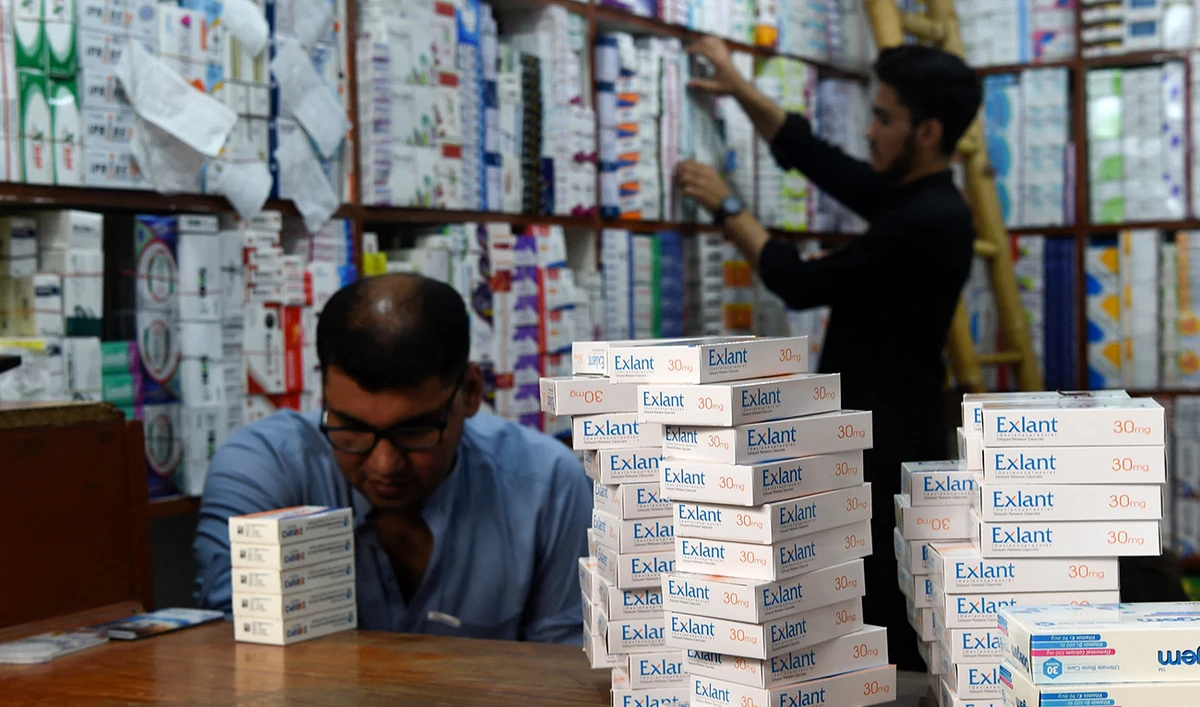
ISLAMABAD: Pakistan approved an increase of 20 percent in the medicine retail prices, capping the rise in prices of essential drugs at a maximum 14 percent, the finance ministry said, as the country grapples with soaring inflation and a weakened currency that has undergone massive devaluation over the past couple of months.
Pakistan last month turned down a request by pharmaceutical firms to raise the prices of more than 100 medicines, prolonging a stand-off with an industry struggling to stem losses from soaring inflation and a weakened currency.
Since last year, local and multinational companies, including Sanofi SA, have been lobbying the government to raise prices through industry lobby groups the Pharma Bureau and the Pakistan Pharmaceutical Manufacturer’s Association (PPMA). Data from the statistics bureau compiled by international news agency Reuters showed Pakistan’s pharma industry had cut overall output by 55 percent since June 2022.
In addition to a global increase in the price of raw materials, the pharmaceutical companies have been hit by fiscal measures aimed at staving off economic collapse and securing more than $1 billion in funds from an International Monetary Fund bailout.
These fiscal measures include Pakistan’s restrictions on imports have hindered pharmaceutical companies from procuring raw materials, leading to a massive decline in output over the past several months. The South Asian country is attempting to prevent the outflow of US dollars from Pakistan by restricting its imports while its move to remove an artificial exchange rate on the rupee has led to massive devaluation of the national currency.
The decision to hike medicine prices was announced after Finance Minister Ishaq Dar presided over a meeting of the Economic Coordination Committee (ECC), Pakistan’s top economic body.
“To ensure continuous availability of drugs in the market, the ECC allowed as a one-time dispensation, manufacturers and importers to increase their existing MRPs of essential drugs equal to 70 percent increase in CPI (with a cap of 14 percent) and MRPs of all other drugs and lower priced drugs an increase up to 70 percent in CPI (with a cap of 20 percent) on the basis of average CPI for current year i-e 1st July, 2022 to 01st April, 2023,” the Ministry of Finance said.
The ministry said the hike in prices should be considered as annual increase for the financial year 2023-24, adding that no further increase in this category would be granted in next the financial year.
“The ECC further advised the Policy Board to review the situation after three months i-e in July 2023 and make its recommendations to the Federal Govt regarding price decrease if Pak rupee appreciates its value,” it added.
Syed Farooq Bukhari, chairman of the Pakistan Pharmaceutical Manufacturers Association (PPMA) lamented that the increase in prices of medicines was not a substantial one.
“We have demanded 38.5 percent raise in the prices but [what] they have announced is peanuts,” Bukhari told Arab News. “However. we are thankful that at least they have considered this.”
He said a 14 percent increase in prices of essential drugs is too less compared to the soaring inflation, adding that the association would approach the government.
An importer, speaking to Arab News on condition of anonymity, said the hike in prices was “too little.”
“Not enough to sustain the exchange rate volatility,” he said. “This is an eyewash.”
Fueled by fuel and energy price hikes, inflation measured by the Consumer Price Index (CPI) rose to 35.4 percent on a year-on-year basis from 31.5 percent. Food inflation in urban centers of the country, jumped to 47.1 percent in March 2023 from 41.9 percent in February 2023, official data showed.
Food price shocks were more severe for Pakistan’s rural dwellers where inflation hit 50.2 percent, according to official data. Pakistan, racked with political instability and facing multiple economic problems, is desperately looking to avoid an acute balance of payments crisis as prospects of default loom large over the South Asian country.