

Lucid Motors appoints Turqi Al-Nowaiser as chairman

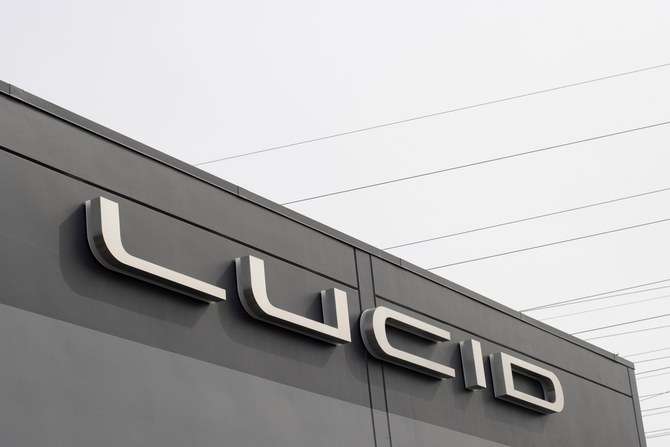
Lucid Motors plans to produce 155,000 units of EVs at its new plant in Saudi Arabia to address the growing demand for the vehicles. (Shutterstock)
Short Url
Updated 28 April 2023
Follow

Lucid Motors appoints Turqi Al-Nowaiser as chairman

RIYADH: In a bid to strengthen the electric vehicle market in Saudi Arabia, Lucid Motors has appointed Turqi Al-Nowaiser as the chairman of its board of directors.

Al-Nowaiser currently serves as the deputy governor and head of the international investments division at the Kingdom’s Public Investment Fund.

He was a board member at Lucid Motors and has also served as a member of several companies and committees of the PIF.

Al-Nowaiser worked as a senior adviser at the PIF from October 2015 to September 2016, before which he held several executive roles at Saudi Fransi Capital, a financial services firm in the Kingdom.

Al-Nowaiser has also been on the board of directors of Hapag-Lloyd AG, an international shipping and container transportation company, since February 2018.

He holds a bachelor’s degree in international business from King Saud University and a master’s in business administration from the University of San Francisco.


Turqi Al-Nowaiser

The sovereign fund owns about 67 percent of the stakes in Lucid Motors, which plans to produce 155,000 units of EVs at its new plant in Saudi Arabia to address the growing demand for the vehicles.

Earlier in March, while talking to Arab News on the sidelines of the Private Sector Forum in Riyadh, Faisal Sultan, Lucid Motors’ vice president and managing director in the Middle East, said that the firm aims to roll out its first fully Saudi-assembled electric car in September in the coastal city of Jeddah.

“Very exciting things are happening at Lucid. If you fly to Jeddah and drive to King Abdullah Economic City, you will find the location of our plant … Pretty soon, we will start putting the equipment there,” said Sultan.

The KAEC plant will be Lucid Motors’ first manufacturing unit outside the US. The Saudi Industrial Development Fund financed the project with SR5 billion ($1.3 billion), and the venture is expected to create over 4,500 jobs in KAEC.

According to market research firm Mordor Intelligence, the Middle East and African EV market was valued at $40.25 million in 2021 and is expected to reach $93.10 million by 2027, registering a compound annual growth rate of more than 15 percent during the forecast period.


Oman inflation at 1.6%, latest figures show

Updated 26 January 2026
Follow

Oman inflation at 1.6%, latest figures show

RIYADH: Oman’s consumer price index rose by 1.6 percent in December compared with the same month a year earlier, reflecting moderate inflationary pressures at year’s end.

Average inflation for the January–December 2025 period increased by 1 percent, according to official data.

Figures released by the National Center for Statistics and Information showed that miscellaneous personal goods and services recorded the sharpest price increase, rising by 10 percent year on year. 

This was followed by transport at 2.8 percent, restaurants and hotels at 2.6 percent, and furniture, household equipment and routine maintenance at 2.4 percent, as well as education at 2.2 percent. 

Food and non-alcoholic beverages prices increased by 1.1 percent, while clothing and footwear rose by 0.2 percent and health by 0.1 percent. In contrast, prices in the culture and recreation group declined by 0.1 percent. 

Housing, water, electricity, gas and other fuels, as well as tobacco and communications, remained unchanged over the period. 

Within the food and non-alcoholic beverages category, December prices compared with the same month of 2024 showed notable increases in fish and seafood at 6 percent and fruits at 4 percent. 

Sugar, jam, honey and confectionery rose by 3.5 percent, milk, cheese and eggs by 2.1 percent, and non-alcoholic beverages by 0.9 percent.

Meat prices increased by 0.8 percent, bread and cereals, oils and fats by 0.7 percent, and other unclassified food products by 0.4 percent, while vegetable prices fell by 5.8 percent. 

Regionally, Al Dhahirah governorate recorded the highest inflation rate at 2.5 percent by the end of December compared with a year earlier. 

Inflation also rose by 2.1 percent in Al Dakhiliyah, 1.7 percent in Muscat and Al Buraimi, and 1.5 percent in South Al Batinah. 

South Al Sharqiyah and Musandam each posted increases of 1.1 percent, while North Al Sharqiyah and North Al Batinah rose by 0.9 percent. Al Wusta and Dhofar recorded inflation of 0.8 percent. 

The report highlights the relative importance of expenditure groups within the consumer price index basket, underscoring why movements in certain categories have a greater impact on overall inflation.

Housing, water, electricity, gas and other fuels carry the largest weight at 31.7, followed by food and non-alcoholic beverages at 20.6 and transport at 14.5.

Together, these three groups account for more than two-thirds of the CPI basket, meaning price stability in housing and utilities can significantly moderate headline inflation even when sharper increases are recorded in smaller-weight categories such as miscellaneous goods and services. 

The analysis also notes that around 56,640 individual price quotations were collected from 3,907 sources across the Sultanate during the reference period. 

In addition, rental data were gathered from a dedicated sample of 1,509 rented housing units, providing a detailed and representative measure of housing costs, which remain the most heavily weighted component of the inflation basket.
