

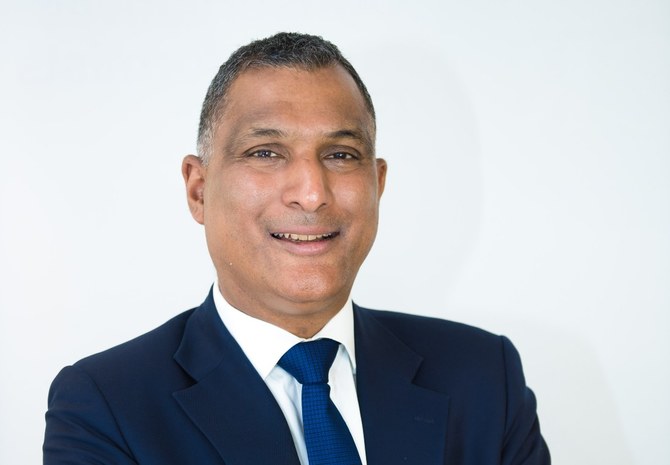
Muslim peer to deliver regalia to UK’s King Charles in coronation ceremony

Short Url
Updated 22 April 2023
Follow

Muslim peer to deliver regalia to UK’s King Charles in coronation ceremony

  • Set of gold ornamented bracers will be carried by Lord Kamall next month
  • Event to see first-ever involvement of non-Christian representatives in crowning of a British monarch

LONDON: Muslim, Hindu, Sikh and Jewish members of the UK’s House of Lords are set to play a crucial role in the coronation of King Charles next month, presenting him with four pieces of regalia during the ceremony, The Times reported on Saturday.

The event at Westminster Abbey in London will see the first-ever involvement in British history of non-Christian faith representatives in the crowning of a monarch.

Though the four Muslim, Hindu, Sikh and Jewish representatives will not speak during the coronation, they will form a procession to deliver key items to the king as part of a centuries-old tradition.

Lord Kamall, 56, a Conservative Party peer and practicing Muslim, will carry the armills — a set of gold ornamented bracers — to the king.

He will be followed or preceded by Baroness Merron, a Jewish peer, Lord Singh, a Sikh, and Lord Patel, a Hindu, who will deliver a robe, glove and ring respectively.

As head of the Church of England, King Charles has pledged to serve as a defender of all religions.

The ceremony will see the four peers deliver the items on a cushion to the monarch as he sits on the coronation chair.

Each item will then be touched before being transferred to the Archbishop of Canterbury Justin Welby, who will place them on the king.

Lord Singh told The Times that the plans for the ceremony are a “show of commonality between the religions,” adding: “It stresses the point that (the king) has said again and again that he is defender of the Christian faith but with total respect for all other faiths.”

The four peers held a 90-minute rehearsal of the event at the Buckingham Palace ballroom this week.

Rabbi Jonathan Romain told The Times that the coronation plan is “a very Christian reworking of the gifts of the three magi (to) Jesus in the manger.”

However, he added: “It is clearly a deliberate avoidance of any non-Anglican religious personnel being involved. The peers are representing four faiths, but they are not faith leaders.”

A Lambeth Palace spokesman did not provide details of the coronation plans, saying: “The coronation liturgy will be published in due course and we look forward to sharing more details then.”


Ice-cool Rybakina beats Sabalenka in tense Australian Open final

Updated 5 sec ago
Follow

Ice-cool Rybakina beats Sabalenka in tense Australian Open final

  • The big-serving Kazakh fifth seed held her nerve to pull through 6-4, 4-6, 6-4
  • Rybakina who was born in Moscow, adds her Melbourne triumph to her Wimbledon win in 2022
MELBOURNE: Elena Rybakina took revenge over world number one Aryna Sabalenka to win a nail-biting Australian Open final on Saturday and clinch her second Grand Slam title.
The big-serving Kazakh fifth seed held her nerve to pull through 6-4, 4-6, 6-4 at Rod Laver Arena in Melbourne in 2hrs 18mins.
It was payback after the Belarusian Sabalenka won the 2023 final between two of the hardest hitters in women’s tennis.
The ice-cool Rybakina, 26, who was born in Moscow, adds her Melbourne triumph to her Wimbledon win in 2022.
“Hard to find the words now,” said Rybakina, and then addressed her beaten opponent to add: “I know it is tough, but I hope we play many more finals together.”
Turning to some Kazakh fans in the crowd, she said: “Thank you so much to Kazakhstan. I felt the support from that corner a lot.”
It was more disappointment in a major final for Sabalenka, who won the US Open last year for the second time but lost the French Open and Melbourne title deciders.
She was into her fourth Australian Open final in a row and had been imperious until now, with tears in her eyes at the end.
“Let’s hope maybe next year will be a better year for me,” Sabalenka said ruefully.
Rybakina fights back
With the roof on because of drizzle in Melbourne, Rybakina immediately broke serve and then comfortably held for 2-0.
Rybakina faced two break points at 4-3, but found her range with her serve to send down an ace and dig herself out of trouble, leaving Sabalenka visibly frustrated.
Rybakina looked in the zone and wrapped up the set in 37 minutes on her first set point when Sabalenka fired long.
Incredibly, it was the first set Sabalenka had dropped in 2026.
The second game of the second set was tense, Rybakina saving three break points in a 10-minute arm-wrestle.
They went with serve and the seventh game was another tussle, Sabalenka holding for 4-3 after the best rally of a cagey affair.
The tension ratcheted up and the top seed quickly forged three set points at 5-4 on the Kazakh’s serve, ruthlessly levelling the match at the first chance to force a deciding set.
Sabalenka was now in the ascendancy and smacked a scorching backhand to break for a 2-0 lead, then holding for 3-0.
Rybakina, who also had not dropped a set in reaching the final, looked unusually rattled.
She reset to hold, then wrestled back the break, allowing herself the merest of smiles.
At 3-3 the title threatened to swing either way.
But a surging Rybakina won a fourth game in a row to break for 4-3, then held to put a thrilling victory within sight.
Rybakina sealed the championship with her sixth ace of the match.
The finalists were familiar foes having met 14 times previously, with Sabalenka winning eight of them.
Sabalenka came into the final as favorite but Rybakina has been one of the form players on the women’s tour in recent months.
She also defeated Sabalenka in the decider at the season-ending WTA Finals.
Rybakina beat second seed Iga Swiatek in the quarter-finals and sixth seed Jessica Pegula in the last four in Melbourne.
Rybakina switched to play under the Kazakh flag in 2018 when she was a little-known 19-year-old, citing financial reasons.