

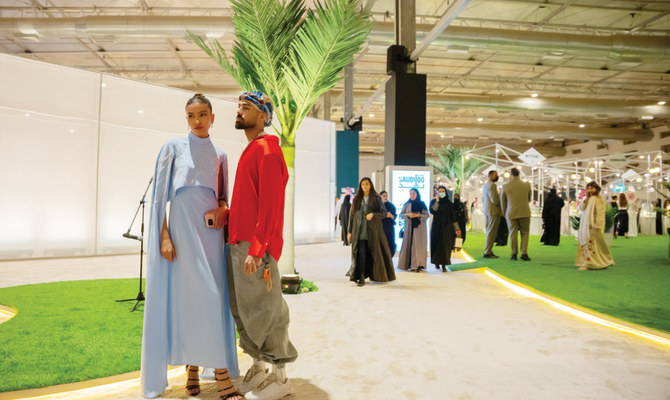

RIYADH: As Saudi Arabia has firmly established itself as a top destination for high-end shopping, it may not be long before the Kingdom emerges as a future luxury capital of the Middle East.
With the diversification of the economy, improvement of consumers’ lifestyle, as well as high per capita income, Saudi Arabia has seen increased spending on luxury products.
Not surprisingly, global luxury brands like Gucci, Louis Vuitton and Chanel have opened flagship stores in the Kingdom while Prada, Tiffany and Mulberry have increased their presence by establishing mono-brand outlets.
According to a report by the International Market Analysis Research and Consulting Group, the Saudi luxury market size reached $8.3 billion in 2022. Looking forward, IMARC Group expects the market to reach $15.8 billion by 2028, exhibiting a compound annual growth rate of 11.6 percent during 2023-2028.
Gen Z factor
The growing demand for luxury is apparently being driven by affluent groups, such as Gen Z, female consumers and wealthy tourists.
According to Euromonitor International’s data, the Kingdom was home to 117,000 millionaires in 2022, meaning a considerable number of ultra-high-net worth-individuals. This is alongside a large Gen Z population who support the sector, as luxury shoppers around the world are getting younger.
Saudi Arabia stands out as a youthful market overall, where the Gen Z population stood at 8 million in 2021, whilst almost half of the total population is below 29 years old.
Wojciech Orlowski, country director, Saudi Arabia at Bateel International, told Arab News: “Retailers continue to adapt to changing consumer preferences and behaviors in the Kingdom, as a younger, yet demanding demographic leverages their purchasing power.
“Unique offerings boasting excellent service quality, premium and personalized experiences, and constant innovation, are winning consumers’ loyalty in Saudi Arabia.”
The increasing participation of women in the workforce and recent social changes further support consumers’ appetite for luxury, the report said, adding that the boom in tourism, in particular luxury travel, will be an asset in developing the Kingdom’s luxury market.
Malls in focus
By all accounts, the establishment of state-of-the-art malls provides luxury brands with sufficient space to broaden their operations in the region.
“Luxury malls and retailers in Saudi Arabia are providing personalized shopping experiences to attract and retain customers,” Yousef Barghouth associate director, Retail Agency, Savills, Saudi Arabia, told Arab News.
“These may include offering customized products, personalized recommendations and tailored shopping experiences.”
He added: “Luxury malls in Saudi Arabia are also enhancing the overall shopping experience by providing amenities such as valet parking, concierge services, fine dining restaurants and other experiential offerings.
“These amenities create a luxury shopping experience that encourages customers to stay longer and spend more.”
Speaking to Arab News, Hind Ali, senior consultant, Euromonitor International Dubai, said “mall culture” has been synonymous with the Gulf region and was once the main food, shopping and entertainment destination, however, today, things have changed.
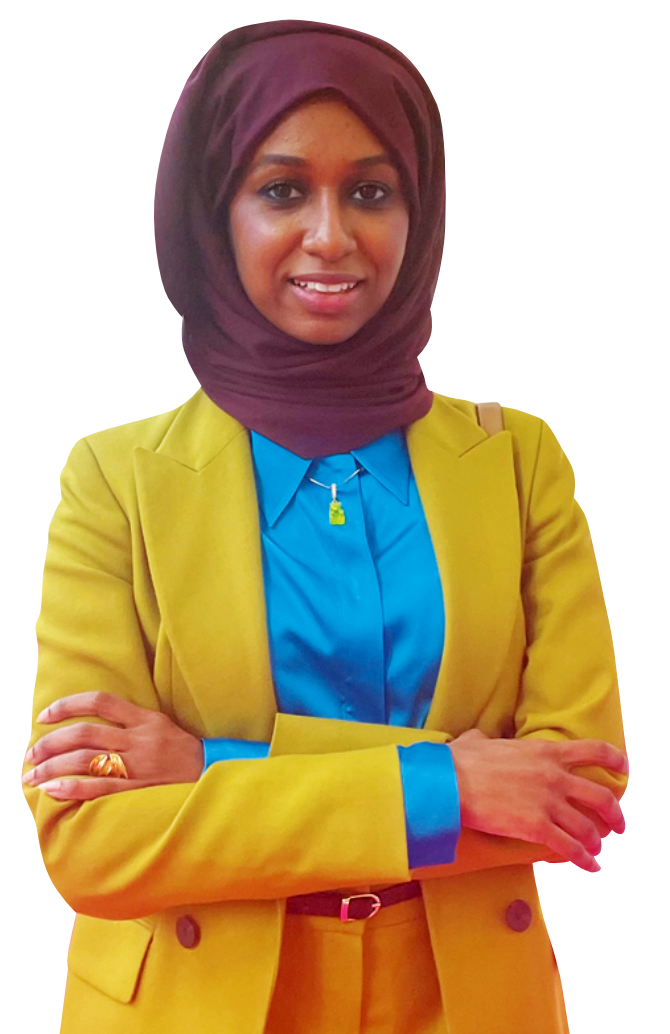
Saudi Arabia is expanding its leisure, entertainment and retailing infrastructure, paving the way for a world-class consumer lifestyle, which is increasing demand for everything luxury.
Hind Ali, Senior consultant, Euromonitor International Dubai
“Saudi Arabia is expanding its leisure, entertainment and retailing infrastructure, paving the way for a world-class consumer lifestyle, which is increasing demand for everything luxury,” she explained.
While leading and established malls remain popular and attract luxury brands, she said upcoming giga-projects and mega developments are going to woo many high-end businesses across different sectors with new and different retail concepts.
Ali cited examples of VIA Riyadh, which opened in February this year, and The Mukaab, the crown jewel of the world’s largest modern downtown development planned in Riyadh.
“While VIA Riyadh is a luxurious new destination that offers elite shopping and dining outlets, a cinema and Saudi Arabia’s first St. Regis hotel, The Mukaab is promised to be the world’s first immersive, experiential destination for hospitality, retail and leisure,” she explained.
Ramadan spending
Talking of luxury spending during Ramadan, Ali said, it was a growing trend in affluent Gulf Cooperation Council countries. “Personal luxury goods such as beauty and personal care, apparel and footwear, jewelry and luxury bags are among the biggest winners,” she explained.
Ali added: “Luxury brands including offer curated capsule collections for Ramadan and promote them through campaigns that celebrate the holy month’s values and traditions. Collaborations with influencers and social media personalities are very popular during Ramadan. Perhaps the biggest collaboration this year was Laverne’s (Arabian fragrance brand) commercial with Georgina Rodriguez, Cristiano Ronaldo’s partner.”
A report by Euromonitor International, which focuses on unlimited opportunities in luxury in Saudi Arabia, highlighted the huge significance placed on celebrating local culture and heritage.
“This drive has been supported by the government but has also clearly been driven by burgeoning consumer demand, which is opening up and encouraging business opportunities,” Ali said.
She went on to cite the example of the abaya, which not too long ago was almost exclusive to Saudi women. “Today, even after lifting of legal enforcement to wear the abaya in 2018, it has grown massively in popularity among all nationalities and become a statement piece during Ramadan,” Ali said.
“We can’t help but wonder who the first luxury designer brand will be to launch their abaya line,” she continued. “This opens up many opportunities for luxury fashion brands provided this is carried out with due diligence and care as far as cultural appropriation is concerned.”
Luxury fashion
As part of a concerted campaign to promote its local heritage and capitalize on its own affluence, Saudi Arabia is also placing great emphasis on local fashion.
The Fashion Commission, established in 2020 and part of the Ministry of Culture, aims to create a thriving fashion space to promote local talent, designers and international brands, whilst encouraging long-term awareness of culture and heritage.
According to the commission’s upcoming report, Saudi Arabia has a potentially powerful opportunity to develop a high value fashion value chain in support of the realization of Vision 2030.
“Saudi’s burgeoning fashion scene has made an immediate impact at home and internationally,” Burak Cakmak, Fashion Commission CEO, told Arab News.
“The country has all the components of a fashion hub — it is strategically located at the crossroads of three continents, has a large domestic market, a rich and unique fashion heritage, and a hugely talented pipeline of local brands that are driving all aspects of the value chain.”
He added: “Luxury fashion is quickly becoming emblematic of Saudi and we are learning to harness our style superpower and building infrastructure for a high-value fashion value chain, including a new product development studio set to open in Riyadh this year.”
Shift toward e-commerce
One of the most significant trends in luxury retail is a shift towards e-commerce, as more consumers have become increasingly comfortable shopping online.
“Luxury retailers in the Kingdom are embracing e-commerce to cater to the growing demand for online shopping,” said Barghouth.
“Many luxury retailers have launched online stores to offer a seamless shopping experience to their customers.”
“Luxury retailers in Saudi Arabia are offering omnichannel experiences that integrate online and offline channels, allowing customers to seamlessly move between channels and enjoy a consistent shopping experience,” he continued.
“As consumers become increasingly comfortable and confident about shopping online, retailers will continue to invest in improving their online services and as more consumers shop online, brick-and-mortar stores will have to improve their offering to remain relevant. This could include new concepts and formats to attract customers, while they could also blend the offline and online retail worlds to provide a more comprehensive and convenient shopping experience,” added Ali.
“Heavily influenced and guided via targeted and data insight-rich strategies like digital advertising, brand awareness, social media, and other marketing channels, happy customers are those that receive the personalized VIP treatment,” Karl Crowther, regional vice president, Middle East & Africa, at Alteryx, a leading analytics automation platform, told Arab News.
“The most effective retailers today are the ones combining data-rich online touchpoints with the quality and customer experience they can deliver in-person,” he concluded.


