

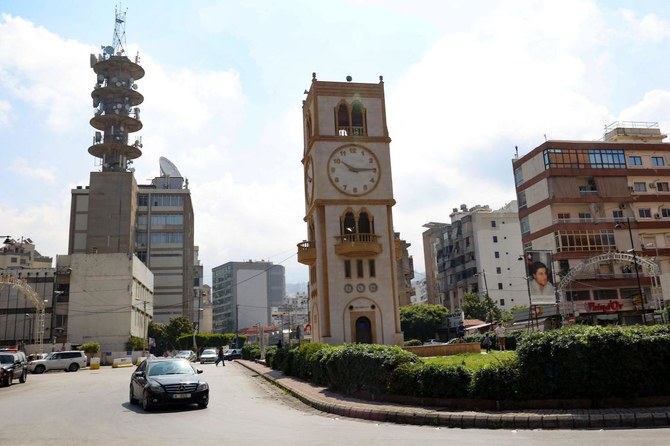
Lebanon overturns unpopular decision to delay daylight saving time

The small Mediterranean country normally sets its clocks forward an hour on the last Sunday in March, which aligns with most European countries. (AFP)
Short Url
Updated 28 March 2023
Follow

Lebanon overturns unpopular decision to delay daylight saving time

  • The unilateral decision taken by Prime Minister Najib Mikati to postpone daylight saving time for one month sparked controversy and sectarian reactions

BEIRUT: The Lebanese Cabinet decided to officially shift to daylight saving time overnight from Wednesday to Thursday, during an extraordinary session on Monday.

The unilateral decision taken by Prime Minister Najib Mikati late last week, following a discussion with Parliament Speaker Nabih Berri, to postpone daylight saving time for one month sparked controversy and sectarian reactions, especially by the Maronite community.

Mikati’s decision showed how easily Lebanon could slip into more division, a reflection of the political tension stemming from the five-month presidential vacuum.

“Since former President Michel Aoun’s term ended, I have been tirelessly working with a group of ministers, the army, security forces, and…public administration employees to preserve the structure of the Lebanese state, which, if it collapses, becomes very difficult to reconfigure. I have never been a fan of defiance or encroaching on religious authorities,” Mikati said Monday.

“The decision was aimed at (allowing) those fasting during the month of Ramadan (to rest) for an hour without causing any harm to any other Lebanese component,” he said.

“I never imagined that some would consider this a confessional or sectarian decision…I have been struggling under a mountain of accusations and deceptions.

“I steadfastly endured and suffered in silence, but today I place everyone before their responsibilities.

“The easiest thing for me to do is to refrain from holding Cabinet sessions, and the most difficult thing is to continue to bear the responsibility. Every person has a personal endurance level, and mine is running low.

“The main problem is the vacancy in the presidency, and I do not take responsibility for this vacuum. Those responsible are the political and spiritual leaders, primarily those parliamentary blocs that disrupted the quorum during 11 election sessions, and those that pledged not to secure it in subsequent sessions without agreeing on a candidate.”

Mikati stressed that the Sunni community he represents “has always been patriotic…and preserved throughout history the unity of the country and its institutions and (has) worked, through its elites and leaders, to formulate national, non-sectarian projects since Lebanon’s independence.”

He added the announcement to overturn last week’s decision requires “a 48-hour delay to settle some technical matters,” in reference to rescheduling flight times to and from Beirut and scheduling computer servers in institutions and mobile phone networks.

The Lebanese have been divided over the decision. Some private media institutions and educational institutions have refused to abide by Mikati’s decision. Caretaker Minister of Education Abbas Halabi said in a statement Sunday that “daylight saving time remains approved and applied in the educational sector.”

Those who rejected Mikati’s decision argued that amending the daylight saving time requires a Cabinet decision and that Mikati took it unilaterally, which is why the Cabinet convened Monday to discuss the issue exclusively.

The Lebanese Cabinet will also hold a session to approve increases in public sector salaries and to implement an agreement to raise the minimum wage to 4,500,000 Lebanese pounds ($295), increase the transportation allowance to 125,000 Lebanese pounds, and double schooling and family allowances.


First responders enter devastated Aleppo neighborhood after days of deadly fighting

Updated 10 sec ago
Follow

First responders enter devastated Aleppo neighborhood after days of deadly fighting

  • The US-backed SDF, which have played a key role in combating the Daesh group in large swaths of eastern Syria, are the largest force yet to be absorbed into Syria’s national army

ALEPPO, Syria: First responders on Sunday entered a contested neighborhood in Syria’ s northern city of Aleppo after days of deadly clashes between government forces and Kurdish-led forces. Syrian state media said the military was deployed in large numbers.
The clashes broke out Tuesday in the predominantly Kurdish neighborhoods of Sheikh Maqsoud, Achrafieh and Bani Zaid after the government and the Syrian Democratic Forces, the main Kurdish-led force in the country, failed to make progress on how to merge the SDF into the national army. Security forces captured Achrafieh and Bani Zaid.
The fighting between the two sides was the most intense since the fall of then-President Bashar Assad to insurgents in December 2024. At least 23 people were killed in five days of clashes and more than 140,000 were displaced amid shelling and drone strikes.
The US-backed SDF, which have played a key role in combating the Daesh group in large swaths of eastern Syria, are the largest force yet to be absorbed into Syria’s national army. Some of the factions that make up the army, however, were previously Turkish-backed insurgent groups that have a long history of clashing with Kurdish forces.
The Kurdish fighters have now evacuated from the Sheikh Maqsoud neighborhood to northeastern Syria, which is under the control of the SDF. However, they said in a statement they will continue to fight now that the wounded and civilians have been evacuated, in what they called a “partial ceasefire.”
The neighborhood appeared calm Sunday. The United Nations said it was trying to dispatch more convoys to the neighborhoods with food, fuel, blankets and other urgent supplies.
Government security forces brought journalists to tour the devastated area, showing them the damaged Khalid Al-Fajer Hospital and a military position belonging to the SDF’s security forces that government forces had targeted.
The SDF statement accused the government of targeting the hospital “dozens of times” before patients were evacuated. Damascus accused the Kurdish-led group of using the hospital and other civilian facilities as military positions.
On one street, Syrian Red Crescent first responders spoke to a resident surrounded by charred cars and badly damaged residential buildings.
Some residents told The Associated Press that SDF forces did not allow their cars through checkpoints to leave.
“We lived a night of horror. I still cannot believe that I am right here standing on my own two feet,” said Ahmad Shaikho. “So far the situation has been calm. There hasn’t been any gunfire.”
Syrian Civil Defense first responders have been disarming improvised mines that they say were left by the Kurdish forces as booby traps.
Residents who fled are not being allowed back into the neighborhood until all the mines are cleared. Some were reminded of the displacement during Syria’s long civil war.
“I want to go back to my home, I beg you,” said Hoda Alnasiri.