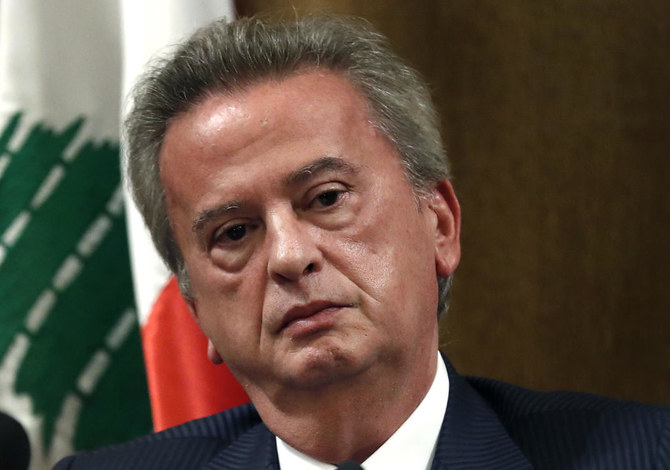
BEIRUT: Lebanese central bank governor Riad Salameh maintained his innocence Friday following a second day of questioning before European investigators in Beirut as part of a probe into his personal wealth.
Salameh, 72, is part of the Lebanese political elite widely blamed for a crushing economic crisis that began in late 2019 and which the World Bank has dubbed one of the worst in recent history.
He faces allegations of crimes including embezzlement in separate probes in Lebanon and abroad, with investigators examining the fortune he has amassed during three decades in the job.
Following a three-hour session Friday, Salameh released a statement saying he appeared as a witness and “not as a suspect or facing charges.”
“Funds from the Lebanese central bank were not transferred to my account,” he said in a statement, adding: “The transfers I made abroad, whatever the amount, were from my personal account.”
The European investigators are looking into allegations of financial misconduct, including possible money laundering and embezzlement.
In January, the European investigators interviewed banking officials in Beirut about the transfer of funds to countries where Salameh has significant assets.
They have also been examining the central bank’s ties to Forry Associates Ltd, a British Virgin Islands-registered company that listed Salameh’s brother as its beneficiary.
Forry is suspected of having brokered Lebanese treasury bonds and Eurobonds at a commission, which was then allegedly transferred to bank accounts abroad.
Salameh denied he profited from any commissions to the company.
He decried “ill intentions” against him and blamed an “ongoing media campaign” for his legal woes.
Thursday’s more than five-hour session at Beirut’s heavily guarded justice palace was the first time Salameh had appeared as part of the European investigation.
The hearing had been scheduled to begin on Wednesday but Salameh failed to show up, claiming it was in “conflict with national sovereignty,” an argument the judiciary rejected.
For procedural reasons, the European investigators submitted their questions to a Lebanese judge, who was then responsible for putting them to Salameh in their presence, a judicial source previously told AFP.
France, Germany and Luxembourg seized assets worth 120 million euros ($130 million) in March last year in a move linked to a French probe into Salameh’s personal wealth.
Salameh has repeatedly denied any wrongdoing and has rarely appeared before investigating judges, despite numerous complaints and summonses.
Last month, Lebanese authorities charged Salameh with embezzlement, money laundering and tax evasion as part of their own investigation.
Lebanon opened its probe into Salameh following a request for assistance from Switzerland’s public prosecutor probing more than $300 million in fund movements by Riad Salameh and his brother.


![]()

Lebanon central bank chief denies financial misconduct
Short Url
https://arab.news/mfhya
Lebanon central bank chief denies financial misconduct
- Salameh, 72, is part of the Lebanese political elite widely blamed for a crushing economic crisis that began in late 2019
- Following a three-hour session Friday, Salameh released a statement saying he appeared as a witness and "not as a suspect or facing charges"


Latest updates



Recommended


© 2026 SAUDI RESEARCH & PUBLISHING COMPANY, All Rights Reserved And subject to Terms of Use Agreement.