

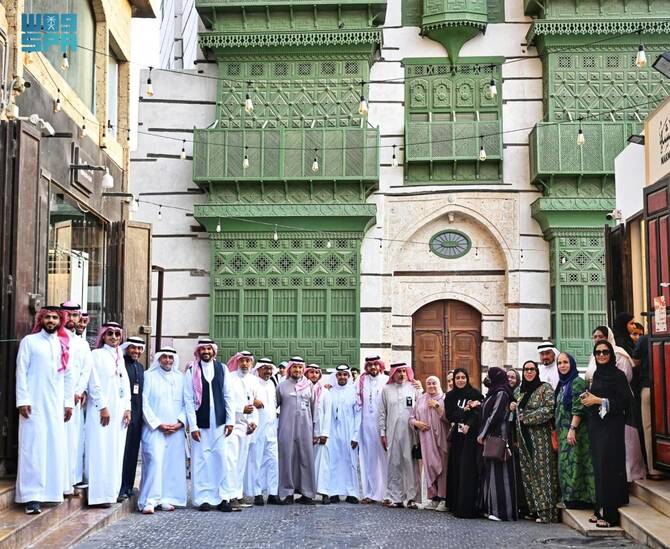
Jeddah celebrates tourist guide day in historic Al-Balad

1 / 8
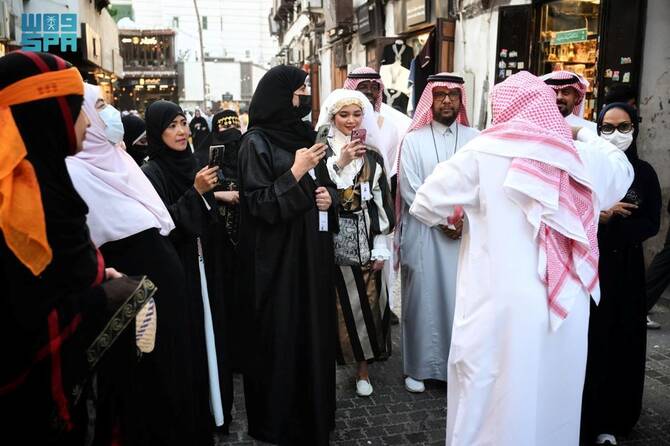
The program focused on introducing guides to the historic Hajj route and Jeddah’s heritage landmarks. (SPA)
2 / 8
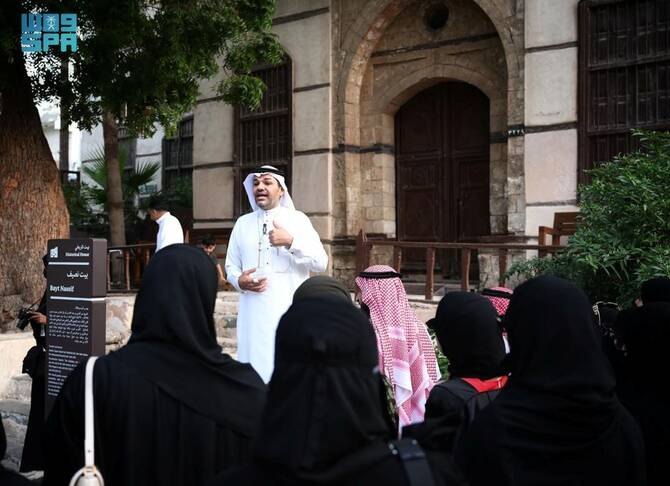
The program focused on introducing guides to the historic Hajj route and Jeddah’s heritage landmarks. (SPA)
3 / 8
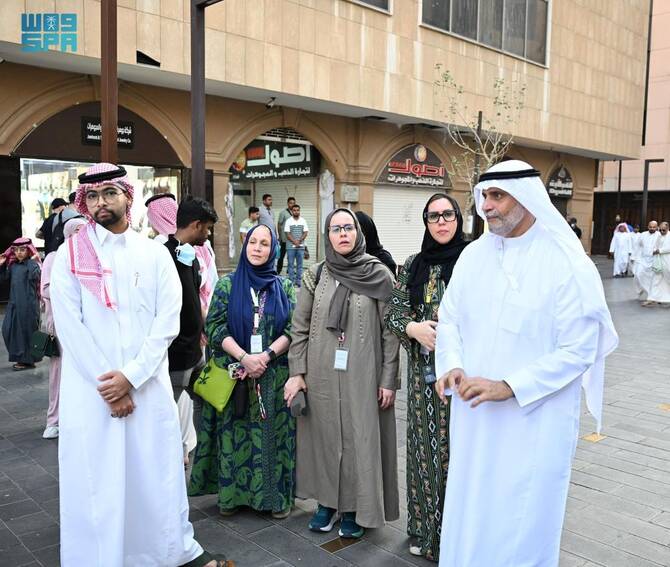
The program focused on introducing guides to the historic Hajj route and Jeddah’s heritage landmarks. (SPA)
4 / 8
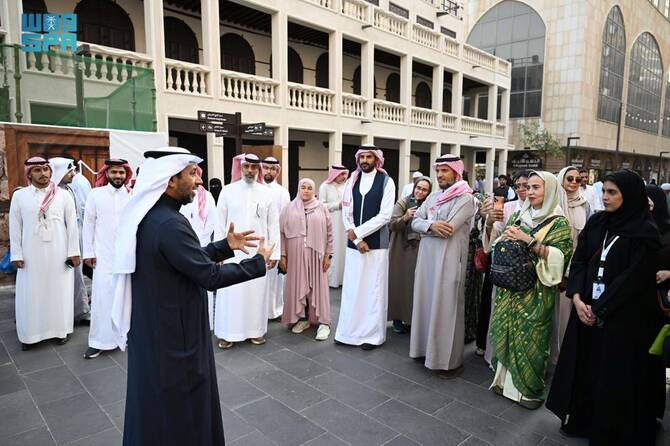
The program focused on introducing guides to the historic Hajj route and Jeddah’s heritage landmarks. (SPA)
5 / 8
The program focused on introducing guides to the historic Hajj route and Jeddah’s heritage landmarks. (SPA)
6 / 8
The program focused on introducing guides to the historic Hajj route and Jeddah’s heritage landmarks. (SPA)
7 / 8
The program focused on introducing guides to the historic Hajj route and Jeddah’s heritage landmarks. (SPA)
8 / 8
The program focused on introducing guides to the historic Hajj route and Jeddah’s heritage landmarks. (SPA)
Short Url
Updated 23 February 2026
Follow

Jeddah celebrates tourist guide day in historic Al-Balad

  • 281 participants from across Saudi Arabia explore the historic Hajj route and heritage landmarks
  • Abir Abusulayman: Tour guides can influence how tourists perceive history, culture and one another

JEDDAH: Jeddah hosted the International Tourist Guide Day event, organized by the Tour Guides Cooperative Society in historic Al-Balad, with 281 male and female guides taking part from across the Kingdom.

The program focused on introducing guides to the historic Hajj route and Jeddah’s heritage landmarks, the Saudi Press Agency reported on Monday.

International Tourist Guide Day, launched in 1990 by the World Federation of Tourist Guide Associations, highlights the role of tourist guides as ambassadors of their countries and cultures.

“Tour guides can influence how tourists perceive history, culture and one another. We act as cultural ambassadors and storytellers,” Abir Abusulayman, a veteran tour guide from Jeddah, told Arab News.

The event also aims to raise awareness of tour guiding’s importance in enriching the visitor experience, promote sustainable tourism, and recognize guides’ efforts in showcasing national identity and heritage.

Mohammed Qari, a tour guide from Jeddah, said: “There was an introduction to the historic district for visitors, and their reaction was amazing and very positive when they saw so many Saudi tour guides gathered together.”

Qari explained the significance of the day: “The main goal of day is to take part in this global gathering and show that Saudi Arabia has professional tour guides with high-level skills — true ambassadors of the nation — who present the Kingdom to tourists through the eyes of its people, their hospitality and generosity. Our aim is to make tourism enjoyable for visitors to Saudi Arabia.”

He added that the celebration reflects the growing importance of professional tour guides in showcasing the Kingdom’s heritage and culture to an international audience.

The celebration coincides with the Kingdom’s rapidly advancing tourism sector, in line with Vision 2030 objectives, the SPA reported.

Tourist guides have become key in presenting historical, cultural and natural sites, conveying their stories with knowledge and professionalism that reflect the depth and diversity of Saudi civilization.

Reflecting on his journey, Qari said: “When the Kingdom opened licensing for tour guides, and encouraged by colleagues, I applied. Since then, I have led many trips across the Kingdom — city tours in major cities and visits to natural, tourist and geological sites, including volcanoes, mountains and other natural areas.”

Qari highlighted that tour guiding is about communication and cultural exchange. “The ‘other’ adds to me as much as I add to them — perhaps even more. Many tourists love to talk about their countries, so I listen and learn, and we compare.

“We share much in common with the world. When tourists see these shared cultural aspects, they are very happy. This brings me great joy, and I also help them engage with our culture in Saudi Arabia.”

Kholoud Abdulwassie, tour guide and board member of the Tour Guides Cooperative Society in Jeddah, said: "Being a tour guide is more than a profession; it is a passion. It is about connecting people to places, turning moments into memories, and serving as a bridge between culture and curiosity.

"Every smile and spark of wonder reminds me why I love sharing the spirit of a place and creating memorable guest experiences."

On Feb. 21, tourist guides worldwide celebrate a day honoring a profession that plays a vital role in fostering cultural understanding, dialogue and responsible travel, according to the federation’s website.

The federation also calls on guides worldwide to celebrate not only their profession, but also their shared duty to foster a more respectful, sustainable and peaceful world.


Why we feel full soon after breaking fast

Updated 23 February 2026
Follow

Why we feel full soon after breaking fast

  • Slower digestion and hormonal changes are likely what is happening after fasting, says expert

RIYADH: Many people experience fullness almost immediately after some soup, dates and coffee at iftar, which is likely due to slow digestion and hormonal changes, according to a local nutritionist.

Malak Kandiel, also a chef who designs iftar menus, told Arab News recently: “The stomach digestion process has slowed down due to the long hours of fasting, which causes feeling fuller after eating small amounts of food and takes more time to digest it.”

She elaborated on the broader benefits of fasting: “I always say if you can control your eating habits and portions you can control anything and achieve anything you want.

“Think about it, food is one of the strongest human instincts. Once you are able to gain control over it, you’ll unlock the ability to strengthen self-control in other areas of life.

“It’s not just practicing fasting, you’re also practicing patience, discipline, emotional control, and the feeling of desire but you choose not to act on it. That’s power.”

She emphasized that fasting affects body hormones more than the stomach itself. “I believe it doesn’t shrink your stomach. After long hours of fasting, the process of digesting the food slows down. Imagine if you’re eating your meal at a slower pace instead of just chucking the food quickly.”

Oils and fried foods, she added, can irritate the stomach and colon, while eating too quickly leads to the swallowing of air and bloating.

Her advice for a gentler approach is practical: break the fast with a glass of water and one to two dates, take at least 10 minutes to pause, complete Maghrib prayer, and sit with family.

She also recommended starting iftar with soup, eggs, or chicken, avoiding heavy carbs and oily foods, followed by fruits for a vitamin boost. After a couple of hours, sahoor should mirror iftar options, with the addition of a banana to help reduce thirst and dehydration.

When it comes to an iftar menu, chef Gokhan Kekec from Rixos Obhur Jeddah shared his perspective.

“Designing an iftar menu is always about respecting both the spirit of Ramadan and the physiology of the guest. After long hours of fasting, the body needs gentle re-activation rather than overload.

“My goal is to honor traditional flavors while guiding the guest through a comfortable culinary journey. This means focusing on hydration, natural sugars, light broths, and a gradual flavor progression before introducing richer dishes.”

He intentionally structures the menu in stages to prevent sudden fullness. “Absolutely. I strongly believe iftar should be experienced in stages,” he said.

The meal begins with rehydration and gentle energy through dates, water, laban and fresh juices, followed by warm, light options such as soups and simple mezze.

Balanced main courses come next, featuring grilled proteins, rice and vegetables, before concluding with desserts and traditional Ramadan sweets.

This gradual approach helps prevent the heavy feeling of overeating and allows guests to fully enjoy the dining experience. This is better than having dates, fried appetizers, soups and juices arrive simultaneously, he says.

Kekec noted: “From a culinary and wellness perspective, spacing dishes is far better. When everything arrives at once, guests tend to eat quickly after fasting, which can cause discomfort.

“Ideally, we encourage a short pause after breaking the fast before introducing soups and hot starters. Even a natural 10 to 15-minute flow improves digestion and guest comfort significantly while still respecting tradition.”

He also observed that diners’ preferences have evolved over time: “Guests today are much more health-conscious and balanced in their choices.

“We see increasing demand for lighter soups, grilled proteins instead of heavy stews, more salads and plant-forward options, and reduced sugar desserts with fresh fruit selections.

“Modern iftar is evolving into a balance of tradition, wellness and experience, and as chefs it is our role to guide that evolution while keeping the emotional connection to Ramadan alive.”

Rixos, as a Turkish hospitality brand, emphasizes the nation’s cuisine at iftar. “Our buffet features a wide selection of Turkish mezze, traditional hot dishes, and a dedicated grill section that plays a key role in the menu.”

The experience is further enhanced with multiple live cooking stations, including freshly prepared pide and gozleme, doner and kebab varieties, and pasta.

“These interactive elements allow guests to enjoy freshly prepared, hot, and personalized dishes, transforming iftar into a complete gastronomic experience,” he added.