

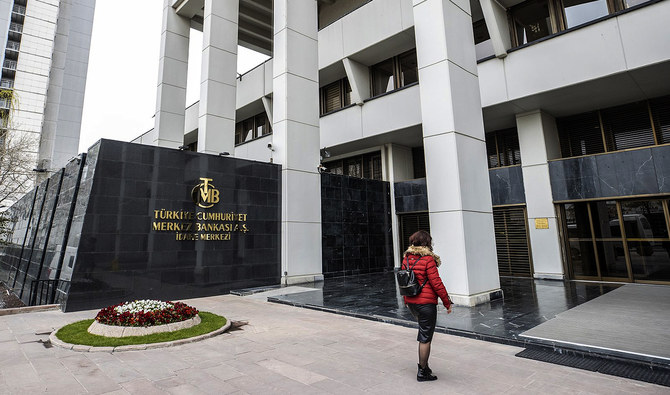

ANKARA: Saudi Arabia and Turkiye on Monday concluded a long-awaited agreement for the Kingdom to invest $5 billion in the central bank in Ankara.
The deposit will provide a major boost to the Turkish economy – struggling in the wake of February’s devastating earthquakes and rising inflation – ahead of the parliamentary and presidential elections on May 14.
The Saudi Fund for Development said the deal was “not only the proof of close cooperation and historical ties between the two countries and its brotherly people, but also a demonstration of the commitment of the Kingdom of Saudi Arabia to support Turkiye’s efforts to strengthen its economy.”
Ankara has been working to consolidate its economic and business ties with the Gulf region, including the UAE and Saudi Arabia, by securing foreign currency inflows.
Enver Erkan, an economist from Dinamik Yatirim, in Istanbul, told Arab News: “The $5 billion deposit to be invested in the CBRT is expected to critically contribute to the Turkish economy in recovering financial damages after the earthquake and in preparing for the approaching parliamentary and presidential elections.”
Initial estimates put the cost of quake damage in Turkiye at around $34 billion – approximately 4 percent of its annual economic output. The Turkish Enterprise and Business Confederation has calculated the figure to be $84.1 billion, mainly in relation to the housing sector.
“Since Turkiye’s current account deficit will probably be in the range of $30 billion to $40 billion this year, financing resources are of critical importance. The reconstruction efforts in the earthquake-hit region of the country will also require financial backing for financing the economic damage and keeping the exchange rate stable in this period,” Erkan said.
The Turkish lira lost 30 percent of its value against the dollar last year and the country has faced a serious shortage of foreign currency reserves for the last five years.
The nation was also hit hard by soaring energy prices after Russia’s invasion of Ukraine, due to being heavily dependent on imports. The depreciation of the Turkish lira coupled with ongoing high inflation rates has hit living costs in the country.
Robert Mogielnicki, senior resident scholar at the Arab Gulf States Institute in Washington, told Arab News: “Saudi Arabia has been shoring up relations with regional actors for some time now – it’s not surprising that Turkiye is now in focus. Saudi Arabia is willing to throw some of its financial largesse around the region to secure a regional leadership status.
“Yet this economic support comes at a time when Turkiye is the much weaker partner and in desperate need of assistance. To the degree that this may be the beginning of better relations, these new ties will be determined largely on Saudi terms,” he said.
On March 3, Turkiye and the UAE signed a comprehensive economic partnership agreement to cut 93 percent of tariffs on non-oil trade and increase bilateral trade from $19 billion to $40 billion in the next five years. The deal with the UAE is expected to be ratified in the second quarter of this year.
Timothy Ash, a London-based emerging markets strategist at BlueBay Asset Management, said foreign exchange deposits at the CBRT would not have much impact in terms of earthquake support, but would help toward supporting Turkiye’s currency and political stability.
“I think there are much more direct and effective ways to provide earthquake relief with the money,” he added.
Ash pointed out that the latest financial deal would assist the CBRT to support the lira while providing a sense of stability in the run up to elections, thereby helping Turkish President Recep Tayyip Erdogan secure another term in office.


