

Saudi non-oil private sector growth accelerates as PMI hits 8-year high in February 

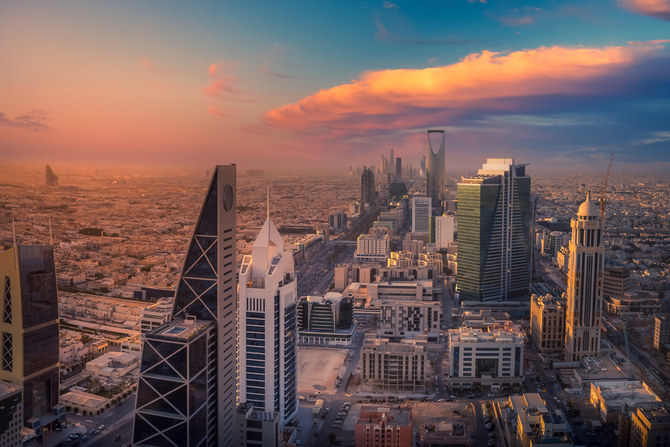
Saudi Arabia’s non-oil private sector witnessed tremendous growth in February, as the Kingdom’s Purchasing Managers’ Index hits 59.8, up from 58.2 in January.  (Shutterstock)
Short Url
Updated 05 March 2023
Follow

Saudi non-oil private sector growth accelerates as PMI hits 8-year high in February 

RIYADH: Saudi Arabia’s non-oil private sector witnessed the highest growth since 2015 in February, as the Kingdom’s Purchasing Managers’ Index hits 59.8, up from 58.2 in January. 

The latest Riyad Bank Saudi Arabia PMI report, formerly the S&P Global Saudi Arabia PMI, noted that the Kingdom’s PMI for December 2022 stood at 56.9; in November, the index hit 58.5. 

According to the index, readings above the 50-mark show growth, while those below 50 signal contraction. 

“Economic conditions remain favorable across business activities in February 2023, as growth in the Saudi non-oil private sector accelerated to the highest level in almost eight years,” said Naif Al-Ghaith, chief economist at Riyad Bank. 

He added: “Despite tighter monetary conditions, demand and supply balance seemed robust and spurred by the ongoing projects around the Kingdom, causing sharper uplifts in output and new orders for firms, as well as rising demand for labor. This was met by a strong improvement in supplier performance and sharp reduction in lead times.”  

According to the report, the rise in PMI was driven by a substantial increase in demand linked to improving economic conditions. 

The report further noted that firms in the Kingdom reported faster upturns in output, employment and purchasing, as optimism toward the year ahead remained robust.  

“Businesses displayed a robust degree of confidence toward future activity as the current improved market conditions are promising, coupled with the positive expectations toward the pickup in the emerging economies,” added Al-Ghaith.  

Meanwhile, job numbers in non-oil companies also rose at the second fastest rate in five years, mainly because firms increased their hiring to fill vacancies in order to meet future demand. 

The report, however, added that the strong improvement in demand in February had the added effect of pushing inflationary pressures higher.  

“Prices have responded to the surge in demand, with the increase in input costs evident especially in the services and construction sectors. To that end, we maintain our inflation forecast just below 3 percent, amid the ongoing cost pressures and the current elevated demand that we believe will continue in the medium term,” Al-Ghaith pointed out. 


Saudi POS spending jumps 28% in final week of Jan: SAMA

Updated 06 February 2026
Follow

Saudi POS spending jumps 28% in final week of Jan: SAMA

RIYADH: Saudi Arabia’s point-of-sale spending climbed sharply in the final week of January, rising nearly 28 percent from the previous week as consumer outlays increased across almost all sectors. 

POS transactions reached SR16 billion ($4.27 billion) in the week ending Jan. 31, up 27.8 percent week on week, according to the Saudi Central Bank. Transaction volumes rose 16.5 percent to 248.8 million, reflecting stronger retail and service activity. 

Spending on jewelry saw the biggest uptick at 55.5 percent to SR613.69 million, followed by laundry services which saw a 44.4 percent increase to SR62.83 million. 

Expenditure on personal care rose 29.1 percent, while outlays on books and stationery increased 5.1 percent. Hotel spending climbed 7.4 percent to SR377.1 million. 

Further gains were recorded across other categories. Spending in pharmacies and medical supplies rose 33.4 percent to SR259.19 million, while medical services increased 13.7 percent to SR515.44 million. 

Food and beverage spending surged 38.6 percent to SR2.6 billion, accounting for the largest share of total POS value. Restaurants and cafes followed with a 20.4 percent increase to SR1.81 billion. Apparel and clothing spending rose 35.4 percent to SR1.33 billion, representing the third-largest share during the week. 

The Kingdom’s key urban centers mirrored the national surge. Riyadh, which accounted for the largest share of total POS spending, saw a 22 percent rise to SR5.44 billion from SR4.46 billion the previous week. The number of transactions in the capital reached 78.6 million, up 13.8 percent week on week. 

In Jeddah, transaction values increased 23.7 percent to SR2.16 billion, while Dammam reported a 22.2 percent rise to SR783.06 million. 

POS data, tracked weekly by SAMA, provides an indicator of consumer spending trends and the ongoing growth of digital payments in Saudi Arabia.  

The data also highlights the expanding reach of POS infrastructure, extending beyond major retail hubs to smaller cities and service sectors, supporting broader digital inclusion initiatives.  

The growth of digital payment technologies aligns with Saudi Arabia’s Vision 2030 objectives, promoting electronic transactions and contributing to the Kingdom’s broader digital economy.