UN chief calls on all countries to follow Iraq’s example and repatriate Al-Hol nationals 

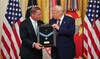
Antonio Guterres was speaking during a visit to the Jeddah Rehabilitation Centre in Baghdad. (Twitter/@antonioguterres)
Short Url
Updated 02 March 2023
Follow

UN chief calls on all countries to follow Iraq’s example and repatriate Al-Hol nationals 

  • Antonio Guterres was speaking from a rehabilitation center for former Daesh returnees at the closure of his Baghdad visit 
  • Half of 60,000 residents in Al-Hol in northern Syria are children facing malnutrition, indoctrination and violence

NEW YORK: The UN Secretary General has called on more nations to follow Iraq’s example and step up the repatriation of nationals stranded in camps in northeast Syria for Daesh militants and their families. 

Antonio Guterres was speaking during a visit to the Jeddah Rehabilitation Centre in Baghdad, where he met with some of those who returned from the Al-Hol camp.

The camp is close to the Iraqi border and houses people displaced after the fall of Daesh. While it is nominally controlled by the US-backed Syrian Democratic Forces, Washington says much of it has been taken over by Daesh militants who use it for indoctrination and recruitment.  


More than 60,000 people live in the camp. Half of them are children under the age of 12. There are recurrent reports of children dying in violence as well as from malnutrition. 

Recognizing the complexity and sensitivity of the repatriation process, Guterres commended the Iraqi government for providing an “example for the world” and conducting repatriations in a “dignified” manner, while also honoring the principles of accountability and reintegration.  

“And it is working. I witnessed it today.” 

Guterres called on all 57 countries which have nationals held at the camp — including the US, China, Iran, France, Switzerland, Denmark, Finland and Australia, to follow Iraq’s example and repatriate them in a dignified manner. 

“Iraq is not one of the richest countries in the world,” he said, “but Iraq is having returnees back from Al-Hol. All countries with their citizens in Al-Hol must do the same, and must do the same in a dignified repatriation in line with applicable international law, and in the case of children, guided by the principles of the best interests of children.”

He said it was important for him to have visited the returnees to “express my support for Iraq’s exemplary efforts, to emphasize the importance of continued return, and to urge all other countries and the wider international community to take responsibility and to act.” 

Guterres, who spent 10 years as the UN High Commissioner for Refugees, described Al-Hol as undoubtedly “the worst camp in the world today with the worst possible conditions… and with enormous suffering for the people that have been stranded there for years.” 

He added that Al-Hol’s population is trapped in a desperate situation deprived of their rights and marginalized “with no end in sight.”

Providing a way out is not only a matter of “human decency and compassion” but also a matter of security, said Guterres. 

“The longer we let this untenable situation fester, the more resentment and despair will grow, and the greater the risks to security and stability. 

“We must prevent the legacy of yesterday’s fight from fueling tomorrow’s conflict.” 

He concluded his visit to Baghdad by praising the resilience of Iraqis.

“I am deeply grateful to the government of Iraq with all its difficulties, with all its problems, with all the security concerns…  [it] is committed to make Iraqis come back here and to be reintegrated and rehabilitated for the future of the communities and for the future of the country,” he said.

“May the Iraq example be followed everywhere else.”


In Gaza hospital, patients cling to MSF as Israel orders it out

Updated 2 sec ago
Follow

In Gaza hospital, patients cling to MSF as Israel orders it out

KHAN YUNIS: At a hospital in Gaza, wards are filled with patients fearing they will be left without care if Doctors Without Borders (MSF) is forced out under an Israeli ban due to take effect in March.
Last month, Israel announced it would prevent 37 aid organizations, including MSF, from operating in Gaza from March 1 for failing to provide detailed information on their Palestinian staff.
“They stood by us throughout the war,” said 10-year-old Adam Asfour, his left arm pinned with metal rods after he was wounded by shrapnel in a bombing in September.
“When I heard it was possible they would stop providing services, it made me very sad,” he added from his bed at Gaza’s Nasser Hospital.
Israel’s Ministry of Diaspora Affairs and Combating Antisemitism, which oversees NGO registrations, has accused two MSF employees of links to Palestinian militant groups Hamas and Islamic Jihad, allegations MSF vehemently denies.
The ministry’s decision triggered international condemnation, with aid groups warning it would severely disrupt food and medical supplies to Gaza, where relief items are already scarce after more than two years of war.
Inside the packed Nasser Hospital in southern Gaza, one of the few medical facilities still functioning in the territory, MSF staff were still tending to children with burns, shrapnel wounds and chronic illnesses, an AFP journalist reported.
But their presence may end soon.
The prospect was unthinkable for Fayrouz Barhoum, whose grandson is being treated at the facility.
“Say bye to the lady, blow her a kiss,” she told her 18-month-old grandson, Joud, as MSF official Claire Nicolet left the room.
Joud’s head was wrapped in bandages covering burns on his cheek after boiling water spilled on him when strong winds battered the family’s makeshift shelter.
“At first his condition was very serious, but then it improved considerably,” Barhoum said.
“The scarring on his face has largely diminished. We need continuity of care,” she said.

- ‘We will continue working’ -

AFP spoke with patients and relatives at Nasser Hospital, all of whom expressed the same fear: that without MSF, there would be nowhere left to turn.
MSF says it currently provides at least 20 percent of hospital beds in Gaza and operates around 20 health centers.
In 2025 alone, it carried out more than 800,000 medical consultations and over 10,000 deliveries.
“It’s almost impossible to find an organization that will come here and be able to replace all what we are doing currently in Gaza,” Nicolet told AFP, noting that MSF not only provides medical care but also distributes drinking water to a population worn down by a prolonged war.
“So this is not really realistic.”
Since the start of the war in October 2023, triggered by Hamas’s deadly attack on southern Israel, Israeli officials and the military have repeatedly accused Hamas of using Gaza’s medical facilities as command centers.
Many have been damaged by two years of bombardments or overcrowded by casualties, while electricity, water and fuel supplies remain unreliable.
Aid groups warn that without international support, critical services such as emergency care, maternal health, and paediatric treatment could collapse entirely, leaving hundreds of thousands of residents without basic medical care.
Humanitarian sources say at least three international NGO employees whose files were rejected by Israeli authorities have already been prevented from entering Gaza through the Kerem Shalom crossing.
“For now, we will continue working as long as we can,” said Kelsie Meaden, an MSF logistics manager at Nasser Hospital, adding that constraints were already mounting.
“We can’t have any more international staff enter into Gaza, as well as supplies... we will run into shortages.”