

The Family Office to host global investment summit in Saudi Arabia

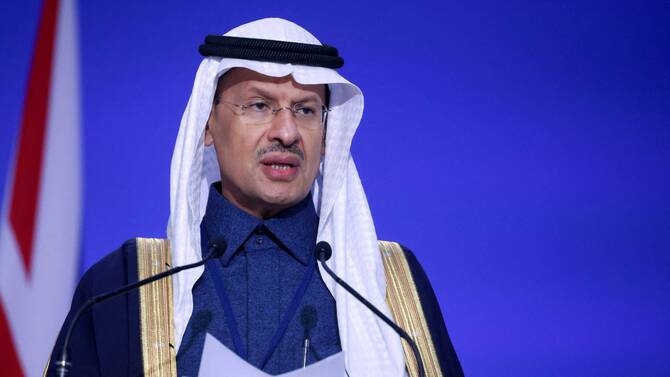
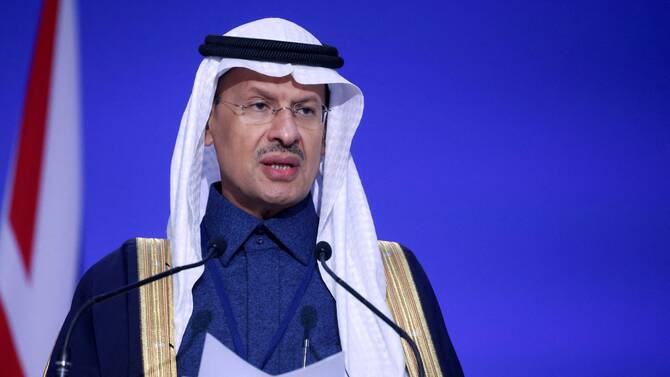
Saudi Energy Minister Prince Abdulaziz bin Salman will deliver the keynote address on the opening day of the exclusive investment summit, scheduled from Jan. 29 to 31 on Shura Island along the Kingdom’s Red Sea coast. Reuters/File
Short Url
Updated 18 January 2026
Follow

The Family Office to host global investment summit in Saudi Arabia

RIYADH: The Family Office, one of the Gulf’s leading wealth management firms, will host its exclusive investment summit, “Investing Is a Sea,” from Jan. 29 to 31 on Shura Island along Saudi Arabia’s Red Sea coast.

The event comes as part of the Kingdom’s broader Vision 2030 initiative, reflecting efforts to position Saudi Arabia as a global hub for investment dialogue and strategic economic development.

The summit is designed to offer participants an immersive environment for exploring global investment trends and assessing emerging opportunities and challenges in a rapidly changing financial landscape.

Discussions will cover key themes including shifts in the global economy, the role of private markets in portfolio management, long-term investment strategies, and the transformative impact of artificial intelligence and advanced technologies on investment decision-making and risk management, according to a press release issued on Sunday.

Abdulmohsin Al-Omran, founder and CEO of The Family Office, will deliver the opening remarks, with keynote addresses from Saudi Energy Minister Prince Abdulaziz bin Salman and Prince Turki Al-Faisal, chairman of the King Faisal Center for Research and Islamic Studies.

The press release said the event reflects the firm’s commitment to institutional discipline, selective investment strategies, and long-term planning that anticipates economic cycles.

The summit will bring together prominent international and regional figures, including former UK Treasury Commercial Secretary Lord Jim O’Neill, Mohamed El-Erian, chairman of Gramercy Fund Management, Abdulrahman Al-Rashed, chairman of the editorial board at Al Arabiya, Lebanese Minister of Economy and Trade Dr. Amer Bisat, economist Nouriel Roubini of NYU Stern School of Business, Naim Yazbeck, president of Microsoft Middle East and Africa, John Pagano, CEO of Red Sea Global, Dr. Anne-Marie Imafidon, MBE, co-founder of Stemettes, SRMG CEO Jomana R. Alrashed and other leaders in finance, technology, and investment.

With offices in Bahrain, Dubai, Riyadh, and Kuwait, and through its Zurich-based sister company Petiole Asset Management AG with a presence in New York and Hong Kong, The Family Office has established a reputation for combining institutional rigor with innovative, long-term investment strategies.

The “Investing Is a Sea” summit underscores Saudi Arabia’s growing role as a global center for financial dialogue and strategic investment, reinforcing the Kingdom’s Vision 2030 objective of fostering economic diversification and sustainable development.


Saudi non-oil exports jump 21% as trade balance improves: GASTAT 

Updated 5 sec ago
Follow

Saudi non-oil exports jump 21% as trade balance improves: GASTAT 

RIYADH: Saudi Arabia’s non-oil exports, including re-exports, rose 20.7 percent year on year in November to SR32.69 billion ($8.72 billion), official data showed. 

According to preliminary figures released by the General Authority for Statistics, national non-oil exports, excluding re-exports, increased by 4.7 percent in November compared with the same month in 2024. 

The strong performance highlights progress under the Kingdom’s Vision 2030 strategy, which aims to diversify the economy and reduce its long-standing dependence on crude oil revenues. 

In its latest report, GASTAT stated: “The ratio of non-oil exports, including re-exports, to imports increased in November 2025, reaching 42.2 percent, compared with 34.9 percent in November 2024. This increase was driven by a 20.7 percent rise in non-oil exports, alongside a 0.2 percent decline in imports over the same period.”  

It added: “The value of re-exported goods increased by 53.1 percent during the same period, driven by an 81.9 percent increase in ‘machinery, electrical equipment and parts’, which accounted for 51.5 percent of total re-exports.”  

Machinery, electrical equipment and parts also led the non-oil export basket, making up 24.2 percent of outbound shipments and recording an 81.5 percent annual increase. This was followed by products of the chemical industries, which represented 20.3 percent of total non-oil exports and rose 0.5 percent year on year. 

The data adds to signs of resilience in Saudi Arabia’s non-oil economy, with S&P Global’s Purchasing Managers’ Index at 57.4 in December, well above the 50 threshold that separates expansion from contraction. 

Top non-oil destinations 

The UAE was the leading destination for Saudi non-oil exports in November, with shipments valued at SR10.48 billion. 

India ranked second at SR3.01 billion, followed by China at SR2.32 billion, Singapore at SR1.76 billion and Bahrain at SR900.7 million. 

Exports to Egypt totaled SR815.5 million during the month, while Turkiye and Jordan received goods worth SR799.1 million and SR773.3 million, respectively. 

GASTAT said ports and airports played a central role in facilitating non-oil shipments in November. 

By sea, Jeddah Islamic Seaport handled the largest volume of non-oil exports at SR3.57 billion, followed by King Fahad Industrial Seaport in Jubail at SR3.51 billion. 

Ras Al-Khair Seaport was the exit point for non-oil goods valued at SR2.66 billion, while Jubail Seaport and King Abdulaziz Seaport in Dammam handled outbound shipments worth SR2.32 billion and SR2.14 billion, respectively. 

By air, King Abdulaziz International Airport handled goods worth SR5.60 billion, while King Khalid International Airport in Riyadh processed exports valued at SR3.53 billion. 

Exports and imports 

Saudi Arabia’s total merchandise exports reached SR99.73 billion in November, representing a 10 percent increase compared with the same month in 2024. 

“Merchandise exports in November 2025 increased by 10.0 percent compared to November 2024, and oil exports increased by 5.4 percent. The percentage of oil exports in total exports declined from 70.1 percent in November 2024 to 67.2 percent in November 2025,” GASTAT added.  

China remained the Kingdom’s largest export destination, accounting for 13.5 percent of total exports, followed by the UAE at 11.7 percent and Japan at 9.9 percent. India, South Korea, the US, Egypt, Singapore, Bahrain and Poland were also among the top 10 destinations, which together accounted for 71.4 percent of total exports. 

Imports declined by 0.2 percent year on year in November to SR77.38 billion, while the merchandise trade surplus surged by 70.2 percent, the report showed. 

China was the Kingdom’s largest source of imports, accounting for 26.7 percent of inbound shipments, followed by the US at 10.2 percent and the UAE at 6.2 percent.  

“Germany, Japan, India, Italy, France, Switzerland, and Egypt were also among the top ten import sources, with total imports from these ten countries representing 68.6 percent of Saudi Arabia’s overall imports,” added GASTAT.  

King Abdulaziz Port in Dammam was the leading entry point for goods, handling 22.8 percent of imports in November. Jeddah Islamic Port followed with 22.6 percent, ahead of King Khalid International Airport in Riyadh at 17 percent and King Abdulaziz International Airport in Jeddah at 11.9 percent.