Saudi Arabia tackles global food insecurity by investing in innovation   

The Kingdom’s ministry signed a cooperation agreement with UpLink in May of 2022. (File)
Short Url
Updated 28 February 2023
Follow

Saudi Arabia tackles global food insecurity by investing in innovation   

RIYADH: Saudi Arabia aims to tackle global food insecurity by supporting the government’s investment in innovation, revealed a top official of the Ministry of Economy and Planning.  

Hosam Rowaihy, the head of the Decision Support Unit and Senior Advisor to the Minister of Economy and Planning, addressed this at the national launch of the Food Ecosystems in Arid Climates Challenge at King Abdullah University of Science and Technology. 

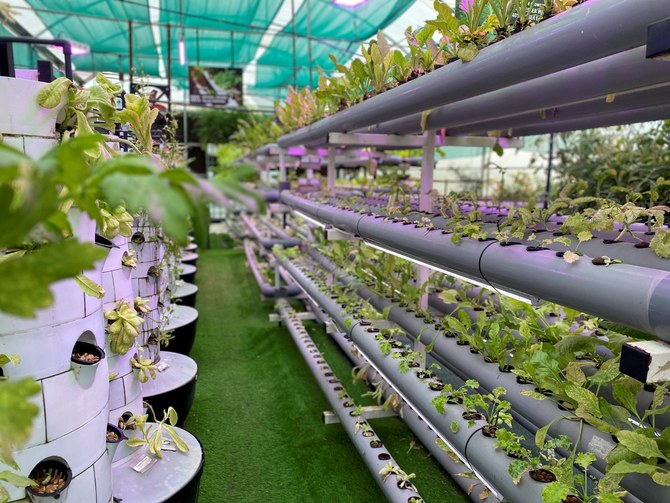
Run by UpLink, an open innovation platform of the World Economic Forum, the challenge is a global call for food entrepreneurs who are generating innovative solutions to achieve food security amidst intensified droughts and desertification. 

“The Ministry of Economy and Planning's partnership with UpLink is an opportunity to create and support a network of innovators that will build unique solutions,” said Rowaihy.   

The Kingdom’s ministry signed a cooperation agreement with UpLink in May of 2022 to “expand the scope of the most innovative solutions which address sustainable development challenges,” the ministry said at the time.   

Rowaihy noted that as the pandemic takes a toll on global hunger, the Kingdom redirects its focus on tackling the issue of food insecurity and malnutrition around the world.   

“As of 2022, 828 million people are affected by hunger worldwide, 2.3 billion are food insecure, and 3.1 billion people cannot afford a healthy diet,” said Rowaihy.   

Given Saudi Arabia's climate context and the challenges that come with it, he stressed that the Kingdom holds its position as a major innovation accelerator, dedicating resources to empower and support entrepreneurs who are determined to tackle the global challenge of food insecurity.  

For the world to reach Zero Hunger, Rowaihy pointed out that “innovative approaches must be implemented along with the investment in today’s youth, who are able to bring novel solutions with agility and speed.”   

Meanwhile, the Minister of Environment, Water and Agriculture Abdulrahman Al-Fadley reviewed the latest developments in the food sector.  

This comes as Saudi Arabia’s private sector also has a vital role in providing the stocks and availability of supply in the markets, which led to overcoming the implications of the Russian-Ukrainian crisis on global food markets. 

Al-Fadley addressed the private sector’s role in developing local stocks of feed inputs like maize, soybeans and barley, as well as the sector’s stimulation mechanisms.   

The minister underlined the vitality of consistency and cooperation between the involved entities to ensure the continuance of availability and quality of food commodities.   


Saudi Arabia opens real estate market to foreign buyers

Updated 22 January 2026
Follow

Saudi Arabia opens real estate market to foreign buyers

RIYADH: Saudi Arabia’s Real Estate General Authority has announced that the regulatory system governing property ownership by foreigners officially came into effect on Jan. 22, with all provisions now enforceable under the national real estate framework.

The authority said applications for property ownership by non-Saudis can be submitted through the official digital platform, Saudi Arabia Real Estate. The system applies to residents and non-residents, as well as foreign companies and entities, in accordance with established legal procedures.

According to the authority, the application process varies by ownership category. Foreign residents in Saudi Arabia may apply directly through the portal using their residence permit, with legal requirements verified automatically and the process completed electronically.

Non-residents are required to initiate their applications through Saudi embassies and consulates abroad to obtain a digital identification number, which enables them to finalize the process via the platform.

Foreign companies and entities without a presence in the Kingdom must first register with the Ministry of Investment through the “Invest Saudi” platform and obtain a unified registration number (700) before completing ownership procedures electronically.

The authority confirmed that the system allows foreign individuals, companies, and entities to own property across Saudi Arabia, with ownership permitted in major cities including Riyadh and Jeddah.

However, property ownership in Makkah and Madinah remains restricted to Saudi companies and Muslim individuals, in line with a regulatory framework based on the Geographic Zones document, which is scheduled to be announced in the first quarter of 2026.

The authority noted that the Saudi Arabia Real Estate portal serves as the official digital gateway for all ownership procedures, ensuring regulatory compliance and direct integration with the national real estate registry to enhance transparency and protect property rights.

It added that the new system is expected to improve the quality of real estate projects by attracting international developers and specialized firms, stimulating growth in the residential, commercial, industrial, and tourism sectors, and creating employment opportunities for Saudi citizens.

The initiative is also expected to strengthen the real estate sector’s sustainable contribution to the Kingdom’s non-oil gross domestic product.