

Japan to expand relations in Gulf, offer help to rebuild quake-hit Turkiye: Top govt official

1 / 2
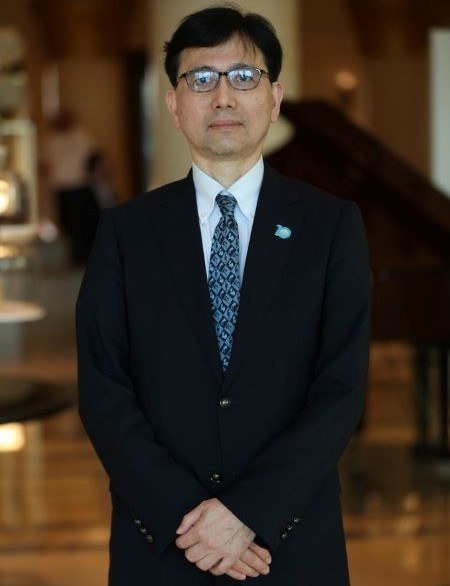
Japanese Cabinet Secretary for Public Affairs Noriyuki Shikata. (Twitter Photo)
2 / 2
Japanese Cabinet Secretary for Public Affairs Noriyuki Shikata. (AN Photo/Abdullah Rammal)
Short Url
Updated 15 February 2023
Follow

Japan to expand relations in Gulf, offer help to rebuild quake-hit Turkiye: Top govt official

  • Japanese Cabinet Secretary for Public Affairs Noriyuki Shikata: We wish to broaden our ties with GCC countries beyond energy, beyond importing oil and gas
  • Shikata: Japan has suffered from various natural disasters, particularly quakes, tsunami, and typhoons; we have very strong sympathy for those people who are suffering in Turkey and Syria

DUBAI: Japan was looking to expand its links with Gulf Cooperation Council countries way beyond its importation of oil and gas, a top Japanese government official has said.

Speaking on the sidelines of the World Government Summit in Dubai, Japanese Cabinet Secretary for Public Affairs Noriyuki Shikata told Arab News that his country aimed to diversify into using other sources of energy.

Japan receives more than 90 percent of its oil from Gulf states, with Saudi Arabia supplying 40 percent and the UAE 35 percent. In addition, 17 percent of its gas comes from the GCC, with Qatar providing 12 percent, Oman 3 percent, and the UAE the remainder.

Shikata said: “We wish to broaden our ties with GCC countries beyond energy. Beyond importing oil and gas. So, in terms of Japanese energy policy, we need to make use of all energy sources, including nuclear power plants.

“My prime minister announced his intention to introduce the next generation of nuclear power plants.”

He noted the importance of renewable energy, adding that Japan was already in talks with Australia and Canada on hydrogen projects. “But for the future, as GCC countries trying to realize energy transition, including hydrogen, we will be very much interested in cooperation.”

On GCC relations, he said: “For Japan, the peace and stability of the Gulf countries is extremely important. In Saudi Arabia we have maintained very close and friendly ties, and also with the UAE.”

Shikata pointed out that Japan was also interested in scientific and technological cooperation and innovation with the region, and he congratulated Saudi astronauts Ali Alqarni and Rayyanah Barnawi on being selected to join the Ax-2 mission to the International Space Station.

“Japan looks forward to promoting further cooperation in the field of space between Japan and Saudi Arabia,” he added.

Japan has previously worked with the UAE, which last year sent a satellite into space in cooperation with the Japanese Aerospace Exploration Agency.

Meanwhile, Japan was quick to send aid, medics, and search and rescue teams following the recent devastating earthquakes in Turkiye and Syria.

Around 150 Japanese workers are currently helping with the international rescue operation and Tokyo has dispatched plane loads of medical equipment, medicines, tents, blankets, and other supplies to the areas hit by the quake.

Shikata said: “Japan has suffered from various natural disasters, particularly quakes, tsunami, and typhoons. So, we have very strong sympathy for those people who are suffering in Turkey and Syria.

“And so, we are committed to helping those affected in both countries in the maximum fashion.”

Japan, situated in an area of major seismic activity, was keen to share its expertise in mitigating the levels of death and destruction caused by such occurrences.

“Obviously we’re still in the aid, rescue, and recovery operation stage here. But at some point, Turkey will be looking at rebuilding,” he added.

He noted that the situation in Syria was more difficult but said the current priority was to ensure those affected had access to clean water and power.

“But in the medium to long term, there’s a need to come up with sustainable reconstruction. And this is something we have gone through.

“It could take several years for the region to be reconstructed. If they need our support for the creation of resilient buildings, which could stand strong quakes, we are ready to support the reconstruction process with our experts,” he added.

Separately, during the height of the coronavirus pandemic, Japan imposed strict rules on entry to the country, but most health and safety measures have now been eased.

Shikata said the Japanese government was still advising but not enforcing the wearing of masks on trains and busses, and in other busy public places.

There was also no longer a requirement for visitors to have a PCR test before traveling to Japan – although some restrictions remained in place for visitors from China.

As the only Asian country in the intergovernmental Group of Seven political forum, Shikata highlighted the importance of building relations with other nations in Asia.


Former Iraq PM Maliki rejects US interference after threat

Updated 2 sec ago
Follow

Former Iraq PM Maliki rejects US interference after threat

  • His comments come after Trump threatened to end support to the country if Al-Maliki returns as PM
BAGHDAD: Iraq’s main candidate for the premiership, Nouri Al-Maliki, on Wednesday denounced Washington’s “blatant interference,” after President Donald Trump threatened to end all support to the country if Al-Maliki took the post.
The US has held significant sway over Iraqi politics since leading the 2003 invasion that ousted long-time ruler Saddam Hussein.
“We categorically reject the blatant American interference in Iraq’s internal affairs,” said Maliki, the only former Iraqi prime minister to have served two terms since the invasion.
“We consider it a violation” of Iraq’s “democratic system,” in place since 2003, he added on X.
Maliki fell out with Washington during his premiership (2006-2014) over growing ties with Iran and accusations that he pushed a sectarian agenda.
But the 75-year-old shrewd politician remained a central figure in Iraq’s politics and a powerbroker whose approval is considered indispensable to any governing coalition.
On Tuesday, Trump said that Iraq would make a “very bad choice” if Al-Maliki were selected for the top post.
He warned that because of Maliki’s “insane policies and ideologies, if elected, the United States of America will no longer help Iraq.”
Maliki was endorsed as Iraq’s next prime minister by the Coordination Framework, an alliance of Shiite groups with varying links to Iran that has emerged in recent years as the main ruling coalition.

‘Until the end’

Since the invasion, Iraq has long been a proxy battleground between the US and Iran, with successive governments negotiating a delicate balance between the two foes.
But Iraq’s new prime minister is set to return to power at a time of seismic changes in the Middle East, as Tehran’s regional influence wanes and as Washington threatens possible military intervention in Iran.
In his post on Wednesday, Al-Maliki said the US involvement “infringes upon the Coordination Framework’s decision to nominate” its candidate.
He added that, in line with that decision, he “will continue to work until the end, in a way that achieves the higher interests of the Iraqi people.”
Several Iraqi political sources told AFP that the coalition is set to meet soon to discuss Trump’s ultimatum.
“Efforts are underway to hold a meeting amid a complicated situation,” a source close to the Framework said.
He added that there were internal divisions within the coalition over supporting Maliki, but that a majority vote ultimately settled the issue.
Maliki’s backers are now pushing to maintain his candidacy and “not back down,” he added.
US representatives in Iraq have been lobbying against Maliki, according to Iraqi sources and diplomats in Baghdad.
Trump’s statement came days after Secretary of State Marco Rubio voiced similar concerns in a telephone call with outgoing Prime Minister Mohammed Shia Al-Sudani.
The US had also sent a letter to Iraqi politicians saying that Washington views Al-Maliki negatively, political sources told AFP.
Iraq’s new premier will be expected to address Washington’s longstanding demand that Baghdad disarm Tehran-backed factions, many of which are designated terrorist groups by the United States.
Last month, Iraqi officials and diplomats told AFP that Washington demanded that the incoming government exclude Iran-backed armed groups.
Before Trump’s call, an Iraqi political source said that the Coordination Framework was set on moving forward with the nomination, believing that Al-Maliki could eventually allay Washington’s concerns.
Maliki “thinks differently today,” an Iraqi politician told AFP.
After decades of conflicts and chaos, Iraq has recently regained a sense of stability.
But it is struggling with weak economic growth and cannot risk punitive measures by the US, which has already sanctioned several Iraqi entities, accusing them of helping Tehran evade sanctions.