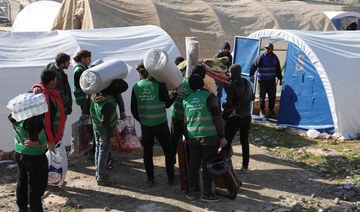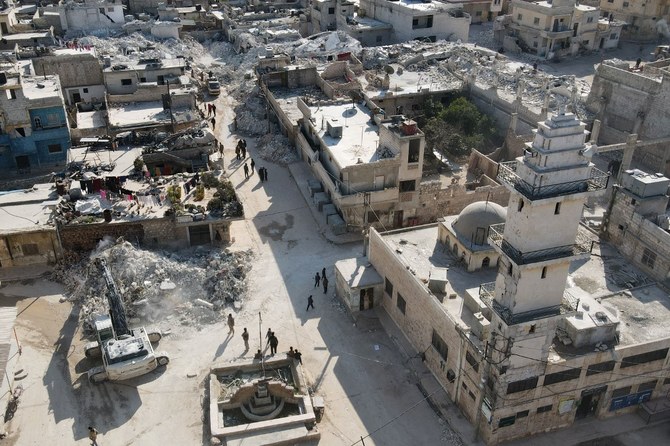

LONDON: The devastating earthquake in Syria and Turkiye, which killed over 35,000 people, has been exploited by scammers seeking to dupe people into donating to fake accounts, according to security experts.
These online scams claim to be relief fundraisers when, in fact, they channel donations into their own PayPal accounts and cryptocurrency wallets, a BBC investigation revealed on Monday.
The investigation identified a few of the methods scammers are employing and tools to be verified before users can donate.
TikTok Live allows content creators to make money by receiving digital gifts. Scammers are sharing images and video footage of the devastation and rescue efforts, with captions encouraging donations and inviting sympathy.
One of the accounts that the BBC found went live for over three hours, showing a pixelated aerial image of destroyed buildings, accompanied by sound effects of explosions and captioned “Let’s help Turkey. Donation.” Off-camera, a male voice was laughing as he spoke in Mandarin, according to the BBC.

Another live-streamed video showed a frightened child running from an explosion alongside the message “Please help achieve this goal” — a plea for TikTok gifts.
The photo, however, was not from last week’s earthquakes. By running a reverse image search, the BBC found the same photo had been posted on Twitter in 2018 along with the caption, “Stop Afrin Genocide,” referring to a city in northwestern Syria.

Another BBC investigation found TikTok takes up to 70 percent of the proceeds of digital gifts, but TikTok said it took less.
“We are deeply saddened by the devastating earthquakes in Turkey and Syria and are contributing to aid earthquake relief efforts,” a TikTok spokesperson told the BBC.
The spokesperson added: “We’re also actively working to prevent people from scamming and misleading community members who want to help.”
On Twitter, scammers are sharing impassioned images alongside links to cryptocurrency wallets, urging people to donate to help victims.
One account posted the same appeal eight times in the span of 12 hours, with an image of a firefighter carrying a child amid collapsed buildings.

But the image was not real, created using artificial intelligence software and the image of Maj. Gen. Panagiotis Kotridis of the Aegean fire brigade, Greek newspaper OEMA reported.
AI image generators often make mistakes, and Twitter users were quick to spot that the firefighter in the post had six digits on his right hand.
To verify this, the BBC’s tech research hub, the Blue Room, attempted to generate similar images using the same software. The prompt produced four images:

One of the scammers had been using the same crypto wallet link since 2018. Another link had been shared on Russian social media website VK with pornographic content.
When the BBC contacted the user tweeting the appeal, they denied it was a scam and answered the questions on Twitter using an AI translation tool: “My aim is to be able to help people affected by the earthquake if I manage to raise funds. Now people are cold in the disaster area, and especially babies do not have food. I can prove this process with receipts.”
The BBC said they have not yet been sent receipts or proof of identity.
Other scammers on Twitter use fake fundraising accounts to post links to PayPal.
These accounts retweet news articles and reply to celebrities and businesses to gain visibility, said Ax Sharma, a cybersecurity expert at Sonatype.

An example is @TurkeyRelief, which joined Twitter in January, and had just 31 followers when the report was published, and touts for donations via PayPal.
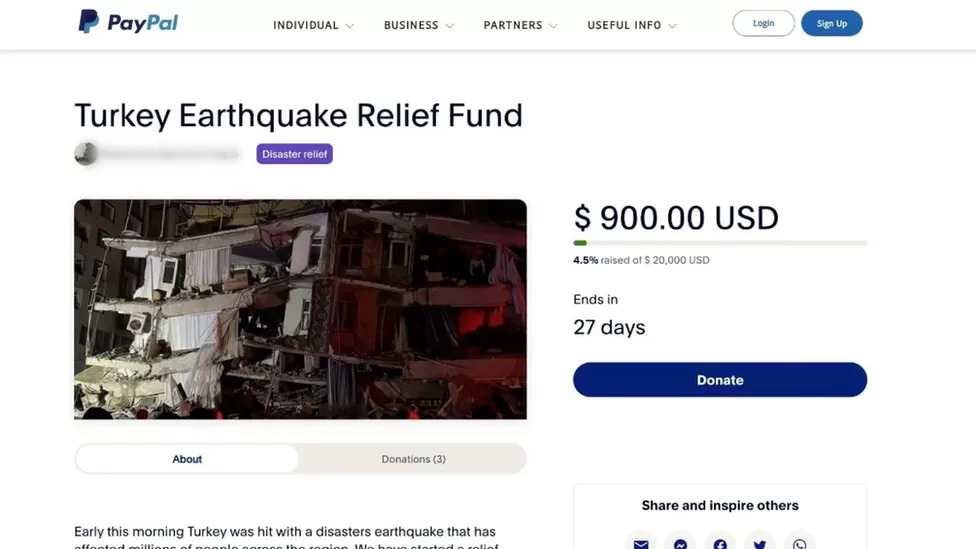
The PayPal account had received $900 in donations by Monday, including $500 from the creator of the page “to make the fundraiser appear authentic,” according to Sharma.
Over 100 fundraisers, some of which are fake, launched on PayPal following the disaster in Turkiye and Syria.
Sharma warned that accounts that claim to be based in Turkiye are especially suspicious, as PayPal has not been operating the country since 2016.
“There are real charities outside of Turkey using PayPal, but when these fundraisers say they’re in Turkey, that’s a red flag,” he explained.
Donors must also be wary of anonymous appeals that have raised small amounts. Real charities have “significant funds.”

A PayPal spokesperson told the BBC: “While the vast majority of people using PayPal to accept donations have the best intentions, there are inevitably some who attempt to prey on the charitable nature and generosity of others.
“PayPal teams are always working diligently to scrutinize and ban accounts, particularly in the wake of events like the earthquake in Turkey and Syria, so that donations go to intended causes,” the spokesperson added.