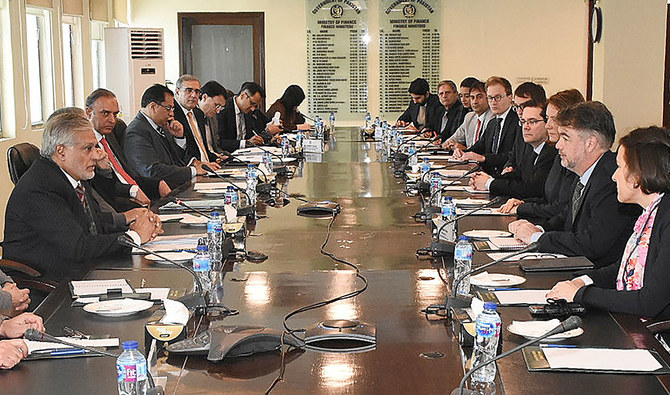

ISLAMABAD: The Pakistani government and the International Monetary Fund (IMF) on Tuesday initiated policy-level talks to bridge differences on data regarding the budget deficit, taxation and measures required to overcome fiscal gaps, particularly in the energy sector.
The IMF mission has been in Islamabad since January 31 following the government’s request to negotiate resumption of Pakistan’s $7 billion loan program, which has been stalled since November last year.
In the first four days, the global lender and the government held technical talks, in which Pakistani officials shared the fiscal statistics, including development budget, external financing and energy sector data, with the IMF mission for its perusal.
“The differences with the IMF still persist over numbers regarding the fiscal gap and need for new taxation through a mini-budget, but hopefully we will overcome it,” a finance ministry official with the knowledge of talks told Arab News, on the condition of anonymity.
Islamabad is struggling to get the loan program revived to receive a tranche of more than $1 billion to stave off a balance-of-payments crisis after the nation’s foreign exchange reserves dropped to $3 billion, just enough to provide 18-day cover for imports.
The official said the government was willing to generate an additional revenue of around Rs450 billion ($1.6 billion), but the IMF was pushing it for at least Rs840 billion ($3 billion) additional revenue to overcome the primary deficit.
“We have agreed with the IMF in principle to slash our development budget too,” he said.
Pakistan’s development budget is expected to be reduced to over Rs400 billion ($1.4 billion) this fiscal year from Rs727 billion.
“The discussions on withdrawal of subsidy and measures to abolish energy sector debt will be held in the next two days,” the official said, hoping the two sides would reach an agreement on all issues by February 9.
The Pakistani finance ministry and the IMF country representative did not respond to Arab News’s requests for comment.
Pakistan is struggling to quell default fears in the domestic and international markets with the $1.1 billion bailout tranche as the South Asian country witnesses a decades-high inflation and depreciation in the national currency.
The Pakistani currency has depreciated by more than Rs100 against the US dollar since January last year due to external repayment pressure, while inflation jumped to 27.5 percent year-on-year in January.
Economists say it is imperative for the government to secure a staff-level agreement with the IMF by Thursday to complete the 9th revenue of $7 billion to ensure dollar inflows from multilateral partners, friendly countries and other bilateral sources to shore up the country’s foreign reserves.
“As slippages from the budgeted amounts are considerable, adjustments in the prices of electricity and gas as well as in the fiscal sector would need to be done to ink this agreement,” Dr. Khaqan Najeeb, a former adviser to the finance ministry, told Arab News.
“Some expenditure cuts would also be required to ensure that the primary deficit comes back to the agreed amount with the IMF.”
Najeeb, however, hoped the IMF would be sympathetic to the plight of the people suffering from last year’s floods and double-digit inflation.