

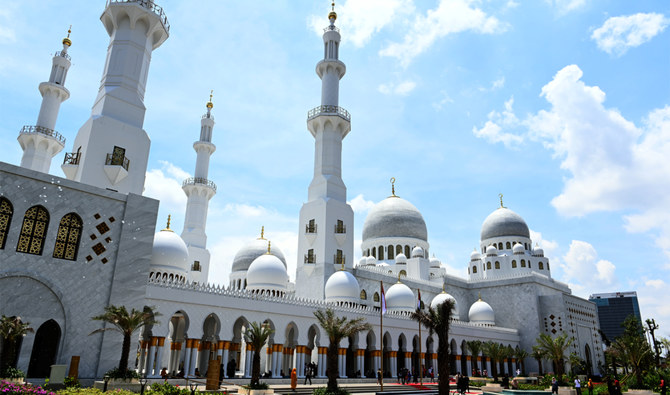

JAKARTA: The public opening of the Sheikh Zayed Grand Mosque in Indonesia will take place before this year’s Ramadan, a religious ministry official said on Monday, as the government pins hopes on the new mosque to attract tourists and become a center for moderate Islam.
The mosque in Solo, Central Java, is a smaller replica of the popular landmark in Abu Dhabi named after the UAE’s late President Sheikh Zayed bin Sultan Al-Nahyan. It is a gift from UAE President Mohamed bin Zayed Al-Nahyan, who inaugurated it alongside Indonesian President Joko Widodo in November.
Akmal Salim Ruhana, who heads the mosque affairs sub-directorate at the Ministry of Religious Affairs, said the mosque was currently in its final stages of construction before a public opening.
“We have to open before Ramadan, because we have already prepared a bunch of programs for the holy month,” Ruhana told Arab News.
The mosque symbolized the close friendship between Indonesia and the UAE and will be managed by officials from both countries, Ruhana added, with both governments planning on developing an Islamic center in the same city soon.
“This is an expression of the good relations between the two countries, Indonesia-UAE diplomatic relations, and the closeness and friendliness of the two presidents,” he said.
Officials are also hopeful of the mosque’s potential to attract religious tourism.
“The Sheikh Zayed Grand Mosque in Solo has the potential to be a learning center for a moderate generation of Islam,” Heny Ermawati, spokesperson of the Surakarta City Government — another name for Solo — told Arab News. “The beauty of this building can be a point of attraction for tourists from all over.”
The Indonesian government had sent architects to draw in detail the grand mosque in Abu Dhabi, and the structure in Solo is about one-fifth the size of the original, Ermawati said.
The mosque — which can accommodate up to 14,000 people — has design elements unique to the region, she added, such as the usage of batik patterns on the flooring and carpets. Batik is an ancient art form in Indonesia, traditionally made with wax-resistant dye on fabrics.
Though it is not yet open to the public, the mosque has already created a buzz in Solo and throughout the country, with residents and visitors of the city flocking to the area to get a glimpse and take photos.
“Even though the mosque isn’t operational yet, it is already bringing big benefits for the local public … it’s a new icon for Solo,” Teuku Rezasyah, an international relations expert from Padjadjaran University in West Java, told Arab News.
The mosque can facilitate community programs, including youth and women’s empowerment as well as teachings on moderate Islam, Rezasyah said.
“The soul of this mosque is its capacity to enlighten the people inside Indonesia on the importance of the future Indonesia-UAE relations, which is beneficial for both countries.”


