LONDON: Russian officials have no desire to halt Russia’s almost 4-year-old invasion of neighboring Ukraine and think they can “outsmart” the United States during talks with Washington about how to end the war, a senior European intelligence official told The Associated Press.
Kaupo Rosin, the head of Estonia’s foreign intelligence service, said Moscow is playing for time in the talks with Washington and “there is absolutely no discussion about how to really cooperate with the US in a meaningful way.”
Rosin, who spoke at an online briefing with reporters ahead of the publication of Estonia’s annual security report on Tuesday, said the findings were based on intelligence his country gathered from “Russian internal discussions.” He did not elaborate on how the information was obtained.
Russian officials have publicly insisted they want a negotiated deal, but they show little willingness to compromise and remain adamant their demands must be met.
US-brokered talks between envoys from Russia and Ukraine in recent weeks have been described by officials from both sides as constructive and positive, but there has been no sign of any progress on key issues in the discussions.
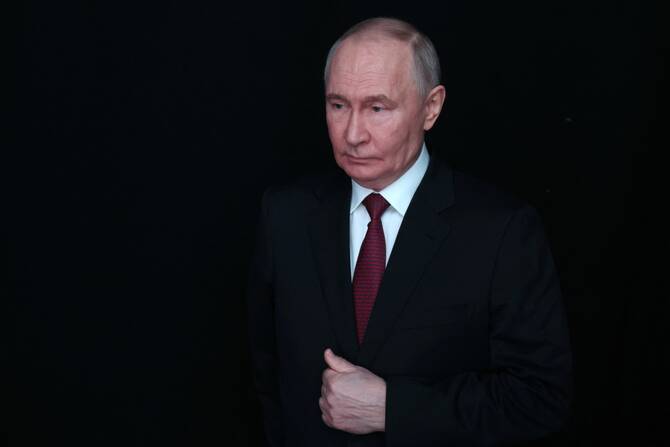
Russian President Vladimir Putin, “in his head, still thinks that he can actually militarily win (in Ukraine) at some point,” Rosin said.
A White House official responded to the Estonian intelligence chief’s comments and said the president’s negotiators had made “tremendous progress” on the talks to end the war in Ukraine. Although prisoner exchanges have happened sporadically since May, they pointed in particular to a recent agreement in Abu Dhabi among the US, Ukraine and Russia to release more than 300 prisoners.
That agreement was evidence that efforts to end the war are advancing, said the official, who was granted anonymity because they did not have permission to speak publicly.
In an indication that US President Donald Trump wants to accelerate the momentum of peace efforts, Ukrainian President Volodymyr Zelensky said last week that Washington has given Ukraine and Russia a June deadline to reach a settlement. Trump over the past year has set several deadlines that have come and gone without apparent consequences.
Fiona Hill, a Russia expert and adviser to Trump in his first term, said Trump and his officials are spinning a story that depicts the US president as a peacemaker and, for that reason, they are not interested in changing their assessment that Putin wants to end the war.
Both leaders, she told the AP, “need their version of events to play out” and are hanging on to their version of the truth — Putin as the victor in Ukraine and Trump as the dealmaker.
It’s unclear why US officials believe Putin wants peace
Although Trump has repeatedly suggested that Putin wants peace, he has sometimes appeared frustrated with the Russian leader’s lukewarm approach to talks.
From an intelligence perspective, Rosin said he doesn’t know why US officials believe the Russian leader wants to end the war.
Hill, who served as a national intelligence officer under previous US administrations, said it’s unclear what intelligence information Trump gets on Russia — or if he reads it.
He relies heavily on his lead negotiators, special envoy Steve Witkoff and son-in-law Jared Kushner, who Hill said may struggle to believe that the damage to the Russian economy caused by the war is a price Putin is willing to pay for Ukraine.
Referring to reports that Witkoff has attended meetings with Putin without a US State Department translator, she questioned if Trump’s envoys understood what was being said in meetings and suggested officials may be “selectively” looking for what they want to hear.
Being told what they want to hear
Putin is fixated on controlling all of Ukraine and the idea “is so deep in his head” that it takes priority over anything else, including economics, Rosin said, suggesting that the conflict will continue in some form for several years.
He said Putin’s position may change only if the situation in Russia, or on the front line, becomes “catastrophic,” threatening his power. For now, the Russian leader still believes he can take Ukraine and “outsmart everybody,” Rosin said.
One reason Putin thinks he can win militarily in Ukraine is because he is “definitely” getting some incorrect information from his officials, the Estonian intelligence chief said.
Not all Russian officials, however, believe they are winning the war in Ukraine, Rosin said.
“The lower you go in the food chain,” the more people understand “how bad it is actually on the ground,” he said, whereas higher up, officials are more optimistic because they are given more positive reports. Rosin cited examples of officials being told Russian forces had captured Ukrainian settlements when that was not true.
The reports that arrive at Putin’s desk may be “much more optimistic” than the situation on the ground because Putin only wants to see success, Rosin said.
Hill said both Trump and Putin are probably being told what they want to hear by people who want to please them.


![]()

Russia thinks it can outsmart the US during Ukraine peace talks, a European intelligence chief says
Short Url
https://arab.news/6r4g3
Russia thinks it can outsmart the US during Ukraine peace talks, a European intelligence chief says
- Kaupo Rosin, the head of Estonia’s foreign intelligence service, said Moscow is playing for time in the talks with Washington and “there is absolutely no discussion about how to really cooperate with the US in a meaningful way”


Latest updates


© 2026 SAUDI RESEARCH & PUBLISHING COMPANY, All Rights Reserved And subject to Terms of Use Agreement.