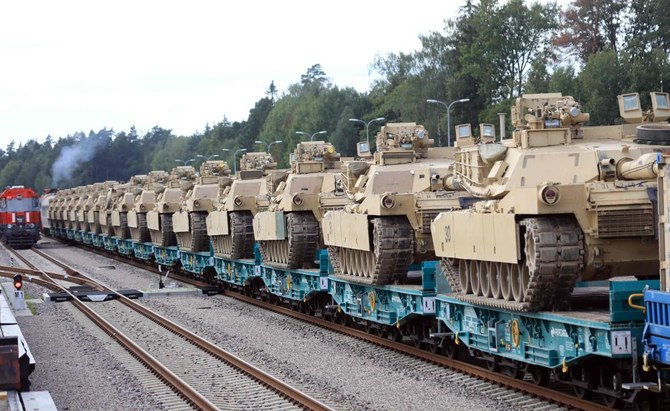
WASHINGTON: The US will send 31 M1 Abrams battle tanks to Ukraine, senior administration officials said Wednesday, reversing months of persistent arguments by the Biden administration that the tanks were too difficult for Ukrainian troops to operate and maintain.
The US decision came on the heels of Germany agreeing to send 14 Leopard 2 A6 tanks from its own stocks. Germany had said the Leopards would not be sent unless the US put its Abrams on the table, not wanting to incur Russia’s wrath without the US similarly committing its own tanks.
Since then, both sides had participated in “good diplomatic conversations” that had made the difference and were part of the “extraordinary shift in Germany’s security policy” over providing weapons to Ukraine since Russia invaded 11 months ago, said a senior administration official, who briefed reporters Wednesday on the condition of anonymity to describe the new tank package in advance of the announcement.
The $400 million package announced Wednesday also includes eight M88 recovery vehicles — tank-like tracked vehicles that can tow the Abrams if it gets stuck.
Altogether, France, the UK, the US, Poland, Germany, the Netherlands and Sweden will send hundreds of tanks and heavy armored vehicles to fortify Ukraine as it enters a new phase of the war and attempts to break through entrenched Russian lines.
But there were few answers about what US tanks would be sent — whether they would be pulled from the existing stockpile of more than 4,000 Abrams and retrofitted, or whether the US would use the Ukraine Security Assistance Initiative to buy new systems to possibly backfill allies who send their own or buy new systems outright for Ukraine.
Either way, using the assistance initiative funding route means that while Abrams have now been promised to Ukraine, it will likely be many months before the tanks are actually on the battlefield, and not in time for Russia’s anticipated Spring offensive.
Russian Ambassador to Germany Sergey Nechayev on Wednesday called Berlin’s decision to send Leopard 2 tanks to Ukraine “extremely dangerous.”
Nechayev said in an online statement that the move “shifts the conflict to a new level of confrontation and contradicts the statements of German politicians about their reluctance to get involved in it.”
“We’re seeing yet again that Germany, as well as its closest allies, is not interested in a diplomatic resolution of the Ukraine crisis, it is determined to permanently escalate it and to indefinitely pump the Kyiv regime full of new lethal weapons,” the statement read.
Until now, the US has resisted providing its own M1 Abrams tanks to Ukraine, citing extensive and complex maintenance and logistical challenges with the high-tech vehicles. Washington believes it would be more productive to send German Leopards since many allies have them and Ukrainian troops would need less training than on the more difficult Abrams.
Just last week, Under Secretary of Defense for Policy Colin Kahl told reporters that the Abrams is a complicated, expensive, difficult to maintain and hard to train on piece of equipment. One thing Defense Secretary Lloyd Austin has been very focused on, he said, “is that we should not be providing the Ukrainians systems they can’t repair, they can’t sustain, and that they, over the long term, can’t afford, because it’s not helpful.”
For the Abrams to be effective in Ukraine, its forces will require extensive training on combined arms manuevuer — how the tanks operate together on the battlefield, and on how to maintain and support the complex, 70-ton weapon. The Abrams tanks use a turbine jet engine to propel themselves that burns through at least two gallons a mile regardless of whether they are moving or idling, which means that a network of fuel trucks is needed to keep the line moving.

Despite concerns, US to send 31 Abrams tanks to Ukraine
Short Url
https://arab.news/6fkss
Despite concerns, US to send 31 Abrams tanks to Ukraine
- The US decision came on the heels of Germany agreeing to send 14 Leopard 2 A6 tanks from its own stocks
- The $400 million package announced Wednesday also includes eight M88 recovery vehicles
A Hong Kong court upholds the convictions of about a dozen activists in national security case
HONG KONG: A Hong Kong court Monday dismissed all appeals arising from the city’s biggest case brought under a Beijing-imposed national security law.
The pro-democracy advocates who lodged the challenges were among 47 activists charged in 2021 with conspiracy to commit subversion for their involvement in an unofficial primary election. The mass prosecution involving some of the best-known activists crushed much of the city’s once-thriving pro-democracy movement that reached a height with massive anti-government protests in 2019.
Forty-five of the defendants were sentenced to between four years and 10 years in 2024, with their punishments drawing criticism from foreign governments and rights groups.
Eleven activists who appealed their convictions lost their bids. They included former lawmakers Leung Kwok-hung, Lam Cheuk-ting, Raymond Chan and Helena Wong.
All appeals over sentences, brought by 10 of them and another activist, were also dismissed by the Court of Appeal.
Lawrence Lau, a pro-democracy former district councilor, was one of two activists acquitted in the case. Judges upheld his acquittal following an appeal from the prosecution.
A primary led to convictions
Riding on the 2019 protests, the pro-democracy camp had been looking to make gains in the 2020 legislative election. The unofficial primary was meant to shortlist pro-democracy candidates for the official election.
During the trial, prosecutors said the activists aimed to paralyze Hong Kong’s government and force the city’s leader to resign by aiming to win a legislative majority and using it to block government budgets indiscriminately.
Judges at the appellate court ruled that the plan was unlawful under the meaning of the security law, saying it was conceived and advocated by legal scholar Benny Tai — whom the lower court described as the mastermind — as a “constitutional mass destruction weapon” for the purpose of toppling the city’s constitutional order.
Critics said the activists’ convictions illustrated how authorities crushed dissent following the 2019 protests. The Beijing and Hong Kong governments insist the national security law was necessary for the city’s stability.
Leung’s wife, Chan Po-ying, also an activist but unrelated to the case, said the ruling was not based on facts, arguing the defendants’ acts were in line with the city’s mini-constitution, the Basic Law.
“It already presumed these people had intended to subvert the state’s power,” she said.
Amnesty International Hong Kong Overseas spokesperson Fernando Cheung said the ruling reflected the grave state of human rights in Hong Kong.
“By failing to overturn these wrongful convictions and sentences today, the court has missed a critical opportunity to correct this mass injustice,” he said.
Some finished serving their terms
The case involved democracy advocates across the spectrum, including Tai, who got a 10-year prison term, and former student leader Joshua Wong, whose sentence was four years and eight months.
Nearly 20 activists in the case have been released from prison over the past year. Among them were former district councilors Jimmy Sham and Lester Shum. Sham and Lee Yue-shun, another acquitted activist, chatted with Lau before Monday’s hearing.
As those who were still in prison left the courtroom, some waved at their families and supporters.
Some residents stayed outside the court building in line since Saturday to secure a seat in the courtroom. Retiree Margaret Chan arrived Monday morning, hoping to show her support to those she considered to be innocent.
Seeing some activists released from prison relieved her. “They have survived it,” she said.
The pro-democracy advocates who lodged the challenges were among 47 activists charged in 2021 with conspiracy to commit subversion for their involvement in an unofficial primary election. The mass prosecution involving some of the best-known activists crushed much of the city’s once-thriving pro-democracy movement that reached a height with massive anti-government protests in 2019.
Forty-five of the defendants were sentenced to between four years and 10 years in 2024, with their punishments drawing criticism from foreign governments and rights groups.
Eleven activists who appealed their convictions lost their bids. They included former lawmakers Leung Kwok-hung, Lam Cheuk-ting, Raymond Chan and Helena Wong.
All appeals over sentences, brought by 10 of them and another activist, were also dismissed by the Court of Appeal.
Lawrence Lau, a pro-democracy former district councilor, was one of two activists acquitted in the case. Judges upheld his acquittal following an appeal from the prosecution.
A primary led to convictions
Riding on the 2019 protests, the pro-democracy camp had been looking to make gains in the 2020 legislative election. The unofficial primary was meant to shortlist pro-democracy candidates for the official election.
During the trial, prosecutors said the activists aimed to paralyze Hong Kong’s government and force the city’s leader to resign by aiming to win a legislative majority and using it to block government budgets indiscriminately.
Judges at the appellate court ruled that the plan was unlawful under the meaning of the security law, saying it was conceived and advocated by legal scholar Benny Tai — whom the lower court described as the mastermind — as a “constitutional mass destruction weapon” for the purpose of toppling the city’s constitutional order.
Critics said the activists’ convictions illustrated how authorities crushed dissent following the 2019 protests. The Beijing and Hong Kong governments insist the national security law was necessary for the city’s stability.
Leung’s wife, Chan Po-ying, also an activist but unrelated to the case, said the ruling was not based on facts, arguing the defendants’ acts were in line with the city’s mini-constitution, the Basic Law.
“It already presumed these people had intended to subvert the state’s power,” she said.
Amnesty International Hong Kong Overseas spokesperson Fernando Cheung said the ruling reflected the grave state of human rights in Hong Kong.
“By failing to overturn these wrongful convictions and sentences today, the court has missed a critical opportunity to correct this mass injustice,” he said.
Some finished serving their terms
The case involved democracy advocates across the spectrum, including Tai, who got a 10-year prison term, and former student leader Joshua Wong, whose sentence was four years and eight months.
Nearly 20 activists in the case have been released from prison over the past year. Among them were former district councilors Jimmy Sham and Lester Shum. Sham and Lee Yue-shun, another acquitted activist, chatted with Lau before Monday’s hearing.
As those who were still in prison left the courtroom, some waved at their families and supporters.
Some residents stayed outside the court building in line since Saturday to secure a seat in the courtroom. Retiree Margaret Chan arrived Monday morning, hoping to show her support to those she considered to be innocent.
Seeing some activists released from prison relieved her. “They have survived it,” she said.
© 2026 SAUDI RESEARCH & PUBLISHING COMPANY, All Rights Reserved And subject to Terms of Use Agreement.



