



PESHAWAR: More than 15 percent of attacks carried out by the Tehreek-e-Taliban Pakistan (TTP) in 2022 took place in the impoverished northwestern district of Lakki Marwat, with officials, residents and experts saying the area’s poor state infrastructure and a lack of government writ had made it a “soft target” for TTP militants since they called off a cease-fire with the government last year.
The district was listed among the top four ‘terrorist hotspots’ in the Khyber Pakhtunkhwa province by senior government functionaries in December.
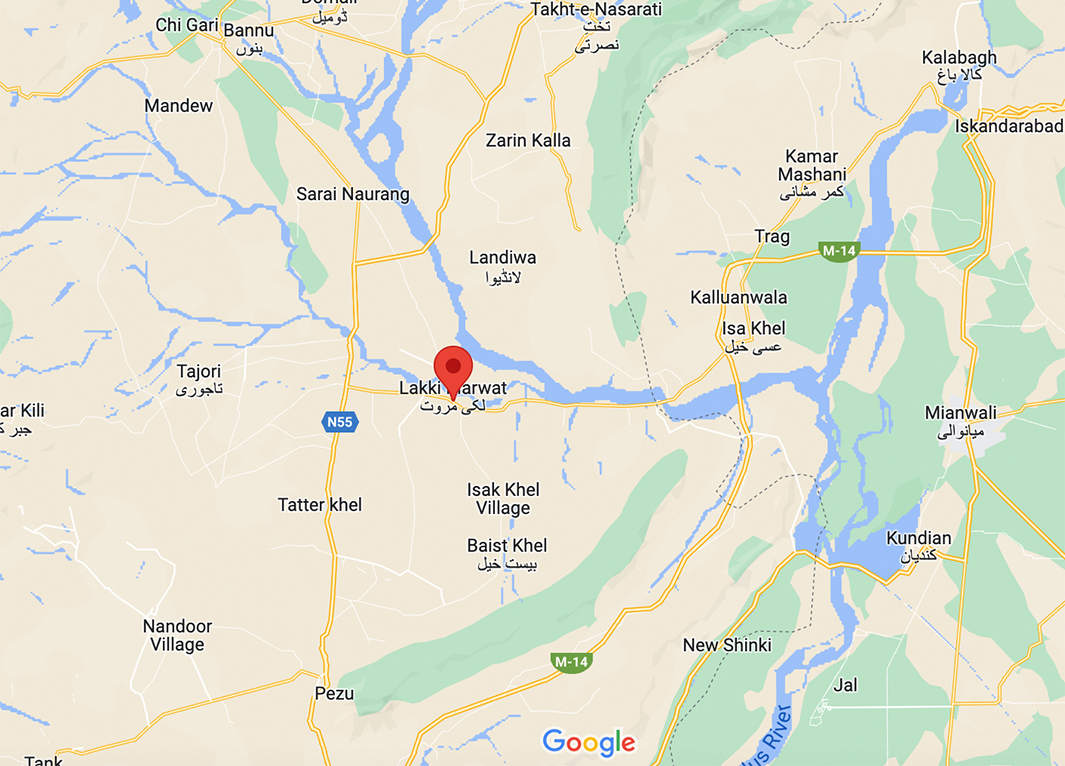
Since ending a truce with the government in November, the banned TTP has carried out a rising number of attacks, including many large and small-scale attacks on police and polio vaccine teams in Lakki Marwat.
According to data collected by the Islamabad-based Pak Institute for Peace Studies (PIPS), out of a total 262 attacks in 2022, the TTP carried out 89, of which at least 14, or 15.7 percent, were in Lakki Marwat district.
In the past too, Lakki Marwat has seen some of the deadliest attacks in Pakistan’s history, including a suicide blast during a volleyball match that killed more than a hundred people in 2010.
“Our district saw 14 major and minor attacks on police check posts and patrolling parties [in 2022], leaving 16 police personnel dead and 14 wounded,” Shahid Khan Marwat, the district police spokesperson, told Arab News.
In comparison, he said, five attacks took place in 2021, in which eight police officials were killed.
Tribal elders, residents and experts attributed the rise in attacks to a number of factors, including that a Marwat Qaumi Jirga formed to counter militancy after the 2010 attack on the volleyball game was no longer functional.
“This district is vulnerable and easily accessible with no active police patrol. The dysfunctional Marwat Qaumi Jirga and dense wild forest along Gambila River are some factors that turned the area into a soft target for militants,” local elder Sher Alam Marwat told Arab News.
“The jirga played a proactive role to maintain peace and kept militants away from the area. But unfortunately, that jirga is not very active nowadays.”
Adnan Bitani, a senior journalist and security analyst, said Lakki Marwat and other nearby districts like South Waziristan were being “virtually overrun” by the TTP because of a “weak government writ.”
“The government has minimal presence in the Lakki Marwat district, with poorly functioning state machinery,” he said.
Rampant poverty and Lakki Marwat’s border with Punjab’s Mianwali district also provided militants of Punjab-based sectarian outfits easy access to the northwestern district and contributed to the strength and manoeuvrability of proscribed outfits, Bitani said.
“Widespread poverty is yet another factor forcing Lakki Marwat’s residents to join militants’ ranks,” he added.
Assistant Commissioner Tariq Mehmood said the district administration wanted to strengthen the local community and remove “communication gaps” between the government and the public to help curb militancy in the district.
“Our doors are open and we appreciate suggestions that can help us ensure peace in the area,” he said.
Senior provincial officials also acknowledged that a weak police force and subsequent poor security was making it easier for TTP militants to launch attacks in Lakki Marwat since calling off their cease-fire with the government.
“Efforts are on,” Babar Saleem Swati, adviser to the chief minister on tribal affairs, said, “to overhaul, train and equip the police force to deal with the situation.”


