Jazan’s jasmine promises blooming business opportunities

1 / 4
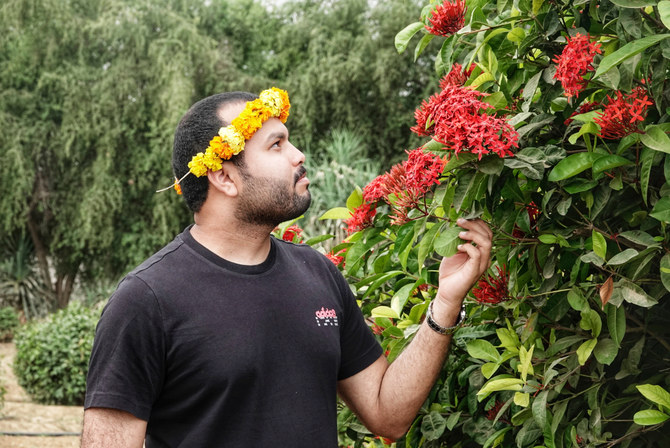
As part of Jazan’s rich culture brides must wear necklaces and crowns made of jasmine flowers due to their cultural significance. (AN photos Huda Bashatah)
2 / 4
As part of Jazan’s rich culture brides must wear necklaces and crowns made of jasmine flowers due to their cultural significance. (AN photos Huda Bashatah)
3 / 4
As part of Jazan’s rich culture brides must wear necklaces and crowns made of jasmine flowers due to their cultural significance. (AN photos Huda Bashatah)
4 / 4
As part of Jazan’s rich culture brides must wear necklaces and crowns made of jasmine flowers due to their cultural significance. (AN photos Huda Bashatah)
Short Url
Updated 11 January 2023
Follow

Jazan’s jasmine promises blooming business opportunities

  • Farmers launch new body to boost industry
  • Modeled on Taif’s flourishing rose markets

RIYADH: A trip to this southwest part of the Kingdom, to the province of Jazan, will offer travelers an immersive experience in a distinctive and alluring culture.

Flowers and plants are among the most significant elements of Jazan’s way of life because of the region’s rich and fertile soil that supports its horticulture.

About six months ago, a group of farmers came together and formed the Association of Jasmine and Aromatic Plants in Jazan.


Visitors enjoy wearing jewelry made of flowers. (AN photos Huda Bashatah)

Mohammed Al-Hobani, chairman of the body, told Arab News this was a “promising” way for the industry to reach its objectives. “The most important of these goals is to set up a factory in the Jazan region to distill jasmine and aromatic plants, just like … in the Taif region.”

Al-Hobani also spoke about the marketing of jasmine in various regions of the Kingdom, including supporting locals through small development projects such as embroidery and design.

FASTFACTS

• The second edition of the Jasmine and Aromatic Plants Festival will take place this year.

• Flowers and plants are among the most significant elements of Jazan’s way of life because of the region’s rich and fertile soil that supports its horticulture.

Together with Al-Mayadeen Company, a training firm hired by the Ministry of Agriculture, Environment and Water, a three-month training course was offered on how to make jewelry inspired by jasmine flowers.

There were 130 people in the first intake, rising significantly to 640 in the second.
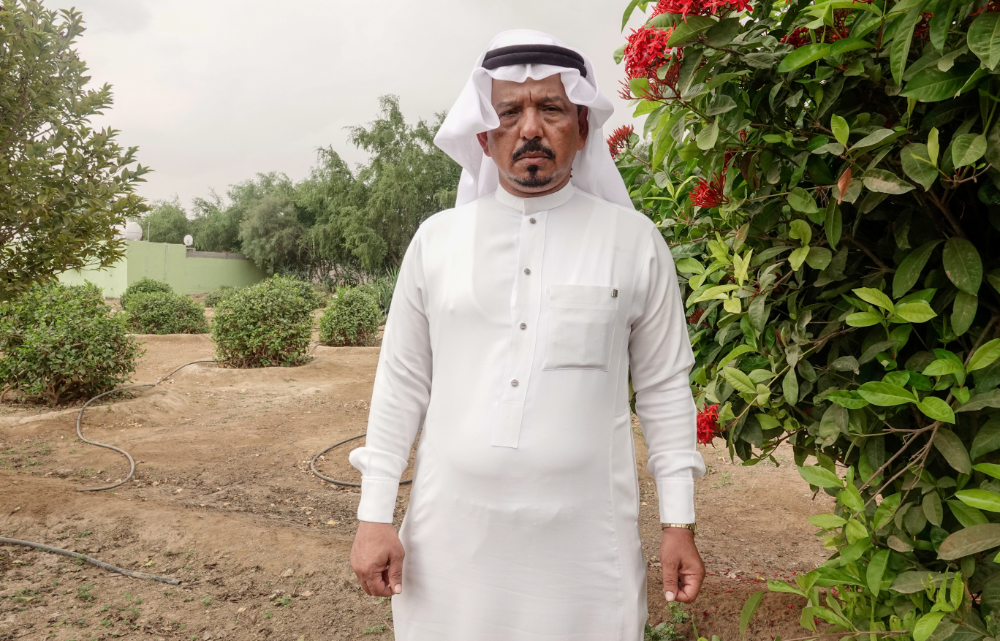


Mohammed Al-Hobani. (AN photos Huda Bashatah)

Al-Hobani believes it is important to invest in jasmine and other aromatic plants because they symbolize the region and have an ancient agricultural heritage.

The most important of these goals is to set up a factory in the Jazan region to distill jasmine and aromatic plants, just like ... in the Taif region.

Mohammed Al-Hobani, Chairman Association of Jasmine and Aromatic Plants

He said all wedding ceremonies in Jazan feature these plants. Brides must wear necklaces and crowns made of jasmine flowers due to their cultural significance.

“Because it is in high demand, farmers want to grow it and make money from it,” he said.



(AN photos Huda Bashatah)

The first Jasmine and Aromatic Plants Festival was held in 2018, overseen by Jazan Governor Prince Mohammed bin Nasser. The second edition will take place this year.

The event will include the Jazan Winter Festival and other special attractions showcasing locally sourced harid, mango, coffee and honey.

Dafer Al-Fahad, director general of the Jazan Mountains Development Authority, told Arab News: “Jazan Province has many comparative advantages. The six mountainous governorates are full of investment opportunities especially in agriculture, agritourism, wellness tourism, and heritage sites.”


Saudi Arabia’s Sharaan and Wadi Nakhlah nature reserves win Dark Sky recognition

Updated 58 min 30 sec ago
Follow

Saudi Arabia’s Sharaan and Wadi Nakhlah nature reserves win Dark Sky recognition

  • The two reserves in AlUla join more than 250 locations worldwide that are protected from light pollution
  • AlUla Manara and AlGharameel Nature Reserve, also both in AlUla, received Dark Sky Park designations last year

ALULA: Two more nature reserves in Saudi Arabia’s AlUla have won recognition as Dark Sky Places, joining more than 250 locations worldwide that are protected from light pollution.

The official accreditation of Sharaan National Park and Wadi Nakhlah reserves from the DarkSky International builds on AlUla’s 2024 achievement, when AlUla Manara and AlGharameel Nature Reserve became the first sites in the Kingdom and the Gulf region to receive Dark Sky Park designations.

The latest recognition further strengthens AlUla’s position as a leading global destination for night sky protection and astronomical tourism, said the Royal Commission for AlUla (RCU) in a statement carried by the Saudi Press Agency (SPA).

Dark Sky International also announced the recognition in an earlier report, noting that the Sharaan and Wadi Nakhlah’s combined area of 6,146 square kilometers reflects the “expanded scope of environmental protection efforts aimed at preserving AlUla’s pristine night skies and reducing light pollution across a vast geographical area.”

DarkSky International works to reduce light pollution in both urban and rural areas and to raise global awareness of the importance of protecting the night sky.

AlUla’s natural isolation from urban light sources, combined with ideal atmospheric conditions, makes it a world-class destination for stargazing, astronomy education, and immersive dark-sky experiences.  (SPA)


AlUla’s protected areas are located in the heart of northwest Arabia, near the ancient oasis city of AlUla in Madinah Province.

“Towering sandstone cliffs, labyrinthine canyons, tranquil basins, and volcanic formations create a dramatic setting where geological diversity, cultural heritage, and thriving biodiversity converge beneath exceptionally dark, open skies,” Dark Sky said.

Scientists have noted that AlUla’s natural isolation from urban light sources, combined with ideal atmospheric conditions, makes it a world-class destination for stargazing, astronomy education, and immersive dark-sky experiences. 

With the phased development of its reserves, AlUla is now ranked 3rd globally in the Dark Sky Park category, solidifying its status as one of the world’s premier destinations for astronomical discovery.

The RCU reaffirmed its commitment to protecting the natural environment, preserving the night sky, and promoting sustainable tourism, further positioning AlUla as a leading global destination for astronomy, scientific research, and advanced environmental experiences, in line with AlUla Vision and the Kingdom’s Vision 2030.