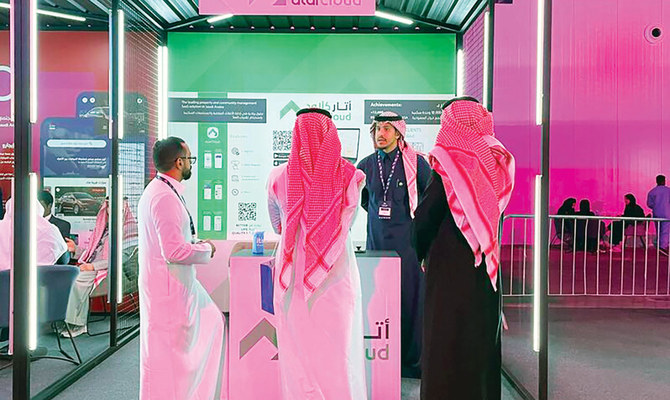

CAIRO: Saudi Arabia-based property technology startup AtarCloud raised $1.3 million in a seed funding round from BIM Ventures along with other investors from the Investors’ Mine Group.
Established in 2021 by Haseeb Mohammed, AtarCloud offers property owners and real estate developers with tools to streamline their management activities.
“We’re proud to be enabling property owners and real estate developers in setting the new standard in property management in Saudi Arabia,” Mohammed said in a statement.
Saudi Arabia’s property management market is estimated to be worth over $8 billion annually and is expected to grow by at least 50 percent in the upcoming years.
Crowdfunding platform secures $28m in series A round
Manafa Capital, the first authorized crowdfunding platform in Saudi Arabia, announced the closing of its series A funding round of $28 million by Riyadh-based venture capital firm STV and Wa’ed Ventures, the venture capital arm of Saudi Arabian Oil Co.
Founded in 2018, the company provides debt and equity financing to small and medium enterprises through a crowdfunding model that hosts institutional and individual investors scouting for SME funding opportunities.
Licensed by the Saudi Central Bank and the Capital Market Authority, Manafa has funded more than 180 SMEs and facilitated almost $400 million through its platforms, reaching out to over 100,000 retail and institutional investors.
“Manafa is planning to launch a new set of products that tackle quick access to financing and capital and empowers SMEs to fuel their growth,” said Abdulaziz Al-Adwani, founder and CEO at Manafa Capital, in a press statement.
Since its inception, the company has been focused on attracting Saudi talent that helped build a sophisticated technical infrastructure that has enabled the financing of SMEs in less than 48 hours through its investor network, Al-Adwani added.
Manafa plans to fuel its growth in the Kingdom by expanding its offering through launching several products and financing solutions across untapped sectors. It also plans to double the number of investors keen on investing in previously inaccessible alternative asset classes.
“The idea of Manafa started with the launch of the Financial Sector Development Program as one of the Vision 2030 realization programs. Today, and within a short period, we were able to transform one of the vision’s goals into a reality,” said Amr Murad, co-founder and chairman at Manafa Capital.
The funding assumes significance as there is a financing gap that SMEs have been facing due to the challenges in obtaining financing from traditional banks. It is evident in the share of SMEs in the total commercial financing in the Kingdom, amounting to 8.4 percent, which is aimed to be increased to 20 percent under the Vision 2030 plan.
Growth Avenue Co. invests in on-demand delivery market
Growth Avenue Co., a subsidiary of Tadawul-listed company Maharah Human Resources Co., acquired a 20 percent stake in Saudi Arabia’s on-demand delivery app SororApp for an undisclosed amount.
Founded in 2020 by Musfer Alyami and Abbas Safadieh, SororApp provides on-demand home services in multiple markets and regions in the Kingdom.
The app will utilize its funding to further improve its user experience and expand its offerings into new regions in the Kingdom.
Safadieh stated that the home services sector is estimated to be worth SR10 billion ($2.66 billion) as the app currently offers nearly 200 services through more than 500 accredited service providers.
Ninja raises a pre-seed round
Saudi Arabia-based quick commerce startup Ninja raised a pre-seed funding round for an undisclosed amount led by the UAE venture capital firm Bunat Ventures along with investors from the US and the Kingdom.
Founded in 2022 by Saud Al-Qahtani and Canberk Donmez, Ninja’s quick commerce platform offers groceries and other products to be delivered in under 25 minutes from its network of dark stores.
“The innovation ecosystem of our region and Saudi specifically is healthily growing, we keep striving to be the first in of best-led startups, building from ideation to going live is exciting, especially when the team is getting things done for a reason, leading for impacting,” Chadi Hajjar, chief technology officer of Bunat Ventures, said in a statement.
The company exited its stealth model four months ago and is operating in Jeddah, Riyadh and the Eastern Province of the Kingdom.
UAE’s Bayzat targets KSA amid a $25m fundraise
The UAE-based human resources technology company Bayzat raised $25 million in a series C funding round led by DisruptAD alongside Ischyros New York to expand its customer base.
Established in 2013 by Brian Habibi, Talal Bayaa and Tarek Bayaa, the company offers corporate clients the right tools to digitize their administrative HR processes with payroll, onboarding, and health insurance features.
The company will utilize its acquired funding to grow its customer base across existing markets in the Middle East with a specific focus on Saudi Arabia.
Bayzat has recorded over 100 percent annual growth in the past three years increasing its employee base to almost 350 across the UAE, Saudi Arabia and the region.
The company’s platform currently serves over 127,000 employees in over 1,500 companies with more than 2 million employee logins per month.