
CAIRO: US-based streaming app Fireside is expanding its reach to the Middle East and North Africa region with Web3-enabled technology set to change the entire media and entertainment industry.
Co-founded by renowned entrepreneur and billionaire Mark Cuban, Fireside’s ambition is to create a streaming app for the future and use the MENA region as a stepping stone to reach global markets.
In an exclusive interview with Arab News, Fireside Co-founder and CEO Falon Fatemi said that the region presents a huge opportunity for growth thanks to its diverse and tech-savvy population.
“There’s a huge appetite for media and entertainment. I think there’s an incredible opportunity here from an infrastructure perspective, especially with the Saudi Vision 2030 and a lot of the media and entertainment initiatives that Abu Dhabi and Dubai have already invested in,” she stated.
Fatemi is extremely excited about the Middle Eastern market, which she stated is full of market opportunities because of its large entertainment consumer base.
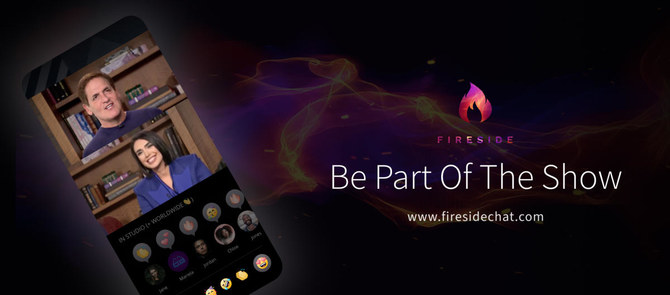
Founded in 2021, Fireside is the first interactive Web3 streaming platform that enables user interaction with live shows and content creators to deepen the relationship between both sides.
“It is the only tech platform out there that turns talent, athletes, brands and organizations into the studio network and streaming services of the future,” said Fatemi.
She further explained that content creators could invite their audiences to be part of their show and get full ownership over their data.
It transforms audiences from being content consumers to partnering with the entertainment network and getting access to behind-the-scenes operations and exclusive merchandize through a subscription to the platform.
Taking the platform to the next level, Fireside closed the acquisition of open-streaming TV platform Stremium last month, which Fatemi explained was part of the company’s strategy to move forward on its interactive live shows.
She also gave the example of Stuart O’Keeffe’s live cooking show, where users will be able to cook along, interact, ask questions, and O’Keeffe will then invite consumers to turn the camera on their phone and join the show in real time.
“The whole point is deepening fan relationships and loyalty. Then, at the end of the show, you could reward them for participating by giving them a collect-a-recipe card, a signed copy of the book, and make it easy for them to engage in commerce,” Fatemi said.
The interactive model is currently available on the platform which includes non-fungible tokens and decentralized technology as part of the consumer rewards process and will also add to it the Smart TV roll out in the first quarter of 2023.
The company is already in talks to develop partnerships with organizations, governments, and individuals to further empower the media industry in the region.
“We want to bring the brands, the athletes, the studios and the broadcasters working with us in the US to the MENA region and deepen their relationship with the audience and the fans they have here,” she added.
She further explained that the company would also be able to identify opportunities to export local talent, brands, and organizations to the global market.
Strategic partnerships
Fatemi added that the company is exploring opportunities with Saudi Arabia’s Ministry of Investment and the Public Investment Fund besides seeking synergies with Huda Beauty from the UAE.
The company is also looking to partner with media production and broadcasting outlets like Saudi Research and Media Group and Arabia Pictures.
Fatemi further lauded the PIF for its interest and investments in the entertainment industry as the sovereign wealth fund announced a $13 billion commitment to develop 21 entertainment destinations across 14 cities through its fully-owned subsidiary Saudi Entertainment Ventures.
It is also worth noting that MISA invited Fatemi to participate in its entrepreneurship event Catalyze Saudi held in Riyadh from Dec. 9-11.
Last February, the company raised $25 million in its series A funding round that valued that company at $125 million, with another $8 million fundraise before that.
Investors included the Chainsmokers, HBSE, Goodwater, Animal Capital, NFL stars Larry Fitzgerald and Kelvin Beachum, former NBA star Baron Davis and billionaire Mark Cuban.
Born and raised in Silicon Valley, Fatemi started her journey in the technology world when she was 19 and working for global giants YouTube and Google by building strategic partnerships for these companies.
Fatemi co-founded another venture called Node, an artificial intelligence platform that leverages customer relationship management data to increase business performance, which SugarCRM later acquired.