
LONDON: The UK government has been told to impose fresh sanctions on senior regime figures in Iran following the arrests of a number of British Iranian dual nationals and other people with ties to the UK.
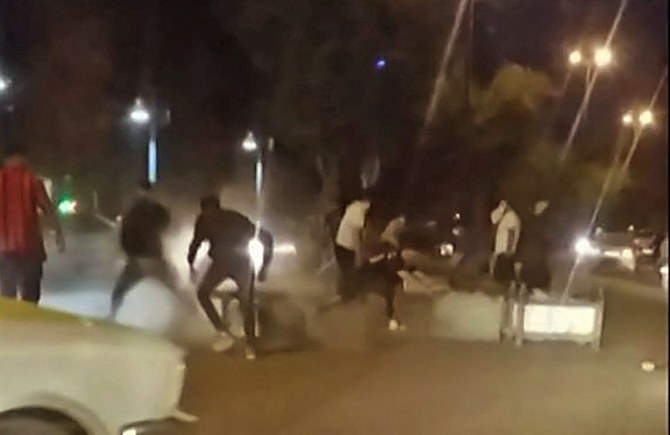
David Lammy, the opposition Labour party’s shadow foreign secretary, called for “Magnitsky sanctions” — a US legal device that targets those accused of human rights abuses, named after a Russian tax lawyer who died in prison in Moscow in 2009 — after the Islamic Revolutionary Guard Corps said it detained seven people with “direct links” to Britain, thought to be in relation to the mass protests that have swept the country in recent months.
“The killings and repression being carried out by the Iranian regime against courageous Iranian protesters seeking a better future (are) appalling. There must be an end to impunity,” Lammy said.
“The UK government urgently needs to put in place new Magnitsky sanctions against individuals and organizations involved in the repression.”
The UK imposed sanctions on Iranian state figures and institutions, including the IRGC, in November, after protests broke out in September across the country following the death of 22-year-old Kurdish woman Mahsa Amini at the hands of Iran’s morality police for improperly wearing her hijab.
Around the same time, sanctions were imposed by London on other regime figures in relation to Iranian drones being supplied to the Russian military for use in its invasion of Ukraine, which UK Foreign Secretary James Cleverly called a “sordid” alliance.
He later tweeted that the UK would “hold the tyrants in Iran to account” in relation to the regime’s activity both at home and abroad.
Iran has a long history of detaining dual nationals on trumped-up charges relating to national security and convicting them without due process to exert political pressure on other countries, including Nazanin Zaghari-Ratcliffe, who was detained in 2016 and released earlier this year.
Conservative MP Alicia Kearns called on British citizens in Iran to leave immediately, adding: “This is industrialized taking of state hostages. This is what Iran now does. Iran has shown that it will happily arrest anyone with dual citizenship.”
Lammy added that Iran “must be held accountable for every crime it has committed through an urgent investigation by the UN Human Rights Council.”