

UAE President Mohamed bin Zayed orders $817 million housing support for citizens

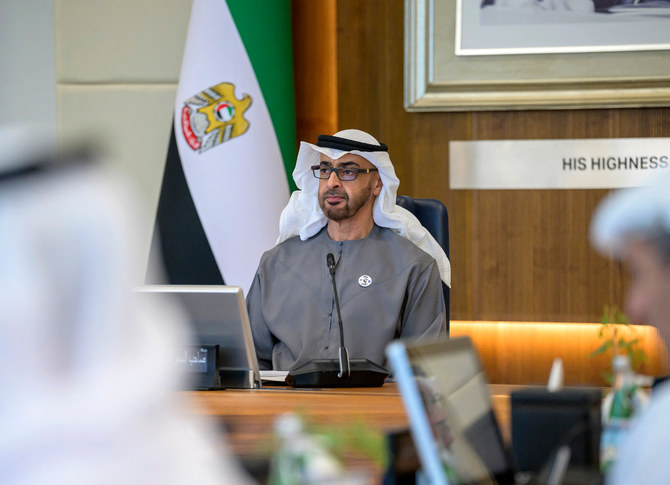
UAE President Sheikh Mohamed bin Zayed ordered housing support package that amounted to almost $2 billion in 2022. (File/AFP)
Short Url
Updated 02 December 2022
Follow

UAE President Mohamed bin Zayed orders $817 million housing support for citizens

  • The third housing package of 2022 coincided with the UAE’s 51st National Day celebrations
  • UAE president earlier waived off over $146 million of debts for 1,214 Emirati citizens

DUBAI: UAE President Mohamed bin Zayed Al-Nahyan has ordered disbursement of housing loans worth $817 million for 1,900 Abu Dhabi citizens.

The third housing package of 2022 coincided with the UAE’s 51st National Day celebrations, marked on Dec.2, bringing the total value of housing support this year to almost $2 billion that benefitted over 4,000 citizens.

“It reflects the leadership’s commitment to ensuring social stability, enhancing living standards and enabling citizens to raise strong and stable families that will benefit the future of the UAE,” said a statement on Emirates News Agency (WAM).

The package includes housing loans, and the exemption of the retired and families of deceased borrowers in Abu Dhabi from loan repayments.

Ahead of the National Day, the UAE president earlier waived off over $146 million of debts for 1,214 Emirati citizens.

The Non-performing Debt Relief Fund said it would settle money owed by Emiratis in 17 banks, WAM earlier reported.


First responders enter devastated Aleppo neighborhood after days of deadly fighting

Updated 12 January 2026
Follow

First responders enter devastated Aleppo neighborhood after days of deadly fighting

  • The US-backed SDF, which have played a key role in combating the Daesh group in large swaths of eastern Syria, are the largest force yet to be absorbed into Syria’s national army

ALEPPO, Syria: First responders on Sunday entered a contested neighborhood in Syria’ s northern city of Aleppo after days of deadly clashes between government forces and Kurdish-led forces. Syrian state media said the military was deployed in large numbers.
The clashes broke out Tuesday in the predominantly Kurdish neighborhoods of Sheikh Maqsoud, Achrafieh and Bani Zaid after the government and the Syrian Democratic Forces, the main Kurdish-led force in the country, failed to make progress on how to merge the SDF into the national army. Security forces captured Achrafieh and Bani Zaid.
The fighting between the two sides was the most intense since the fall of then-President Bashar Assad to insurgents in December 2024. At least 23 people were killed in five days of clashes and more than 140,000 were displaced amid shelling and drone strikes.
The US-backed SDF, which have played a key role in combating the Daesh group in large swaths of eastern Syria, are the largest force yet to be absorbed into Syria’s national army. Some of the factions that make up the army, however, were previously Turkish-backed insurgent groups that have a long history of clashing with Kurdish forces.
The Kurdish fighters have now evacuated from the Sheikh Maqsoud neighborhood to northeastern Syria, which is under the control of the SDF. However, they said in a statement they will continue to fight now that the wounded and civilians have been evacuated, in what they called a “partial ceasefire.”
The neighborhood appeared calm Sunday. The United Nations said it was trying to dispatch more convoys to the neighborhoods with food, fuel, blankets and other urgent supplies.
Government security forces brought journalists to tour the devastated area, showing them the damaged Khalid Al-Fajer Hospital and a military position belonging to the SDF’s security forces that government forces had targeted.
The SDF statement accused the government of targeting the hospital “dozens of times” before patients were evacuated. Damascus accused the Kurdish-led group of using the hospital and other civilian facilities as military positions.
On one street, Syrian Red Crescent first responders spoke to a resident surrounded by charred cars and badly damaged residential buildings.
Some residents told The Associated Press that SDF forces did not allow their cars through checkpoints to leave.
“We lived a night of horror. I still cannot believe that I am right here standing on my own two feet,” said Ahmad Shaikho. “So far the situation has been calm. There hasn’t been any gunfire.”
Syrian Civil Defense first responders have been disarming improvised mines that they say were left by the Kurdish forces as booby traps.
Residents who fled are not being allowed back into the neighborhood until all the mines are cleared. Some were reminded of the displacement during Syria’s long civil war.
“I want to go back to my home, I beg you,” said Hoda Alnasiri.