

Economic performance of Bahrain, Oman expected to improve as oil prices surge: S&P

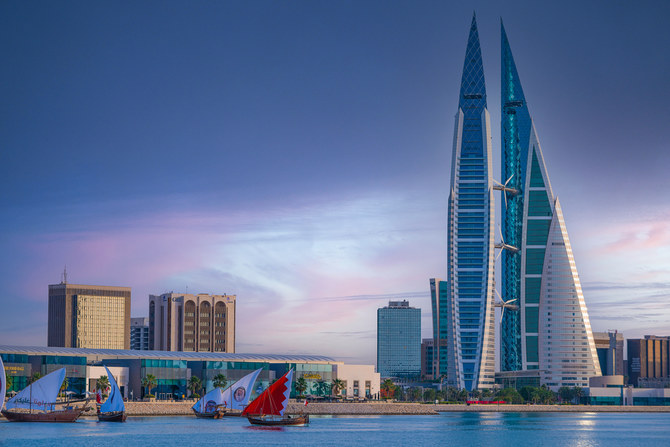
Bahrain's government to continue pursuing reforms to reduce fiscal deficits that will place debt to the gross domestic product on a more sustainable path. (Shutterstock)
Short Url
Updated 27 November 2022
Follow

Economic performance of Bahrain, Oman expected to improve as oil prices surge: S&P

RIYADH: With oil revenue projected to rise amid strengthening crude prices, S&P Global Ratings expects Bahrain and Oman to improve their economic performance as the Gulf nations continue with their fiscal reforms. 

The global rating agency revised Bahrain’s outlook to positive from stable on expectations that solid growth in non-oil earnings and budget consolidation measures will help ease pressure on the country’s fiscal position.  

S&P said it expects Bahrain's government to continue pursuing reforms to reduce fiscal deficits that will place debt to the gross domestic product on a more sustainable path. 

“We also assume the country's external vulnerabilities will decline amid current account surpluses over 2022-2024. We, therefore, revised our outlook on Bahrain to positive from stable and affirmed our 'B+/B' ratings,” said S&P in its report released on Nov. 25. 

The rating agency kept its transfer and convertibility assessment on Bahrain unchanged at 'BB-'.  

“The positive outlook indicates that we expect the government will continue implementing fiscal reforms to reduce the budget deficit and benefit from additional support from other Gulf Cooperation Council sovereigns, if needed,” it said. 

As Bahrain looks at strong economic performance, with its GDP registering the fastest growth over a decade, it is positively impacting the Kingdom’s various sectors including real estate.   

This comes as the real estate transaction volumes in Bahrain improved in the third quarter of 2022, reaching a total of 5,482, according to American commercial real estate consultancy CBRE. 

The August month alone saw over 2,400 transactions, making it Bahrain’s second most successful month since 2018. The country’s newer and landmark office buildings hit their highest occupancy levels in the third quarter as occupiers continued with the flight to quality.  

Oman outlook stable  

Meanwhile, Oman’s outlook remains stable as S&P expects the government's fiscal reform program and favorable prices for key export oil will strengthen the country’s fiscal and external metrics. 

“We expect a significant improvement in the economy's external balance sheet this year and for the government to return to a small net asset position in 2023. We, therefore, raised our long-term sovereign credit ratings on Oman to 'BB' from 'BB-',” said S&P, adding that the outlook stays stable.  

The rating agency also revised its transfer and convertibility assessment to 'BB+' from 'BB' and affirmed its 'B' short-term sovereign credit rating on Oman. 

Higher oil prices coupled with the government's recent reforms have helped Oman better manage its fiscal and external positions. In addition to rebuilding fiscal buffers on the back of windfall oil revenue, S&P said the Omani government has continued to reduce the budget's reliance on oil receipts, in line with its medium-term fiscal plan to 2025.  

“We expect fiscal reforms to continue, including the possible introduction of personal income tax on high earners and measures to increase value-added tax receipts,” it noted in the report. 


First EU–Saudi roundtable on critical raw materials reflects shared policy commitment

Updated 16 January 2026
Follow

First EU–Saudi roundtable on critical raw materials reflects shared policy commitment

RIYADH: The EU–Saudi Arabia Business and Investment Dialogue on Advancing Critical Raw Materials Value Chains, held in Riyadh as part of the Future Minerals Forum, brought together senior policymakers, industry leaders, and investors to advance strategic cooperation across critical raw materials value chains.

Organized under a Team Europe approach by the EU–GCC Cooperation on Green Transition Project, in coordination with the EU Delegation to Saudi Arabia, the European Chamber of Commerce in the Kingdom and in close cooperation with FMF, the dialogue provided a high-level platform to explore European actions under the EU Critical Raw Materials Act and ResourceEU alongside the Kingdom’s aspirations for minerals, industrial, and investment priorities.

This is in line with Saudi Vision 2030 and broader regional ambitions across the GCC, MENA, and Africa.

ResourceEU is the EU’s new strategic action plan, launched in late 2025, to secure a reliable supply of critical raw materials like lithium, rare earths, and cobalt, reducing dependency on single suppliers, such as China, by boosting domestic extraction, processing, recycling, stockpiling, and strategic partnerships with resource-rich nations.

The first ever EU–Saudi roundtable on critical raw materials was opened by the bloc’s Ambassador to the Kingdom, Christophe Farnaud, together with Saudi Deputy Minister for Mining Development Turki Al-Babtain, turning policy alignment into concrete cooperation.

Farnaud underlined the central role of international cooperation in the implementation of the EU’s critical raw materials policy framework.

“As the European Union advances the implementation of its Critical Raw Materials policy, international cooperation is indispensable to building secure, diversified, and sustainable value chains. Saudi Arabia is a key partner in this effort. This dialogue reflects our shared commitment to translate policy alignment into concrete business and investment cooperation that supports the green and digital transitions,” said the ambassador.

Discussions focused on strengthening resilient, diversified, and responsible CRM supply chains that are essential to the green and digital transitions.

Participants explored concrete opportunities for EU–Saudi cooperation across the full value chain, including exploration, mining, and processing and refining, as well as recycling, downstream manufacturing, and the mobilization of private investment and sustainable finance, underpinned by high environmental, social, and governance standards.

From the Saudi side, the dialogue was framed as a key contribution to the Kingdom’s industrial transformation and long-term economic diversification agenda under Vision 2030, with a strong focus on responsible resource development and global market integration.

“Developing globally competitive mineral hubs and sustainable value chains is a central pillar of Saudi Vision 2030 and the Kingdom’s industrial transformation. Our engagement with the European Union through this dialogue to strengthen upstream and downstream integration, attract high-quality investment, and advance responsible mining and processing. Enhanced cooperation with the EU, capitalizing on the demand dynamics of the EU Critical Raw Materials Act, will be key to delivering long-term value for both sides,” said Al-Babtain.

Valere Moutarlier, deputy director-general for European industry decarbonization, and directorate-general for the internal market, industry, entrepreneurship and SMEs at European Commission, said the EU Critical Raw Materials Act and ResourceEU provided a clear framework to strengthen Europe’s resilience while deepening its cooperation with international partners.

“Cooperation with Saudi Arabia is essential to advancing secure, sustainable, and diversified critical raw materials value chains. Dialogues such as this play a key role in translating policy ambitions into concrete industrial and investment cooperation,” she added.