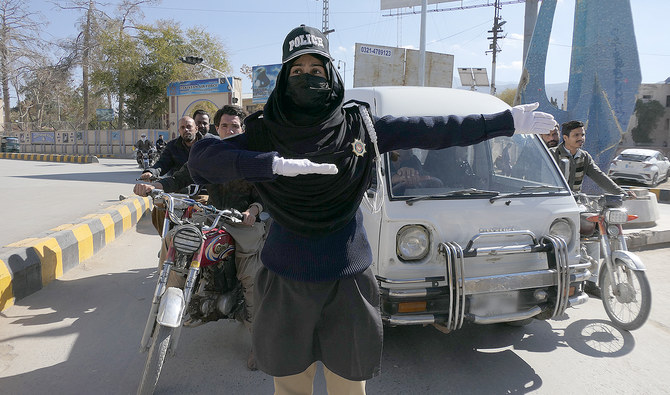

QUETTA: Wearing a black facemask and police cap earlier this week, Haleema Imran stepped out of a rickshaw into the biting cold on one of the busiest roads in Quetta, the capital of Pakistan’s southwestern Balochistan province.
Imran, 30, is among the first four women constables deployed in the traffic police force in Quetta, a city of over two million people, notorious for its frequent traffic jams caused by an ever-increasing number of cars, motorbikes and rickshaws.
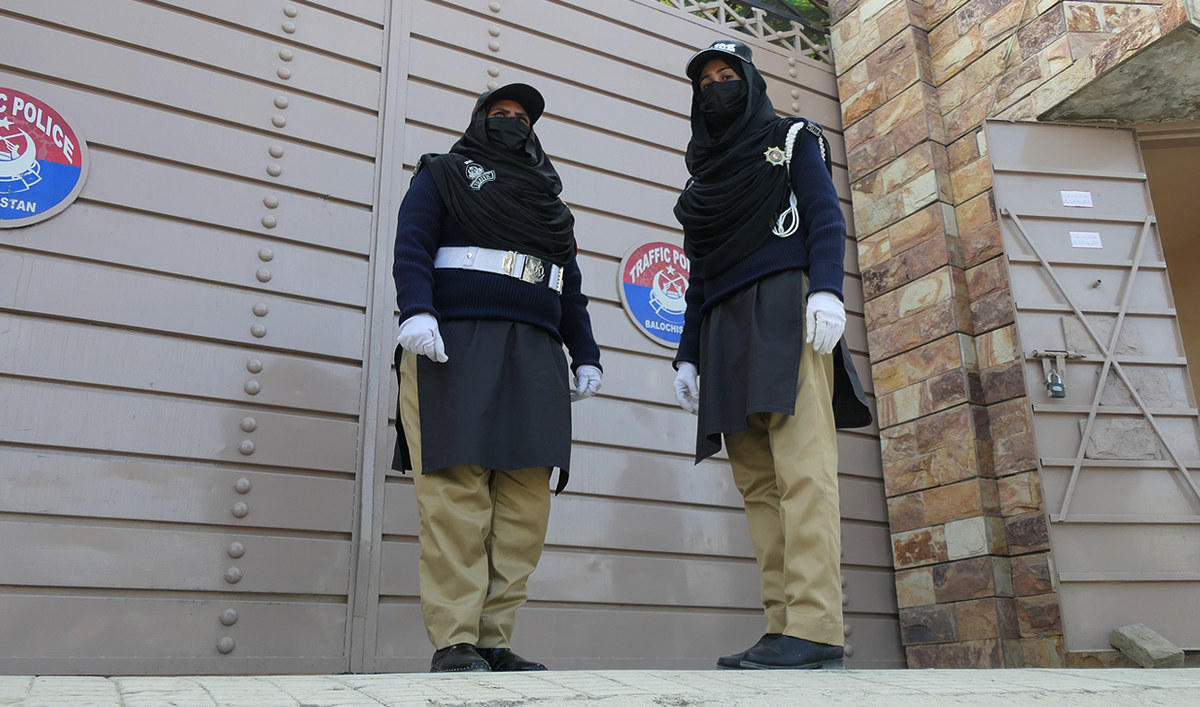
Women traffic constables Nazia Siddique (left) and Haleema Imran (right) gesture for a photograph outside Traffic Police Police Station Quetta in Balochistan province on November 15, 2022. (AN Photo)
According to the Pakistan Bureau of Statistic, female labor force participation in Balochistan is only 5.06 percent of the total population of women in the province, the lowest rate in the country. The province is also the country’s most conservative and economically backward, with some of the worst health and education indicators, especially for women.
But Imran wanted to be a policewoman since she was young and joined the district police in 2016.
“I wanted to become a policewoman since I was a child and I had told my parents of my wish and they gave me permission to join police,” Imran told Arab News as she managed traffic on Quetta’s busy Jinnah Road.
“After completing the training course, I requested my senior officers to transfer me to the traffic police because I wanted to set a new precedent for other women in Balochistan.”
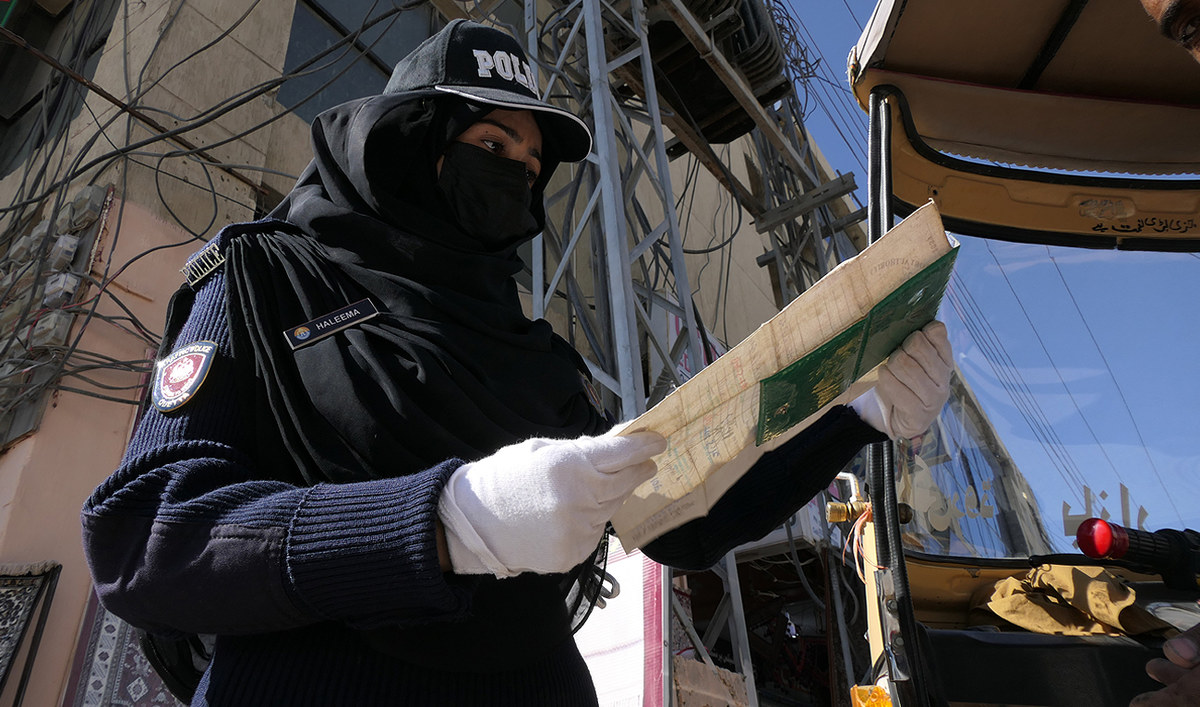
Traffic constable Haleema Imran checks a vehicle's documents in Quetta, Pakistan on November 14, 2022. (AN Photo)
Quetta’s 700 traffic wardens have their plates full. For one, there are few traffic control signals throughout the city, which leaves the task of managing traffic entirely to the police force. The city also has over 200,000 registered vehicles, 700,000 motorbikes and 15,000 rickshaws and citizens who have little regard for traffic rules. Traffic jams are thus an integral part of living in the provincial capital.
So, the job of Imran and her three other women colleagues is not easy. They not only have tough traffic conditions to manage but also must deal with stereotypes about the kind of work women can do and their place in public life in the deeply conservative province.
“We have to face hardships, it’s difficult for ladies to commute to and from work but we come to duty on auto-rickshaws,” Imran said.
“In the beginning when people saw that female traffic constables were controlling traffic on the roads, they felt a little bit odd because it’s a tribal province [Balochistan]. But slowly, now people are cooperating with us.”
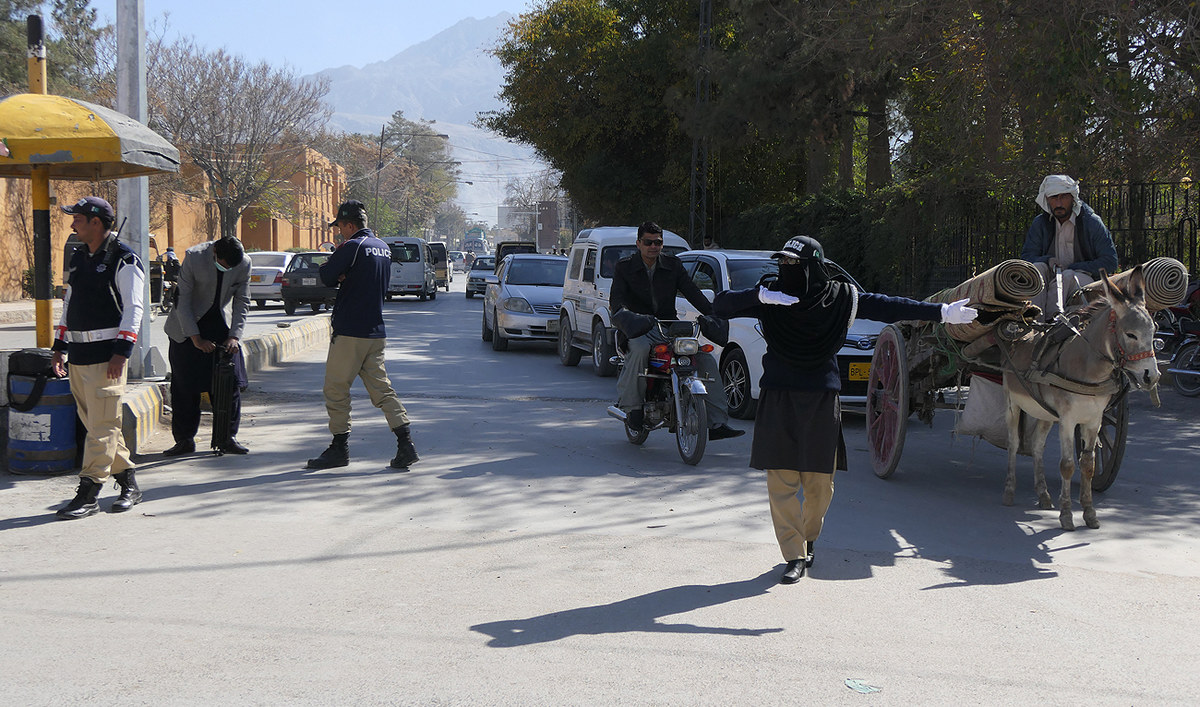
Female Traffic constable Sameena John poses with traffic control signs in Quetta, Pakistan, on November 14, 2022. (AN Photo)
Traffic authorities hope female traffic police wardens in Quetta will make it easier for women drivers to communicate with police.
“Initially the department deployed four female traffic constables while a woman traffic officer will be deployed in the coming weeks,” Javed Malik, superintendent of Traffic Police in Quetta, told Arab News. “But we have plans to deploy more female wardens in Quetta.”
Malik said the number of women drivers in Quetta had increased in recent years, which pushed traffic police to deploy women wardens on routes frequented by female drivers.
“In the tribal society of Quetta, female drivers were hesitant to talk to male sergeants,” Malik said, adding that now female wardens could check their documents and guide them about traffic rules.
“Even where male drivers violate traffic rules, they [women wardens] work with male sergeants,” the policeman said. “And we have received positive feedback from the public and people have liked this initiative.”
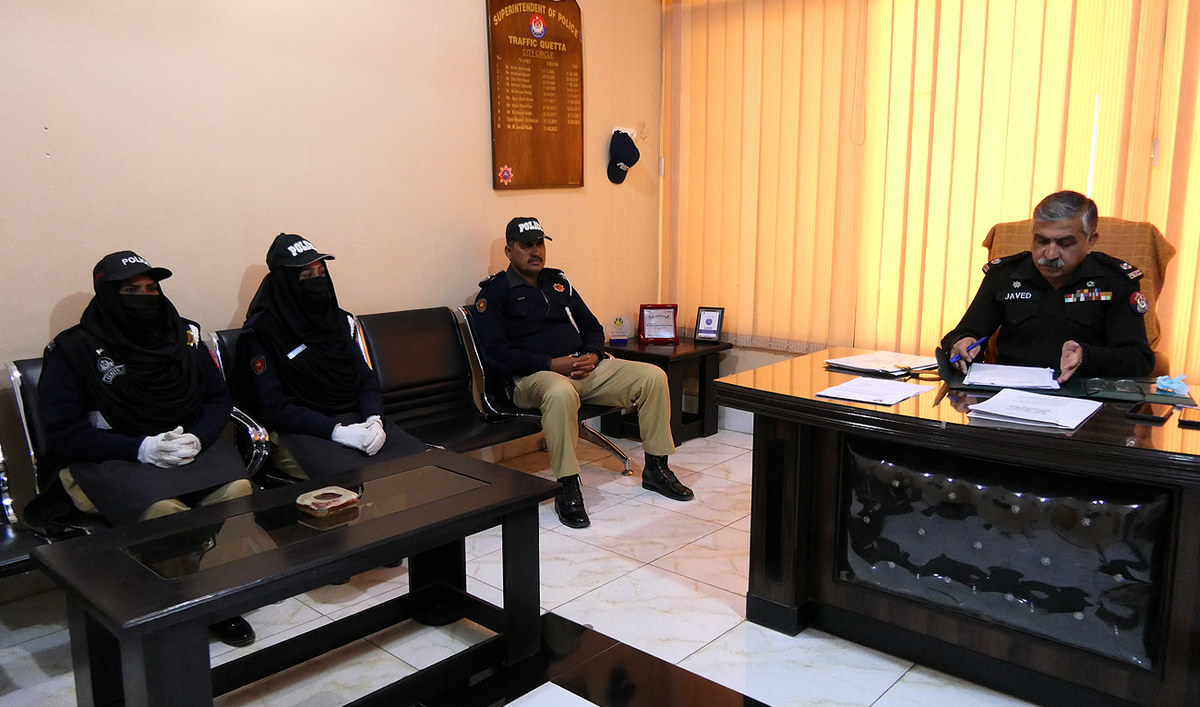
(From left) Women traffic constables Nazia Siddique and Haleema Imran at the Superintendent Police Office on November 15, 2022 in Quetta, Balochistan. (AN Photo)
Imran said she stops on average around two dozen male drivers each day and had never felt threatened by them.
Habib ur Rehman, 22, who was stopped by a female traffic police warden at Quetta’s Serena Chowk and asked to present his car’s documents, lauded the initiative to introduce women wardens.
“People have been supporting female wardens and we should give them respect to embolden their confidence toward their duties,” Rehman told Arab News.
“Since the female constable have been deployed, action against [illegal] vehicles and licenses is very good. They are very helpful for female drivers because many women are now driving on the roads.”
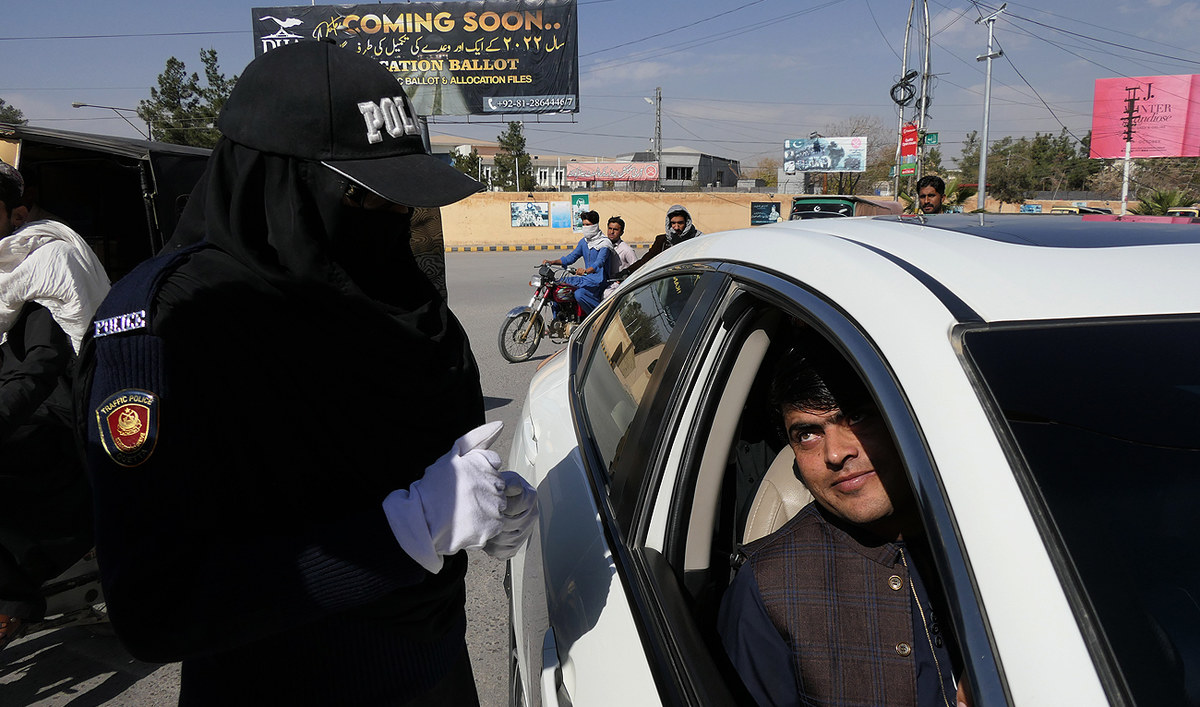
Woman traffic constable Sameena John talks to a male driver in Quetta, Pakistan on November 14, 2022. (AN Photo)