

Egypt’s non-oil economy remains under strain as PMI stands at 47.6 in October: S&P Global

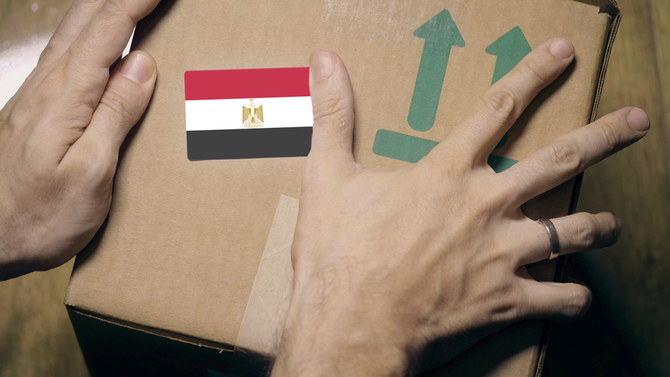
This comes as Egypt’s business optimism among non-oil firms slid to its lowest in over a decade of survey data in October, as only 4 percent of firms gave a positive outlook for the next 12 months. (Shutterstock)
Short Url
Updated 03 November 2022
Follow

Egypt’s non-oil economy remains under strain as PMI stands at 47.6 in October: S&P Global

RIYADH: Egypt’s non-oil economy continues to be under strain amid sliding business sentiment as the country’s Purchasing Managers’ Index stood at 47.7 in October, slightly up from 47.6 in September, according to the latest report from S&P Global.

The rating agency considers a PMI score above 50 marks as growth, while those below 50 signal contraction.

The trend stretches the current sequence of deterioration to just under two years as the headline index was still below its long-run average despite ticking up to the highest since February, the report added.

This comes as Egypt’s business optimism among non-oil firms slid to its lowest in over a decade of survey data in October, as only 4 percent of firms gave a positive outlook for the next 12 months.

S&P Global noted that rising prices, supply problems and weak global demand also served to drive new business and activity lower.

“Egypt remains heavily impacted by the war in Ukraine, particularly in the tourism sector, as well as industries constricted by the government’s import ban in place since March in a bid to conserve US dollar reserves,” said David Owen, an economist at S&P Global Market Intelligence.

He added: “Several businesses reported that import restrictions had pushed material prices even higher, adding to upticks in energy and food commodity prices recorded since the war began.”

The inability of firms to acquire inputs, in addition to the rise of the costs of raw materials and the lack of new orders, contributed to the decrease in output and the contraction in purchasing activity in October, despite it being a softer drop than the month before.  

On the other hand, suppliers’ delivery times witnessed an improvement for the first time in a year showing the economy’s modest recovery since the start of the Russia-Ukraine war.  

As for Egypt’s foreign reserves, the country’s saw an increase by $214 million month-on-month at the start of the third quarter compared to a $56 million increase the month before, according to the Central Bank of Egypt. 

Egypt’s foreign reserves reached $33.4 billion in October up from $33.197 billion in September marking the first increase since the beginning of the war in Ukraine, noted the CBE.


Post-break return of students drives surge in education spending, SAMA data shows

Updated 10 sec ago
Follow

Post-break return of students drives surge in education spending, SAMA data shows

RIYADH: Spending on education in Saudi Arabia increased by 141.1 percent for the week ending Jan. 24, as students returned to the classroom after the mid-year break.

This was accompanied by a 7 percent increase in spending on books and stationery, which reached SR146.17 million ($38.9 million).

According to the latest data from the Saudi Central Bank, the over POS value dropped 10.6 percent to SR12.52 billion, with transactions representing a 9.7 percent week-on-week decrease to 213.62 million.

This week saw negative changes across all the remaining sectors. Spending on bakeries and pastries saw an 18.4 percent decline to SR229.71 million, while gas stations saw an 11 percent drop. Professional and business services decreased by 11.6 percent.

Expenditure on apparel and clothing fell by 19.7 percent to SR985.94 million, followed by a 2.8 percent drop in spending on jewelry.

Spending on car rentals in the Kingdom fell by 14.7 percent, while airlines saw a 9.3 percent decrease to SR38.16 million.

Expenditure on food and beverages saw a 7.9 percent decline to SR1.88 billion, claiming the largest share of the POS. Restaurants and cafes retained the second position despite an 18.5 percent decrease to SR1.50 billion.

Geographically, Riyadh accounted for the largest share of total POS spending, but still saw a 6 percent dip to SR4.46 billion, down from SR4.74 billion the previous week. The number of transactions in the capital settled at 69.07 million, down 6.8 percent week on week.

In Jeddah, transaction values decreased by 13.6 percent to SR1.75 billion, while Dammam reported a 4.8 percent decrease to SR640.59 million.

POS data, tracked weekly by SAMA, provides an indicator of consumer spending trends and the ongoing growth of digital payments in Saudi Arabia. 

The data also highlights the expanding reach of POS infrastructure, extending beyond major retail hubs to smaller cities and service sectors, supporting broader digital inclusion initiatives. 

The growth of digital payment technologies aligns with the Kingdom’s Vision 2030 objectives, promoting electronic transactions and contributing to the Kingdom’s broader digital economy.