

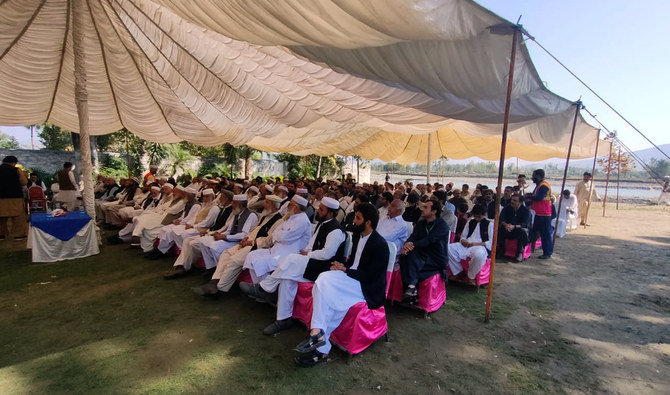

DERA ISMAIL KHAN: A jirga (council) of tribal elders in northwestern Khyber Pakhtunkhwa province has decided locals would neither support a military operation, nor set up community-led committees to fight insurgents, members of the jirga said on Monday, amid widespread reports of a return of the Pakistan Taliban to the region and an uptick in violence.
Hundreds of elders, including politicians and civil society members from KP’s Chitral, Swat, Buner, Shangla and Dir districts, took part in a tribal council meeting last week to discuss a return of militancy to the area and ways to tackle it.
In a statement released after the meeting, tribal elders said the area was in the grip of uncertainty, militancy, extortion and a deteriorating law and order situation for the past five months.
“This jirga strongly demands the government take effective measures for lasting peace. The jirga also demands the government identify and apprehend those elements who are out to sabotage peace,” the statement said, adding the jirga would launch a “massive campaign” for peace and political awareness.
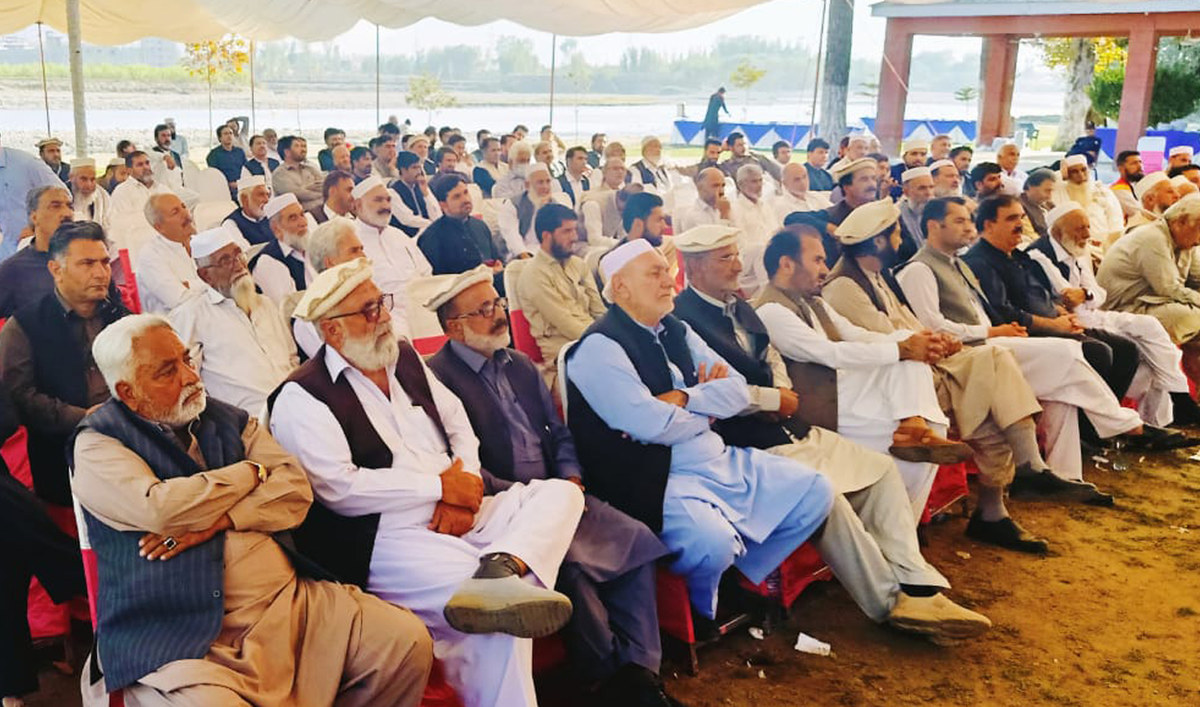
Senior and civil society members attend a grand "Aman Jirga" in Chakdara, a town in the Lower District of Khyber Pakhtunkhwa province on October 29, 2022. (Photo courtesy: Aftab Khan Yousafzai/Swat Olasi Pasoon)
Aftab Khan Yousafzai, a coordinator of the Swat Olasi Pasoon or Swat People’s Movement, confirmed the jirga would not support military operations or set up peace committees to combat militants. He said the jirga wanted the government to deploy a larger police force to take a leading role to counter insurgency and defend citizens and villages against militants.
He referred to a bombing last month claimed by the Pakistani Taliban in which eight people were killed, including Idrees Khan, an influential leader of a village peace committee, in what was the first major bombing in Swat in more than a decade.
Yousafzai said peace committees were formed back in 2007 and then in 2009 to fight militants to protect villages and ensure peace. However, scores of local elders who supported anti-Taliban councils were assassinated by militants.
“We have already observed that common people greatly suffered socially and economically during past military operations against militants. We have witnessed so many members of peace committees were killed in target killings,” Yousafzai told Arab News.
“Keeping in view past precedents, the jirga members simply demanded the government to fulfill its constitutional duty to ensure peace without hurting locals.”
Atta Ullah, another member of the jirga, said elders had unequivocally decided not to become part of any anti-Taliban offensive, because it was the prime responsibility of the state to maintain security.
“For tangible peace, we have agreed that the police force should be equipped with advanced technology,” he said, “to deal with the wave of violence that is now plaguing this part of the country.”


