

Saudi PIF launches Regional Voluntary Carbon Market Co. with $133m capital

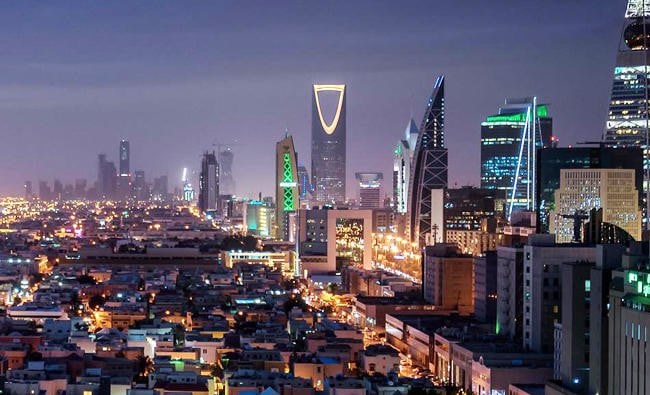
Based in Riyadh, VCM will help facilitate a carbon credit auction to be held at the 6th Future Investment Initiative summit, which opens on Tuesday. (Reuters/File Photo)
Short Url
Updated 25 October 2022
Follow

Saudi PIF launches Regional Voluntary Carbon Market Co. with $133m capital

  • Entity marks ‘major milestone’ for region, PIF deputy governor says
  • Plan for VCM was announced last year by Crown Prince Mohammed bin Salman

RIYADH: Saudi Arabia’s Public Investment Fund has announced the launch of the Regional Voluntary Carbon Market Co. in collaboration with Tadawul Group with a SR500 million ($133 million) capital.

In a statement issued on Monday, the sovereign wealth fund said it would hold an 80 percent stake in the new entity, with the remaining shares held by the stock exchange operator.

Based in Riyadh, VCM will help facilitate a carbon credit auction to be held at the 6th Future Investment Initiative summit, which opens on Tuesday, involving 1 million tons of carbon credits, the fund said.

The auction will offer one million tons of high-quality carbon credits, including CORSIA-compliant certificates registered with Verra.

The creation of VCM was announced in September last year by Crown Prince Mohammed bin Salman as part of a series of initiatives adopted by the Kingdom to reduce emissions and tackle climate change.

Voluntary carbon markets allow carbon emitters to offset their emissions by purchasing carbon credits.

The financial impact of the Group's stake in the company, following its commercial launch, is expected to be positive.

“We are delighted to announce the establishment of the Regional Voluntary Carbon Market Co., which coincides with the auction’s announcement — a major milestone for the Middle East and North Africa region,” Yazeed Al-Humied, deputy governor and head of MENA Investments at PIF, said.

“We are passionate about the potential for voluntary carbon markets to deliver additional carbon reduction benefits throughout the region, thereby ensuring the MENA region is at the forefront of climate action and that Saudi Arabia is a leading force in tackling the climate challenges.

“The company will play an important role in PIF’s wider efforts to drive the investment and innovation required to address the impact of climate change and support Saudi Arabia’s efforts to achieve net zero by 2060,” he added.

Khalid Al-Hussan, CEO of Tadawul Group, said the company had an important role to play in championing Saudi Arabia’s efforts to achieve a sustainable future.

“We continuously work toward encouraging the adoption of ESG disclosures in the Saudi capital market, to advocate for a better, more transparent future,” he said.

“We are delighted to be an integral part, strategically and operationally, of the Regional Voluntary Carbon Market Co. We believe it will be instrumental in supporting Vision 2030 and in further realizing the group’s vision of being a gateway to the MENA region for global investors.”

It is worth noting that the PIF holds 70 percent of Saudi Tadawul Group Holding shares.


Licensed building area in Jordan rises 12.2 percent in first 11 months of 2025 

Updated 5 sec ago
Follow

Licensed building area in Jordan rises 12.2 percent in first 11 months of 2025 

RIYADH: Jordan’s licensed construction activity rose in the first 11 months of 2025, with the total permitted building area increasing by 12.2 percent year on year, according to new data released by the Department of Statistics. 

The department said the cumulative licensed building area reached about 9.12 million sq. meters during the January–November span, compared with 8.13 million sq. meters in the same period of 2024. 

Construction activity is a key driver of Jordan’s domestic economy, contributing to job creation, private-sector investment, and urban development. 

The increase reflects stronger construction permitting activity despite month-to-month fluctuations during the year. 

The total number of building permits issued during the period rose to 23,204, up from 21,708 permits a year earlier, representing an increase of 6.9 percent. 

Licensed building areas grew by 6.6 percent in November compared with the same month of 2024, reaching 864,000 sq. meters. 

Residential construction continued to account for the majority of licensed building areas. The department reported that residential licensed areas totaled approximately 7.08 million sq. meters during the first 11 months of 2025, up from 6.51 million sq. meters in the same period of 2024, an increase of 8.8 percent. 

Licensed non-residential building areas rose more sharply, reaching about 2.03 million sq. meters, compared with around 1.61 million sq. meters a year earlier, marking a 26.1 percent increase. 

Overall, residential construction represented 77.7 percent of total licensed building areas during the period, while non-residential projects accounted for 22.3 percent. 

The Central Region dominated construction activity, accounting for 72 percent of Jordan’s total licensed building area during the first 11 months of 2025. 

The area also recorded a 7.5 percent increase compared with the same period in 2024. 

In contrast, the Northern Region’s share declined by 13.8 percent to 20 percent, while the Southern Region’s share fell by 18.4 percent to 8 percent. 

At the governorate level, the capital recorded the highest per capita share of licensed residential building area, at 13.3 percent, equivalent to 0.816 sq. meters per person. Zarqa registered the lowest share, at 4.5 percent, or 0.275 sq. meters per person, during the same period. 

The department noted that newly licensed buildings and additions to existing structures accounted for 64.8 percent of total licensed building area during the January–November period, while permits for existing buildings represented 35.2 percent. 

The total licensed area for new buildings and additions reached approximately 5.9 million sq. meters, compared with about 5.1 million sq. meters in the same period of 2024, reflecting a 15.7 percent increase. 

The department said building permit indicators provide a close reflection of actual construction activity, as permits correspond to projects that have received final approval to begin construction. 

The data is compiled monthly from licensing authorities, including the Greater Amman Municipality, local municipalities, joint services councils, the Petra Development and Tourism Region Authority, and the Aqaba Special Economic Zone Authority. Government projects that do not require licensing are excluded.

According to the department, while design contracts and engineering plans may reflect future intentions, building permits remain a more reliable indicator of near-term construction activity, as some licensed projects may still be delayed or not completed.