Saudi Arabia’s real estate price index up 1.5% in Q3 due to rise in residential rates

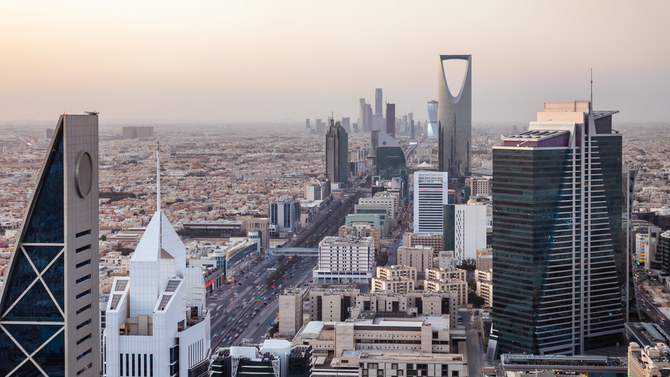
While residential real estate prices increased by 2.5 percent fueled by a 2.6 percent rise in land plot prices, other sub-sectors such as commercial and agricultural real estate saw a marginal fall in the prices. (Shutterstock)
Short Url
Updated 19 October 2022
Follow

Saudi Arabia’s real estate price index up 1.5% in Q3 due to rise in residential rates

RIYADH: Saudi Arabia’s Real Estate Price Index increased by 1.5 percent in the third quarter of 2022 compared to the same period last year, primarily driven by an increase in residential properties, the latest data from General Authority for Statistics revealed.

While residential real estate prices increased by 2.5 percent fueled by a 2.6 percent rise in land plot prices, other sub-sectors such as commercial and agricultural real estate saw a marginal fall in the prices, resulting in a dampening effect on the general index. 

According to the GASTAT report, commercial and agricultural real estate prices recorded a fall of 0.4 percent and 0.6 percent respectively. 

The report noted that the prices of villas increased by 0.2 percent, while apartments rose by 1 percent. 

On the other hand, house prices decreased by 0.7 percent, while the prices of residential buildings were stable and did not record any significant relative change, GASTAT added in the report. 

The report further said that the drop in commercial real estate prices happened due to a fall in commercial land plots prices by 0.4 percent. 

Agricultural real estate prices also decreased due to the drop of 0.6 percent in agricultural land prices.

On a quarterly basis, the General Real Estate Price Index rose 0.3 percent in the third quarter of this year, showed the report. 

This growth was backed by a 0.4 increase in residential real estate prices as land plots prices rose. 

The report added that apartment prices also saw an increase of 0.9 percent in the third quarter of 2022, and commercial real estate prices saw a modest 0.2 percent increase as commercial plots and centers increased. 

Conversely, villa and house prices fell by 1.5 and 0.3 percent respectively last quarter while residential buildings remained steady. 

The report further documented a fall in the prices of exhibitions by 0.1 percent whereas commercial buildings stood firm.

Additionally, the agricultural sector did not show any notable change in the third quarter of 2022 compared to the second. 


Saudi non-oil exports jump 21% as trade balance improves: GASTAT 

Updated 5 sec ago
Follow

Saudi non-oil exports jump 21% as trade balance improves: GASTAT 

RIYADH: Saudi Arabia’s non-oil exports, including re-exports, rose 20.7 percent year on year in November to SR32.69 billion ($8.72 billion), official data showed. 

According to preliminary figures released by the General Authority for Statistics, national non-oil exports, excluding re-exports, increased by 4.7 percent in November compared with the same month in 2024. 

The strong performance highlights progress under the Kingdom’s Vision 2030 strategy, which aims to diversify the economy and reduce its long-standing dependence on crude oil revenues. 

In its latest report, GASTAT stated: “The ratio of non-oil exports, including re-exports, to imports increased in November 2025, reaching 42.2 percent, compared with 34.9 percent in November 2024. This increase was driven by a 20.7 percent rise in non-oil exports, alongside a 0.2 percent decline in imports over the same period.”  

It added: “The value of re-exported goods increased by 53.1 percent during the same period, driven by an 81.9 percent increase in ‘machinery, electrical equipment and parts’, which accounted for 51.5 percent of total re-exports.”  

Machinery, electrical equipment and parts also led the non-oil export basket, making up 24.2 percent of outbound shipments and recording an 81.5 percent annual increase. This was followed by products of the chemical industries, which represented 20.3 percent of total non-oil exports and rose 0.5 percent year on year. 

The data adds to signs of resilience in Saudi Arabia’s non-oil economy, with S&P Global’s Purchasing Managers’ Index at 57.4 in December, well above the 50 threshold that separates expansion from contraction. 

Top non-oil destinations 

The UAE was the leading destination for Saudi non-oil exports in November, with shipments valued at SR10.48 billion. 

India ranked second at SR3.01 billion, followed by China at SR2.32 billion, Singapore at SR1.76 billion and Bahrain at SR900.7 million. 

Exports to Egypt totaled SR815.5 million during the month, while Turkiye and Jordan received goods worth SR799.1 million and SR773.3 million, respectively. 

GASTAT said ports and airports played a central role in facilitating non-oil shipments in November. 

By sea, Jeddah Islamic Seaport handled the largest volume of non-oil exports at SR3.57 billion, followed by King Fahad Industrial Seaport in Jubail at SR3.51 billion. 

Ras Al-Khair Seaport was the exit point for non-oil goods valued at SR2.66 billion, while Jubail Seaport and King Abdulaziz Seaport in Dammam handled outbound shipments worth SR2.32 billion and SR2.14 billion, respectively. 

By air, King Abdulaziz International Airport handled goods worth SR5.60 billion, while King Khalid International Airport in Riyadh processed exports valued at SR3.53 billion. 

Exports and imports 

Saudi Arabia’s total merchandise exports reached SR99.73 billion in November, representing a 10 percent increase compared with the same month in 2024. 

“Merchandise exports in November 2025 increased by 10.0 percent compared to November 2024, and oil exports increased by 5.4 percent. The percentage of oil exports in total exports declined from 70.1 percent in November 2024 to 67.2 percent in November 2025,” GASTAT added.  

China remained the Kingdom’s largest export destination, accounting for 13.5 percent of total exports, followed by the UAE at 11.7 percent and Japan at 9.9 percent. India, South Korea, the US, Egypt, Singapore, Bahrain and Poland were also among the top 10 destinations, which together accounted for 71.4 percent of total exports. 

Imports declined by 0.2 percent year on year in November to SR77.38 billion, while the merchandise trade surplus surged by 70.2 percent, the report showed. 

China was the Kingdom’s largest source of imports, accounting for 26.7 percent of inbound shipments, followed by the US at 10.2 percent and the UAE at 6.2 percent.  

“Germany, Japan, India, Italy, France, Switzerland, and Egypt were also among the top ten import sources, with total imports from these ten countries representing 68.6 percent of Saudi Arabia’s overall imports,” added GASTAT.  

King Abdulaziz Port in Dammam was the leading entry point for goods, handling 22.8 percent of imports in November. Jeddah Islamic Port followed with 22.6 percent, ahead of King Khalid International Airport in Riyadh at 17 percent and King Abdulaziz International Airport in Jeddah at 11.9 percent.