

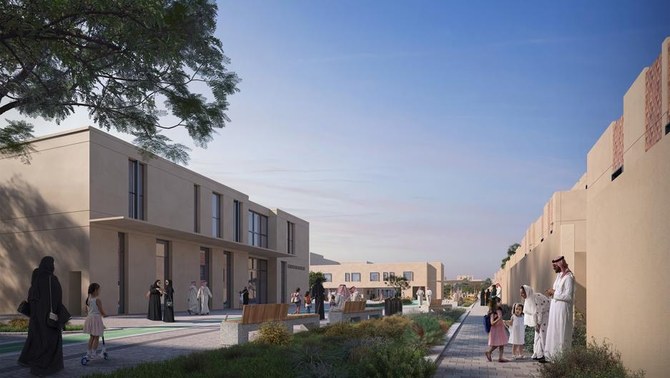
PIF-owned real estate firm ROSHN launches sales for SEDRA Phase 2

The Public Investment Fund-owned company plans to build as many as 2,172 homes as part of the second phase of its landmark project. (Supplied)
Short Url
Updated 16 October 2022
Follow

PIF-owned real estate firm ROSHN launches sales for SEDRA Phase 2

RIYADH: Saudi real estate developer ROSHN has launched sales for the second phase of its first development SEDRA, located in Riyadh. 

The Public Investment Fund-owned company plans to build as many as 2,172 homes as part of the second phase of its landmark project. 

SEDRA’s second phase also falls in line with Saudi-listed ROSHN’s sustainability objectives of putting nature at the heart of the community, the company said in a press release.

Spread over more than 3.4 km, the homes in SEDRA’s second phase are deemed as highly efficient as they are projected to account for an estimated 18 percent drop in energy costs as well as a 17 percent decline in the cost of water.

“Residents of SEDRA will enjoy access to the full range of amenities that have become a trademark of ROSHN developments,” said ROSHN Group CEO David Grover.

The project promises to have good features including pedestrian-friendly streets, a network of green and open spaces, long-term maintenance and management frameworks.


Saudi Arabia set to attract $500bn in private investment, Al-Falih tells conference

Updated 09 December 2025
Follow

Saudi Arabia set to attract $500bn in private investment, Al-Falih tells conference

RIYADH: Sustainability, technology, and financial models were among the core topics discussed by financial leaders during the first day of the Momentum 2025 Development Finance Conference in Riyadh.

The three-day event features more than 100 speakers and over 20 exhibitors, with the central theme revolving around how development financial institutions can propel economic growth.

Speaking during a panel titled “The Sustainable Investment Opportunity,” Saudi Investment Minister Khalid Al-Falih elaborated on the significant investment progress made in the Kingdom.

“We estimate in the midterm of 2030 or maybe a couple of years more or so, about $1 trillion of infrastructure investment,” he said, adding: “We estimate, as a minimum, 40 percent of this infrastructure is going to be financed by the private sector, so we’re talking in the next few years $400 (billion) to $500 billion.”

The minister drew a correlation between the scale of investment needs and rising global energy demand, especially as artificial intelligence continues to evolve within data processing and digital infrastructure in global spheres.

“The world demand of energy is continuing to grow and is going to grow faster with the advent of the AI processing requirements (…) so our target of the electricity sector is 50 percent from renewables, and 50 percent from gas,” he added.

Al-Falih underscored the importance of AI as a key sector within Saudi Arabia’s development and investment strategy. He made note of the scale of capital expected to go into the sector in coming years, saying: “We have set a very aggressive, but we believe an achievable target, for AI, and we estimate in the short term about $30 billion immediately of investments.”

This emphasis on long-term investment and sustainability targets was echoed across panels at Momentum 2025, during which discussions on essential partnerships between public and private sectors were highlighted.

The shared ambition of translating the Kingdom’s goals into tangible outcomes was particularly essential within the banking sector, as it plays a central role in facilitating both projects and partnerships.

During the “Champions of Sectoral Transformation: Development Funds and Their Ecosystems” panel, Saudi National Bank CEO Tareq Al-Sadhan shed light on the importance of partnerships facilitated via financial institutions.

He explained how they help manage risk while supporting the Kingdom’s ambitions.

“We have different models that we are working on with development funds. We co-financed in certain projects where we see the risk is higher in terms of going alone as a bank to support a certain project,” the CEO said.

Al-Sadhan referred to the role of development funds as an enabler for banks to expand their participation and support for projects without assuming major risk.

“The role of the development fund definitely is to give more comfort to the banking sector to also extend the support … we don’t compete with each other; we always complement each other” he added.