Pakistan telecom regulator urges restraint on social media amid regional tensions

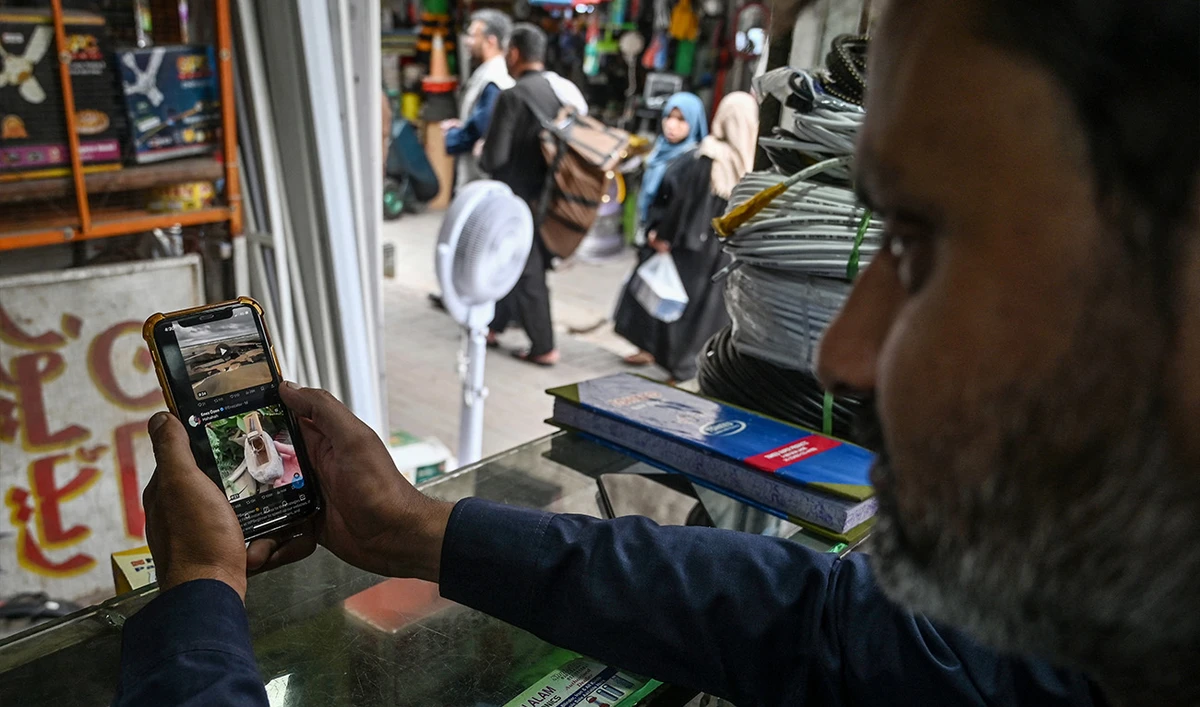
A man uses the social media platform X, formerly known as Twitter, on his phone at a market in Islamabad on April 17, 2024. (AFP/File)
Short Url
Updated 28 February 2026
Follow

Pakistan telecom regulator urges restraint on social media amid regional tensions

  • PTA warns against sharing unverified content, says legal action may follow ‘fake news’
  • Advisory comes as Pakistan strikes targets in Afghanistan and Iran faces US, Israeli attacks

ISLAMABAD: Pakistan’s telecom regulator on Saturday urged citizens to avoid sharing “unverified or inflammatory” content online, warning that legal action could be taken against those spreading misinformation amid what it described as a “sensitive national situation.”

The advisory from the Pakistan Telecommunication Authority (PTA) comes as Islamabad says it is targeting militant positions inside Afghanistan following a recent flareup between the two neighbors, while Iran is under attack by the United States and Israel in an escalating regional conflict that has heightened security concerns across South and West Asia.

“In view of the prevailing sensitive national situation, Pakistan Telecommunication Authority (PTA) urges all citizens to be responsible while using social media and digital platforms,” the regulator said in a statement posted on X.

The PTA advised citizens “not to share, disseminate, forward, or upload any unverified, inflammatory, or misleading information/content that may directly or indirectly harm the national interest, public order, or state institutions.”

It said people should instead rely on authentic information based on official sources and refrain from spreading rumors and “fake news.”

“Sharing any fake news/information is liable to legal action in accordance with applicable laws,” the authority said, calling on citizens to act with “caution, maturity, and a strong sense of national responsibility” to help maintain stability and public confidence.

Pakistan in recent years has witnessed increasingly stringent implementation of the Prevention of Electronic Crimes Act (PECA), a cybercrime law that has drawn criticism from rights groups, with journalists and activists arrested and prosecuted under its provisions.


Pakistan’s Mahnoor Omer named among TIME’s ‘Women of the Year’ for 2026

Updated 01 March 2026
Follow

Pakistan’s Mahnoor Omer named among TIME’s ‘Women of the Year’ for 2026

  • Omer moved a Pakistani court against the so-called ‘period tax’ in Sept. 2025 which has since sparked a national debate
  • Taxes on sanitary pads in Pakistan can add up to 40 percent to retail price, UNICEF says only around 12 percent women use such products

ISLAMABAD: Pakistani women’s rights activist Mahnoor Omer, who fought against taxes on menstrual products, has been named among the TIME magazine’s ‘Women of the Year’ for 2026.

Omer’s efforts have been recognized alongside 16 activists, artists, athletes and businesswomen in the TIME’s Women of the Year 2026 list, including Olympic gold medalist Sydney McLaughlin-Levrone and Oscar-nominated filmmaker Chloe Zhao.

Dissatisfied with the efforts to educate Pakistani girls about sexual violence, Omer founded the Noor Foundation at the age of 14 and held her own workshops with village girls about everything from climate change to menstruation, according to the TIME magazine.

Two years later, a conversation with a domestic worker about the price of pads made her realize that not everyone could afford these essentials. She moved a court against the so-called “period tax” in Sept. 2025 and the case has sparked a national debate on the subject, considered a taboo by many in Pakistan, since its first hearing late last year.

“A decade and one law degree after her interest in activism was sparked, Omer, now 25, is putting her passion and expertise to work in the name of gender equity,” TIME wrote about Omer on its website.

Taxes imposed on sanitary products in Pakistan can add up to 40 percent to the retail price. UNICEF estimates just 12 percent of women in the country use commercially produced pads or tampons. The alternative, using cloth, risks health impacts including rashes and infections, and can make it impossible for girls to attend school while menstruating.

Omer’s suit, which awaits the government response, has sparked a national discussion. She says she spoke about menstruation to her father and male cousins, who thanked her for standing up for their daughters.
The 25-year-old, who is currently enrolled in a master’s degree in gender, peace, and security at the London School of Economics, sees this case as just the first of many.

“I’m not free until every woman is free,” she was quoted as saying by TIME. “I want to leave no stones unturned in terms of what I can do with the next few decades, as a lawyer for the women in my country and gender minorities in general.”